

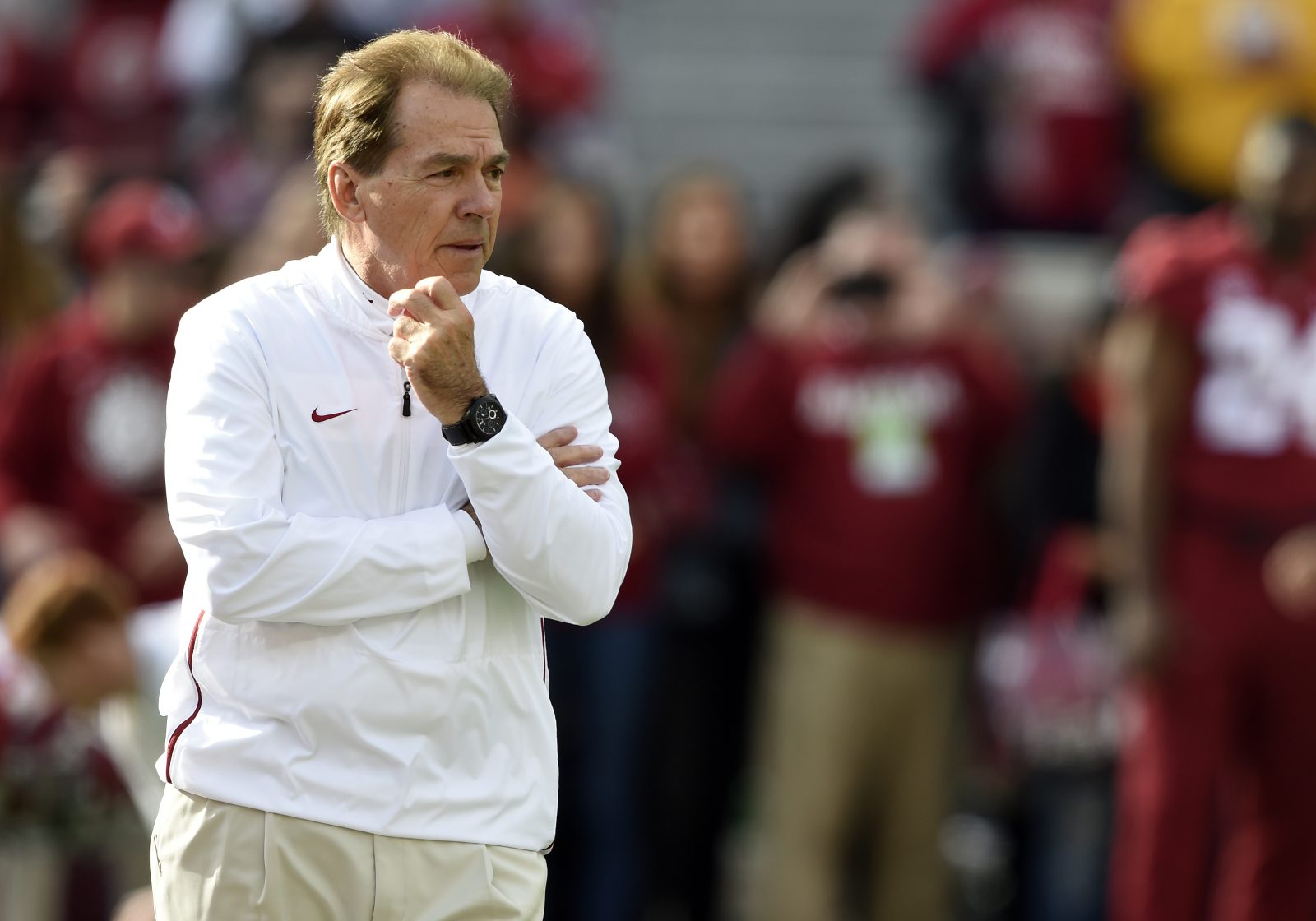
Dynasty has long been a buzzword in college football circles, representing more than just an outstanding team or championship season.
It signifies an entire era. Dominance refers to a period of sustained, all-consuming dominance where one program transcends from mere competition into an inevitability, becoming the “Goliath” that other teams aspire to defeating in sports.
Such teams define generations, set standards of excellence, and become targets for every “David”. Examining the intricate data, historical context, and statistical dominance of these programs requires thorough academic research— something any expert APA paper writer from WritePaper could assist with for a scholarly evaluation of athletic legacies. Such sustained excellence distinguishes those considered “great” from those considered truly “dynastic.”
But what really creates a dynasty? It takes more than one factor coming together for it to happen. This article examines their inner workings, highlights some of college football’s most dominant dynasties, and looks into modern-day challenges that threaten to dislodge them from history.
The Blueprint of Dominance
Dynasties aren’t accidental— they are meticulously constructed. While every dominant run is unique, they all share a common blueprint.
The Patriarch: The Legendary Coach
College football is a game of systems and culture, which stems directly from its head coach. Head coaches don’t just call plays— they serve as CEOs, philosophers, and relentless program architects.
Think Nick Saban’s “The Process”, Tom Osborne’s unwavering consistency or Bobby Bowden’s father figure approach as examples of such coaches who remain consistent over player graduations or coaching changes.
Talent Pipeline: Relentless Recruiting
A dynasty does not rebuild— it reloads. These programs dominate the “living room” just as much as they dominate the gridiron. They create a self-fulfilling prophecy: the best players want to attend the best programs to win championships and get drafted, which in turn enables those programs to continue winning. This relentless acquisition of 4- and 5-star talent creates a roster depth that other teams simply cannot match, turning “next man up” from a cliché into a terrifying reality.
Alignment and Infrastructure
A coach cannot do it alone. A dynasty requires total buy-in from the university administration, the athletic department, and a fervent booster base. This alignment unlocks the resources necessary for state-of-the-art facilities, massive coaching salaries, and the robust support staff needed to manage a modern, high-stakes program. It creates a “standard” of excellence that permeates every corner of the organization, from the weight room to the academic counseling center.
The Gold Standard: Modern Dynasties
When modern fans hear “dynasty,” one program immediately comes to mind: Alabama (2009-Present).
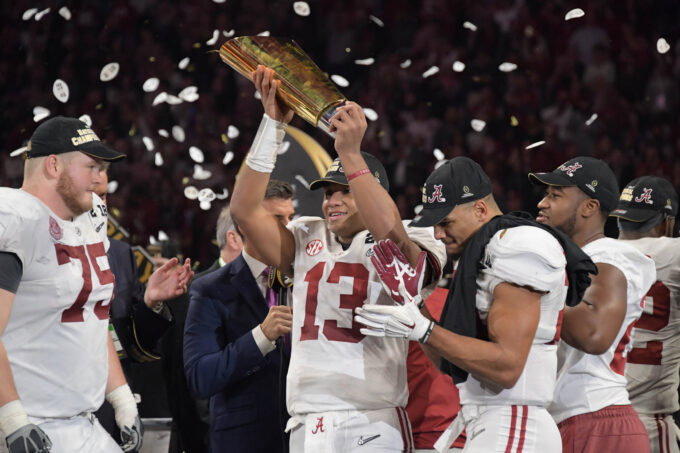
What Nick Saban has built in Tuscaloosa is arguably the most dominant run in the sport’s history, especially given the increased competition of the modern era. With six national championships since 2009, multiple Heisman Trophy winners, and a near-constant presence in the College Football Playoff, the Crimson Tide is the standard, even after Saban’s retirement. The coaching legend won with game-managing quarterbacks and suffocating defense, and then, recognizing the sport’s shift, completely reinvented his offense to win with explosive, high-scoring affairs.
The only program to consistently challenge Alabama’s reign and build its own “mini-dynasty” was Clemson (2015-2020). Under the folksy-but-fiery leadership of Dabo Swinney, the Tigers rose from a regional power to a national titan, winning two national championships (in 2016 and 2018), both by defeating Saban’s Alabama in the title game. For a six-year stretch, Clemson was a lock for the CFP, fueled by a distinct “All In” culture and a string of transcendent quarterback talents like Deshaun Watson and Trevor Lawrence.
And now, a new power has emerged from the Saban coaching tree. Georgia (2021-Present), led by Kirby Smart, broke a 41-year title drought and then immediately repeated as champions. Smart has replicated the Alabama blueprint — relentless recruiting, physical defense, and organizational alignment — and has positioned the Bulldogs as the potential next great SEC dynasty.
The Icons of History: The Classic Dynasties
Before the era of playoffs and billion-dollar TV deals, four titans dominated football fields, building legacy dynasties that still define the sport today.
Notre Dame (1940s)
Knute Rockne’s legendary Four Horsemen made Notre Dame well-known during its glory days of the 1920s; Frank Leahy’s teams in the 1940s proved even stronger, winning four national championships and producing four Heisman award winners over an unprecedented seven-year span from 1941-1949, solidifying Notre Dame as college football’s inaugural true national brand.
Oklahoma (1950s)
Coach Bud Wilkinson led his Sooners to an unprecedented 47-game winning streak from 1953 to 1957, a streak that will likely never be broken. He won back-to-back national championships (1955 and 1956) while dominating the Big Seven Conference with his innovative “Split-T” offense.
Nebraska (1990s)
Tom Osborne led Nebraska into physical dominance throughout the mid-’90s. From 1993 to 1997, Nebraska amassed an impressive 60-3 record and won three national championships (1994, 1995, and 1997) during that timeframe. Their 1995 team, with its unstoppable option offense, is widely considered one of the greatest college football teams of all time.
The “U” (Miami, 1980s-Early 2000s)
No team changed the culture of the sport like the Miami Hurricanes. They won five national titles between 1983 and 2001 under three different coaches. They brought a new level of speed, swagger, and attitude to the game, becoming the “villains” of the sport while producing an unprecedented amount of NFL-ready talent.
Honorable Mentions
No list is complete without mentioning USC in the early 2000s under Pete Carroll, a seven-year run of dominance that included two national titles (one later vacated) and three Heisman winners. And then there is Florida State under Bobby Bowden, who achieved the mind-boggling feat of finishing in the AP Top 5 for 14 consecutive seasons (1987-2000).
The Future of Dominance
Today, the very concept of a dynasty faces new threats. The advent of the Transfer Portal and Name, Image, and Likeness (NIL) has ushered in a new era of “free agency” in the sport. Roster stability, a cornerstone of past dynasties, is no longer guaranteed. While it’s possible these new rules will simply allow the richest programs to get richer, they also create unprecedented volatility.
Can a coach maintain a long-term “process” when their roster can be poached overnight? Can a program sustain dominance when the foundations are constantly shifting?
What remains certain is that the pursuit of a dynasty is the sport’s driving force. It is the quest for immortality, the desire to build something that lasts longer than a single season. The faces and programs may change, but the throne will never stay empty for long. The hunt for the next powerhouse is, and always will be, what makes college football the most compelling drama in sports.









Leave a comment