

As the internet rewards engagement over substance, the rise in critical language has been exponential. Opinions and hot takes run rampant online, even influencing how modern television approaches controversial subjects. In some shows, such as ESPN’s Get Up, we see controversy become the objective rather than the topic to resolve.
Is the age of clickbait and engagement farming desensitizing us to the long-standing power of words? It sure seems like it.
Shai Gilgeous-Alexander and the Court of Public Opinion
It’s Game 3 of the Western Conference Finals. “Flopper!” chants rain down as the NBA MVP Shai Gilgeous-Alexander draws yet another shooting foul. He’s already taken seven free throws in the third quarter, and the crowd isn’t happy. SGA is asked about the postgame chants and claims to be unfazed. Outside the arena, the media takes an opportunity to shine a negative light on him.
https://twitter.com/GetUpESPN/status/2060354728878276666?s=20
If you’ve scrolled social media as a sports fan, comments about Shai’s style of play have most certainly crossed your feed. Posts mocking SGA are springing up at a rapid rate. Most notably, the MVP’s alleged flopping has become a primary focus of online critique. ESPN’s coverage of the subject may have stoked an already raging fire of online discourse.
What exactly is Shai supposed to do? He’s a multiple-time MVP, a former scoring champion, one of the best defenders in the league, and a proven winner. There’s a long-standing mantra amongst many athletes that their game “speaks for itself.” While Shai’s game could easily fall into this idea, he hasn’t been scared to talk up his success. From quotable interviews to clever Instagram captions, SGA has been everything but humble about his game.
In a recent Instagram post, Shai appears to take a shot at Dillon Brooks, one of the NBA’s most notable trash talkers.
In a sports culture where many athletes on different teams train together and befriend each other, Shai’s outspoken disdain for an opponent stands out.
As Shai makes his statement off the court, some athletes take a more silent approach.
The Dak Attack — Dak Prescott’s Philanthropy Goes Unnoticed
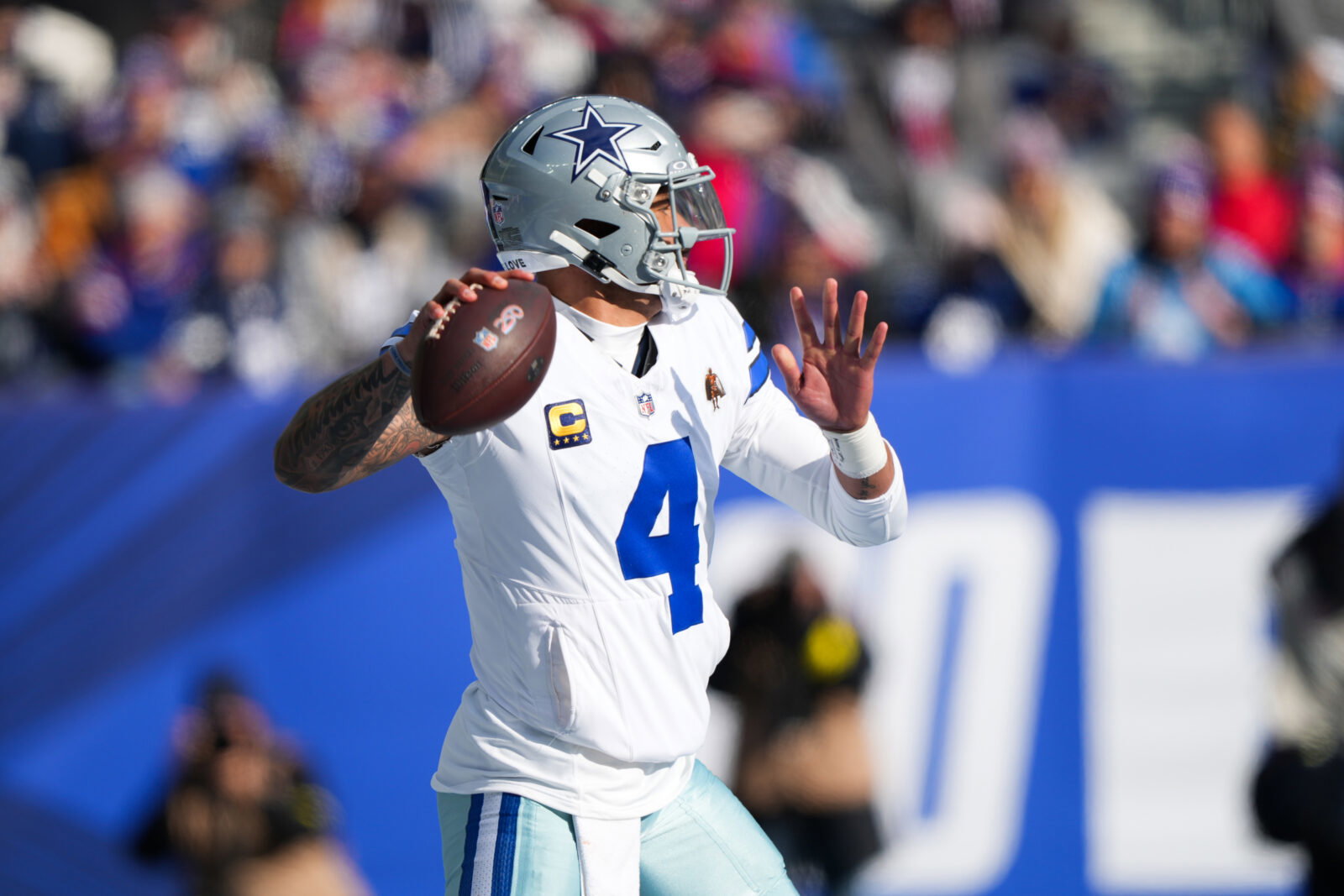
Dak Prescott is the starting quarterback for the Dallas Cowboys. He has some of the best regular-season play of anybody in his era, yet lacks any meaningful playoff success. As a result, he is often pointed to as a failure in big moments. In terms of individual play, Dak’s performances have been a mixed bag. A game such as the divisional round matchup with San Francisco in 2023 is a great example of Prescott playing poor individual football in the playoffs.
The Cowboys find themselves in an ugly position with enough time for one last chance to win. It’s 3rd and 10. The offense hasn’t been clicking, and the defense has done just enough to make the game competitive. As a result, many blame Prescott for putting the team in this situation. His one touchdown and two interceptions certainly didn’t elevate the team.
https://twitter.com/the_onejose/status/1617354003490152450?s=20
While the veteran quarterback has the opportunity to defend himself from online criticism, he instead uses his platform to discuss issues such as cancer research and suicide prevention. Both of these issues resonate deeply with Dak, due to losing his mother to cancer and his brother to suicide. As a result of his philanthropic efforts, Prescott is a former winner of the Walter Peyton Man of the Year Award and continues to campaign for these causes. Recently, he attended a gala raising money for childhood cancer.
“The Children’s Cancer Fund gala, with Dak Prescott and Troy Aikman as honorary chairs, raised a record-breaking $4 million last Friday to benefit pediatric cancer research,” said Todd Archer of ESPN.
Unlike Shai, Dak lets his game speak for itself. Especially against his rivals. Prescott holds a winning record against all three other teams in the NFC East, dominating the Eagles, Commanders, and Giants on a consistent basis. The 11-year veteran has a win rate of 80.5% in the division, with his worst record being 9-5 against the Eagles.
Despite this, it is commonly stated that Dak lacks the playoff resume necessary to be considered a “great” quarterback.
Who’s to Judge, Aaron?
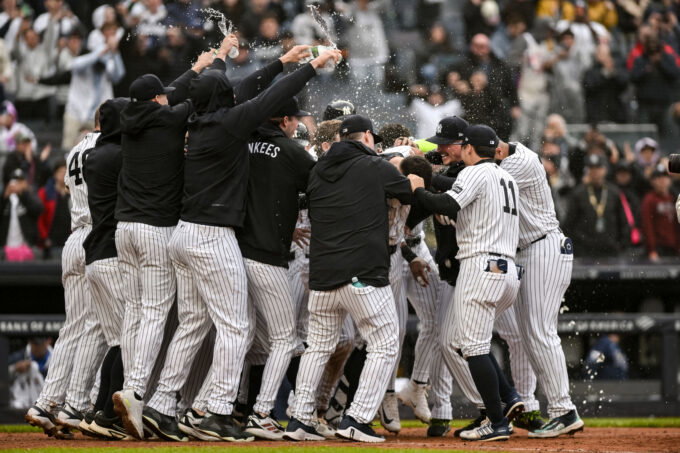
In the 2026 World Baseball Classic championship game, reigning American League MVP Aaron Judge went 0-4 at bat. One of the MLB’s premier home run hitters seemingly disappeared in the biggest game of international baseball. Seemingly, this performance may have played a significant role in the team’s 3-2 loss to Venezuela. While the entire roster struggled that night, Bryce Harper came in clutch in the bottom of the eighth inning with a 2-run homer to tie the game 2-2. Immediately after, Judge went on to strike out for the third time in the game.
“In the big spot, in the big moment, with everybody watching…Aaron Judge let his country down,” said Tommy Lugauer of WFAN Sports Radio.
Judge also struggled in the World Series against the Los Angeles Dodgers in 2024. In the five-game series, Aaron Judge recorded four hits in 18 at bats, resulting in one home run and a battling average of .222. The Yankees would lose the series 4-1. In the Yankees game four victory, Judge went 1-3 with an RBI single in the eighth inning.
The Yankees star has never been one to be outspoken. Judge has been publicly indifferent to the concerns around his performances in these games. Just like Dak, one must wonder: How do you define a legacy that doesn’t come with championship success? Looking at the career of Philip Rivers can bring us this answer.
Rivers Runs Dry — Philip Rivers Is Lucky He Played Before Peak Social Media
In a career most quarterbacks would give everything to have, Philip Rivers retired with minimal accolades. He won zero MVPs, zero championships, and only won his division four times in his 18-season career. If we loop back to Dak, the comparison is eerie. The biggest difference between the careers of these two is that Dak has played his entire career in the age of sports twitter while Rivers played in the era of 24/7 sports news cycles. From barbershops to school playgrounds, Rivers’ shortcomings were always a discussion, although the magnitude of the discussions appears diluted in comparison to the modern online discourse.
In 2008, Rivers led his Chargers to the AFC Championship Game against Tom Brady’s Patriots. Rivers threw zero touchdowns and two interceptions, as well as passing an abysmal 51.4% completion rate on 37 attempts. One year and one week prior, Rivers lost to the same Patriots in the divisional round with a 55.5 quarterback rating and a completion rate of 43.8%. Rivers has rarely stepped up in these games to say the least.
That being said, Philip Rivers is likely a future Hall of Famer. He’s an eight-time Pro-Bowler, a Comeback Player of the Year winner, and has the eighth most passing yards in NFL history. He sits amongst greats on the stat sheet but sits amongst perennial losers in the post-season record books.
Can the Modern Athlete Control Their Image?
Short answer: No.
Long answer: Every professional team in sports has a public relations team. They have teams dedicated to training players on how to speak to the media. They have teams dedicated to monitoring social media posts by players. What teams don’t have, though, is the ability to override a person’s ego. At the end of the day, players have free will. They may have incentive to protect their image, but they still have free will.
Just as the players have free will to speak their mind, so does the audience. The biggest difference is that the audience faces fewer repercussions for their speech. Most often, audiences face no consequence for their words at all.









Leave a comment