

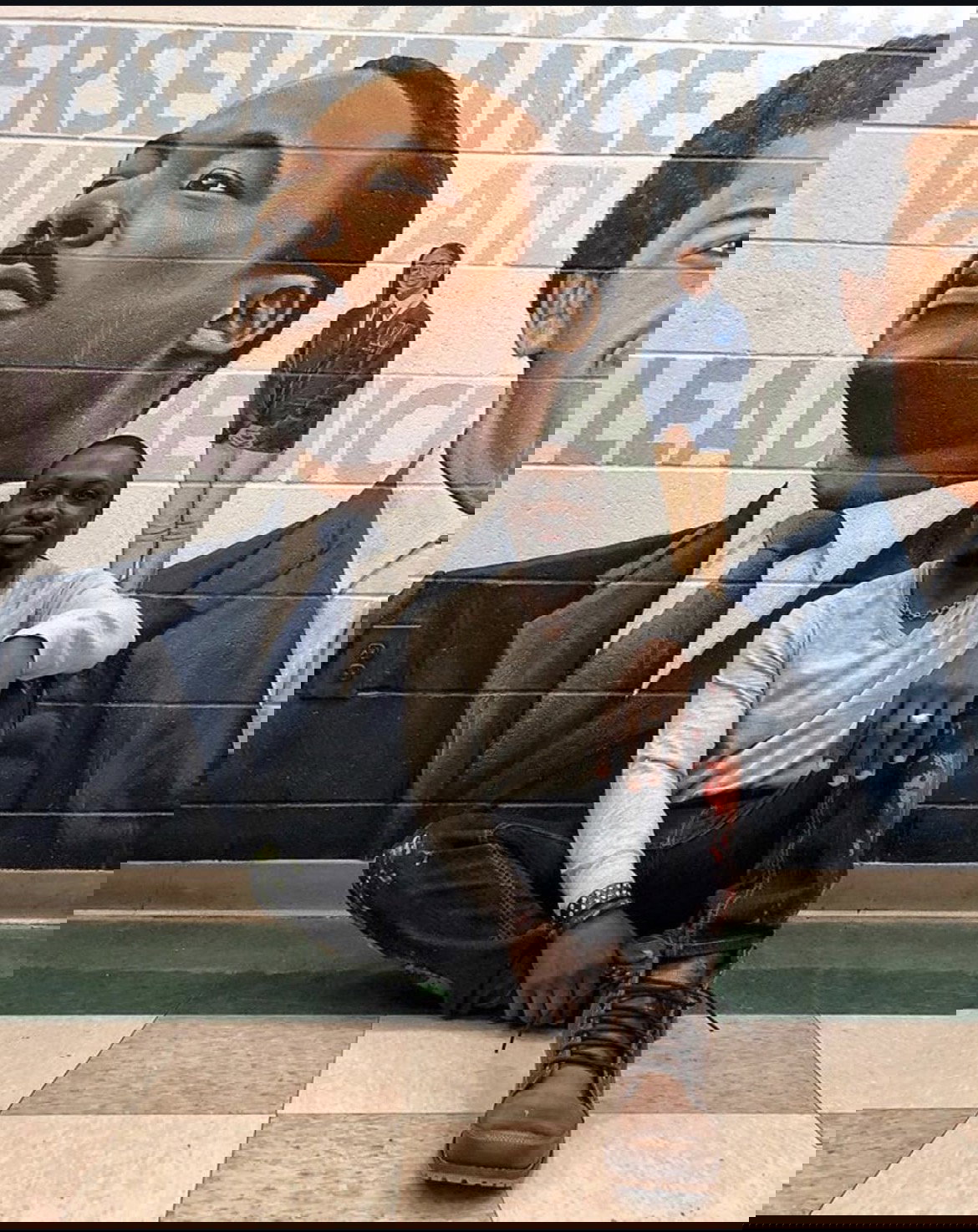
Art has always been subjective in the eyes of many, but every painting has a story behind it.
Painter Muhammad Yungai has mastered telling stories through his murals, a gift he acquired as he walked his own path to artistic supremacy.
His story begins in 1974 on the culture-filled streets of New Orleans, where jazz is bigger than any other genre, and the food is one-of-a-kind. Coming from gang-infested Chicago, the Yungais were unfamiliar with the legendary city and wanted to shield their only child from the dangers of uncharted streets.
I.) The Nation Of Islam
“I never really belonged to one place,” Yungai said. “My parents left Chicago when I was 2. [Then we] moved down to New Orleans. So now I’m in New Orleans, but my parents are from Chicago, so I’m not getting the full New Orleans experience.”

Both of Yungai’s parents were from the Nation of Islam, and they would educate their son daily on the principles of their religion. He was either in school Monday through Friday or attending mosque with his family.
“What I remember the most was the feeling of security and the warmth of my family,” he said. “The fun of New Orleans as a kid and the peace of the Nation of Islam.
“When you went to the mosque, it was the women on one side, men on the other side. You came in, and they greeted you. It was the friendliest I had ever seen Black people.”
He was reluctant to attend the mosque at first, like any other fun-seeking child in the 80s, but it became a sanctuary once he understood its purpose. The power of community was introduced to Muhammad at an early age, and attending the mosque helped his parents become comfortable in their new surroundings.
“It was the most peaceful I had ever seen Black people because when I go home, everybody’s having fun, everybody’s yelling, cursing, drinking, you know, whatever. When you’re at the Nation of Islam, there’s no drinking, there’s no smoking, so it’s a weird balance of all of these different energies.”
While there, Muhammad befriended another African-American boy named Saddi, and one weekend, the duo were on the hunt for as much fun as a $20 bill could buy.
II.) A $20 Bill
It’s crazy to think that a little piece of green paper would change the trajectory of two young boys’ lives and forever alter Yungai’s perspective.
“One weekend, Saddi got $20, so we go play video games, and basically spent all his money,” said Yungai. “We just bonded that weekend and have been tight ever since.”
Walking around town without his parents showed the world through a new lens, and while searching for sights, Yungai bonded with Saddi. The two shared their inquisitive thoughts about the world around them and their resolutions to life’s biggest mysteries.
Saddi expressed his insatiable desire to achieve greatness and his future goals. The more words he spoke, the more Muhammad’s heart started to race. He couldn’t help his natural resonance, and his newfound motivation was further exacerbated after seeing the respect Saddi received from the community.
After spending time with Saddi for the weekend, Yungai set off on a journey to chase his own ‘greatness’. It forced the fourteen-year-old to look within himself and unlock an innate talent that Yungai wasn’t aware of.
III.) Turning On The Turn Tables
The two newfound friends bonded over their love of music, which cemented their friendship. Funny enough, Muhammad’s father was already a connoisseur of jazz, so the love for music was already coursing through his veins.
His passion for music would eventually turn into an obsession, leading him to produce records night after night.
“While art was my first love, I got into hip-hop real heavy, around 14,” said Yungai. “I went to Atlanta [later on] to pursue hip-hop, and it was right before hip-hop popped off in New Orleans, so it was kind of crazy.
“But me and [Saddi] had a rap group, and we kind of sharpened each other’s skills.”
When he finally worked up the courage, Yungai began playing self-produced records for his father’s approval, knowing his level of fandom. Receiving praise from his pops was a massive confidence booster. Before he knew it, Muhammad was pursuing a career as a rapper.
IV.) Pen To Paper
Acknowledgement of his talents was a spiritual awakening that Muhammad Yungai couldn’t ignore, so he and Saddi decided to form a rap group to pursue their dream together.
“In terms of rap, he would write a verse, he would call me, he would spit it, and I’d be like, ‘Oh, man, that’s dope. Let me see if I can create something,’” said Yungai. “And then I would just sit down for the next couple hours, I would write something,”
They would call each other constantly to share rhymes and brainstorm ideas together.
“And then I would call him back, then I would spit mine. And we did that until we were just really, really good at not only constructing verses, but constructing full songs. We were very critical of each other in the process. We were like Outkast before Outkast.”
Muhammad wanted to be as close to the rap game as possible, and more importantly, he had to get paid for his time. Destiny would bring him to the legendary record store Odyssey Records.
V.) A Musical Odyssey
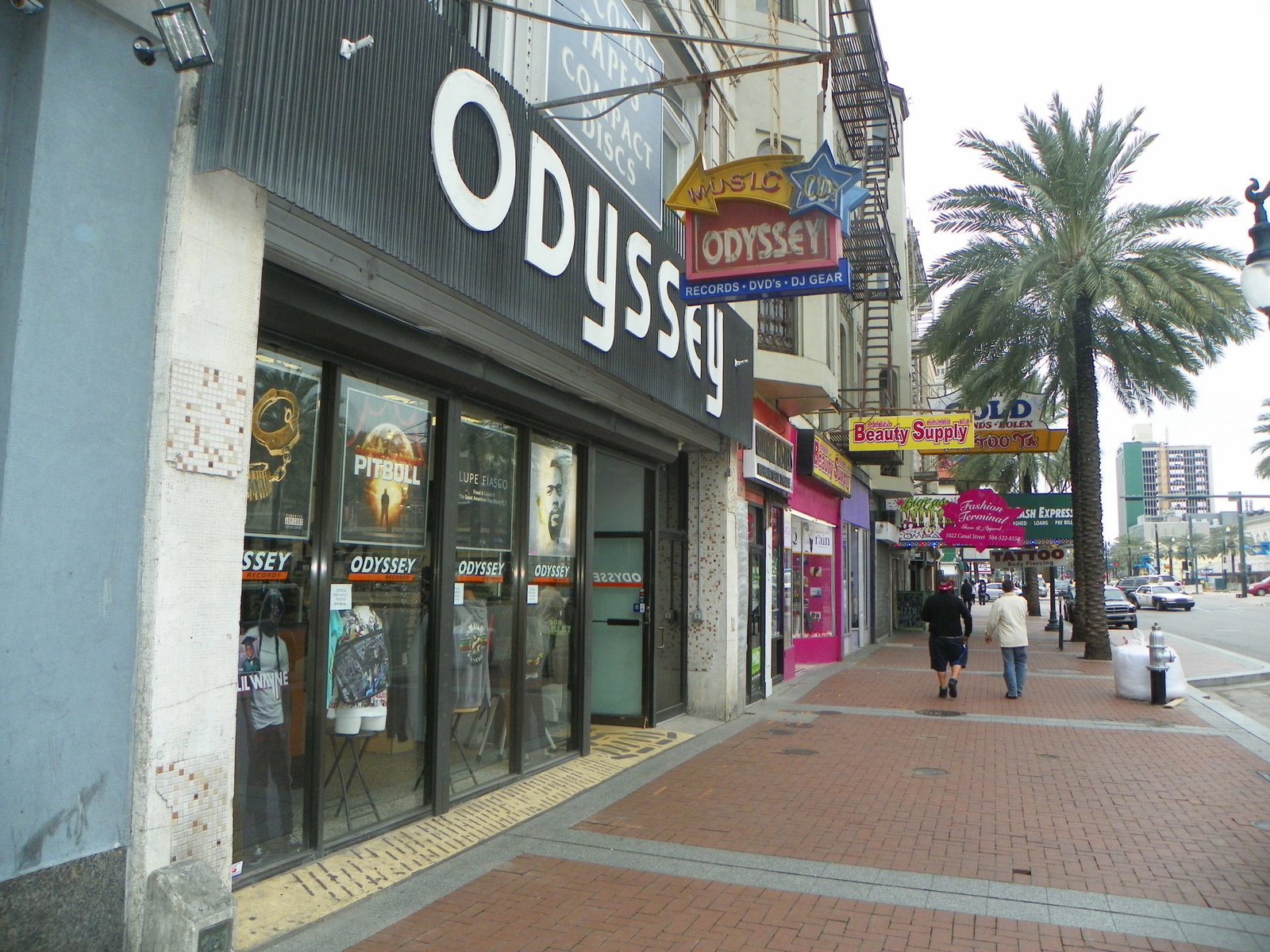
While most 14-year-olds were trying to be ‘Like Mike’ on the court, Yungai was focused on the kind of Mic that could spread his own message. He started off by mastering the technique of 1200 turntables after months of trial and error.
It was the perfect situation for a young black kid in New Orleans with dreams of a career in Music. As time went on, famous DJs from all over the city would stop by the shop, and Muhammad would make an impression every time.
“When DJs are mixing records, you got headphones, and you’re figuring out what the tempos of the records are before the audience gets to hear it,” he said. “But because we have all of these DJs, I learned how to identify the music tempos by ear, and mix them without headphones, because that’s basically what we had to do, to sell the records to the DJs.”
Seeing all the different DJ styles served as musical classes for the aspiring rapper, and his teachings inspired him to become a producer as well.
“Once I started mixing all of those records, and I would take break beats that we had, I would mix them with samples that we had that were loops, and I was like ‘most of the stuff I’m mixing here in the store, just off the top of my head, is a lot better than the stuff that we’re selling.’ So I got into producing.”
VI.) A Leap Of Faith
For the next five years, Muhammad honed his skills until one day, in 1994, he and a friend decided to open their own music store. The pair received a $30,000 loan from the bank and went into business for themselves. Unfortunately, it was the mid-90s, and the record industry was dying a slow death.
Their entrepreneurial venture was short-lived, and the failed business caused a rift between the two partners. Yungai was mentally and emotionally drained from the ordeal, causing him to seek salvation in a fresh start. Destiny would come calling yet again in the form of a conversation with childhood friend, Chaka Zulu.
Zulu walked the same streets as Muhammad growing up, but later moved to Atlanta, GA, to pursue his own musical aspirations. He would eventually link up with legendary Atlanta rapper Ludacris and became his manager.
Zulu convinced Yungai to move to Atlanta. With his heart fully set on music, Muhammad loaded up his white two-door Ford GT and moved to Black Hollywood during a time of hip-hop renaissance.
It was finally time to make a move.
VII.) Arriving In The A.
Atlanta was on fire in 1996, with moguls like Jermaine Dupri dominating the Billboard charts, but Yungai would have to get his foot in the door first. Industry gatekeepers made it difficult to make connections, and being from another city amplified Yungai’s disadvantage.
“I had two kids at the time,” he said. “I’m 21, and I’m like, ‘okay, I’m just gonna go to Atlanta.’ So I go to Atlanta, and now I’m pursuing music full-time. I got an internship at Motown Records, so I’m really learning this from the inside out. I’m writing songs, I’m rapping, I’m producing, and I’m trying to get in with these people, but at that time, there are so many gatekeepers.”
Motown Records was a major step in the right direction, but once Yungai entered the music industry, he was disappointed by what he found. Being in a new city forced him to adapt to a culture and lifestyle foreign to Muhammad.
He wasn’t the type to smoke weed and play video games all day for the sake of a ‘creative process’.
“For me, not being able to bond with regular rappers kind of made it a more uphill climb for me,” he said. “I would see some of those groups who I left go on to be successful. So, I kept trying to regroup, but I just never was able to really make it.”
VII.) An Unfortunate Revelation
Smoking weed and gaming are normal behaviors for rappers, especially in Atlanta. For the next few years, Yungai would climb up the preverbal totem pole. New places brought new faces, and even though Muhammad had a kind soul, he couldn’t avoid the dark side of the music industry.
“This is before Ludacris took off. You have to immerse yourself fully in the culture, gotta be going to clubs, and gotta network. All of these gatekeepers, you have to get to know them so they’ll let you in the gate,” Yungai said. “ By the time I figured all of that out, I didn’t like the industry. It didn’t feel like creativity to me. It felt like begging to be a part of something that I would have to change myself to be in anyway.”
With his rap dream behind him, Muhammad realized that his journey had reached a crossroads. Two signs were pointing in opposite directions: one to Music and the other to Art. The now 28-year-old embraced the ultimatum and decided to pursue his first love.
IX.) From Crossroads to Canvases
Failing in the music industry was a reality check, but Yungai’s support system believed in his abilities. He already had a natural talent for art, and his wife was well aware of it. After witnessing what her husband experienced in Atlanta, she encouraged him to go all in on his true calling.
Her job paid enough to support the entire family, so she encouraged Muhammad to pursue his dream full-time. The liberation from a day job allowed Muhammad to perfect his craft daily, but with every sunset, the pressure rose.
Chasing dreams in another city and returning home with nothing to show for it lit a fire under the young father of two. Spending time with his kids provided plenty of motivation, so he redefined his skill set, hoping to make money from his paintings.
X.) A New Calling
When he wasn’t holding a brush, he was tending to his children and dropping them off at school. The Yungais enrolled their children in Kipp Ways Academy, and Muhammad developed a close relationship with the school board.
After touring around the campus, Yungai found the perfect canvas for his first set of pieces as a full-time painter. He offered to decorate the school, and before he knew it, he was filling the school with a colorful ambience.
It became such a regular occurrence that Kipp Ways’ principal became familiar with Yungai. A few years later, in the fall of 2005, the school announced the creation of its art program. They developed such a strong rapport with Muhammad that he was their first candidate to fill the position.
He had never taught a day in his life, but he couldn’t ignore the chance to spread the power of self-expression to children who had never experienced it before. .
“I didn’t think that I was qualified, but I knew I was a good enough artist that I could teach middle school level,” Yungai said.
At the young age of 31, he was officially hired as the school art teacher, but Muhammad would be the one to learn a valuable lesson.
XI.) Academics Of Artistry
Knowledge is considered power in America, and all of a sudden, Yungai was tasked with giving a roomful of children such a treasured asset.
“To teach these kids I had to learn the technical terms,” he said. “I had to learn a lot of concepts I never paid attention to because I just got [the lesson] automatically. Me learning all of these things that I had to learn before I taught them, sometimes I would learn something just before I taught my class. That took my work to another level.”
Learning self-expression is an essential part of a child’s development, so he brainstormed artistic lesson plans to help them improve as artists and free thinkers. Educating the students on the premises of art was an excellent test for the kids and Yungai.
Most kids have a concept of Art; however, a large majority lack the technical components needed to express themselves. Muhammad relied on his experience as an artist to guide them on the vast plateau that is creativity.
“I knew what I would have wanted to learn as an artist, so that’s what I brought to my class,” said Yungai. “The very first day that I taught, I was very nervous. My kids start with a warm-up. So they would have to draw something, that’s their warm-up.”
XII.) Muhammad’s Murals
Yungai always wanted each of his murals to be unique and tell a different story. It set him on a pace to complete one mural per year, and by 2010, he had completed five. As the children grew, so did the school’s reputation.
“After about five years, the school began to feel different without you having to go into the classrooms,” he said. “Because when you go into the classrooms, it’s magic. These teachers were doing amazing things. But if you’re just in the halls, and the halls are dull, now you’re not getting it.
“Our school felt magical, no matter what time you went in, whether you went into the halls or the classrooms, because I had the art there.”
In five short years, Muhammad had established a new career and ushered in a new culture through his artistry. He was an active member of the staff and would make his presence felt at open houses.
XIII.) New People & New Opportunities.
New families filled the halls at open houses, and seeing the majestic murals along with the kids’ art throughout the building left a lasting first impression.
“After people see our test scores, whenever we get visits, that’s when the murals start to get noticed. Because people were like, ‘Why is your school doing so well?’ And it was a combination of all of these things,” Yungai said. “But it definitely made the art one of those things that people wanted to replicate at their school, and so I began to get requests. I got one job one summer, then I got two jobs the next summer, then I had three after that.”
Naturally, the guests would inquire about the painter of the masterpieces, and surely enough, Yungai’s name began to grow. He had harnessed this talent for years, but now he was reaping the benefits of his craft on a bigger scale.
XIV.) From Walls To Buildings
The three painting jobs provided more opportunity to perfect his craft while also making money from his true passion. Painting in the summer offered the bliss of painting without the stress of lesson planning, but the workload became too much.
“It got to a point when I left, I was like, okay, ‘I can’t continue to do both of these, because at one point, I was like, oh, I’ll just do this in the summer.’ And then it bled into the school year,” he explained.
“I’m there, getting there at 7 o’clock’, doing the morning duty, helping the kids who arrive in the cars to get into the school safely, and so I knew I had to make a choice.”
In 2016, Muhammad Yungai decided to bet on himself and become a full-time painter. Gambling with his life would end up being the best decision he’s ever made in his entire career.
XV.) The Culmination Of The Craft
Painting murals for Kippways helped Muhammad prepare for a full-time career, so the transition was seamless. He painted a wide variety of murals, from contemporary art to the faces of real children.
Yungai’s supply and demand could only be matched by his insatiable work ethic. One massive mural led to the next, creating a consistent flow of opportunities, and by 2021, he had finished a plethora. It was the perfect time, as the 43-year-old had a life full of experiences and a litany of messages to spread.
Around the time Joe Biden and Donald Trump were running for President, Yungai was working hard in the streets of Atlanta. One of his murals featured some of black history’s most profound leaders and mesmerized the citizens daily.
Given the city’s history of civil rights, the mural became a smash hit, understandably so.
With his watermark plastered across the wall, his name became synonymous with the city’s most detailed murals. Along the way, he leaned into his love for sports and children, combining the two for a series of powerful murals.
XVI.) Expressions Of Inspiration
Completing jobs for others also encouraged Muhammad to delve into his most meaningful thoughts and feelings. While touching up the MLK mural, he caught wind of Kobe Bryant’s tragic death.
Following Bryant’s untimely passing in January of 2020, Yungai felt a burning desire to paint the NBA Hall of Famer.
He was able to put the man known as the Black Mamba in a beautiful and positive light, highlighted by the Lakers’ legendary colorway.
The piece was met with critical acclaim from the public, and he soon caught the itch to paint more of his favorite athletes.
“I had this thing where I wanted to paint the champions of a sport,” he said. “I would get all of these prints done, and when they’re doing the parades, then I would go and sell all my prints at the parade.
“That was a business thing I was thinking was a great hustle for me to do.” “So, I had done the Saints when they won, of course, because I’m from New Orleans. I had done the Carolina Panthers when they went to the Super Bowl, Cam Newton. I have a painting of Cam with his Superman thing.”
XVII.) A Parade Down Peachtree
On April 12, 1966, Warren Spahn, Hank Aaron, and the Atlanta Braves held a parade to celebrate their arrival.
The mural culminated in a beautiful scene down Peachtree St, and Yungai immortalized it with another outstanding mural right across the street from the historic Centennial Olympic Park.
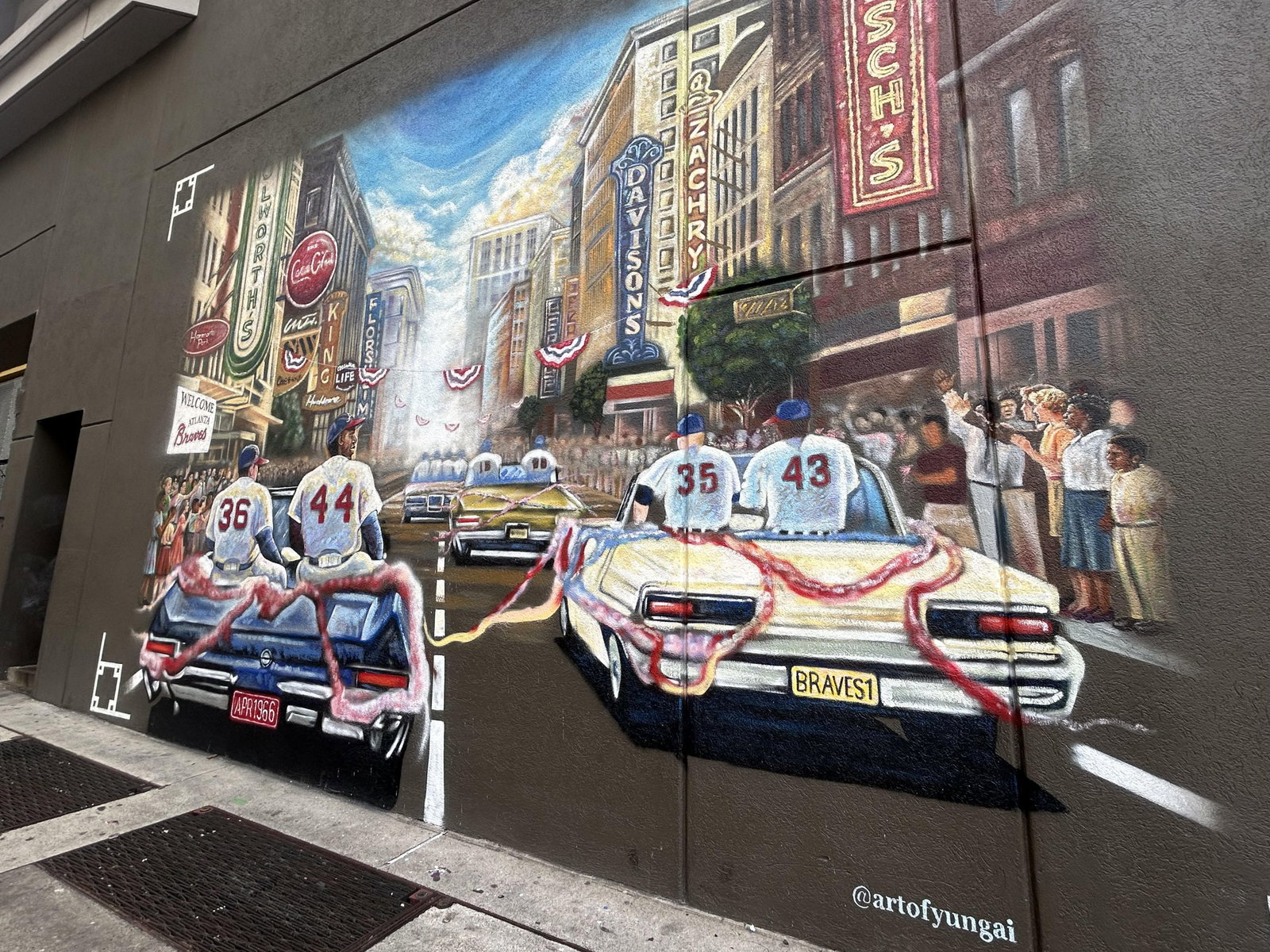
This was three years after completing a Hank Aaron mural for the Henry Aaron Lewis New Beginnings Academy. Adults who weren’t even alive during the team’s inception will be able to relive some of their most significant moments.
It’s one of the many pleasures that Muhammad’s art has given the world. He’ll forever be immersed in his craft, so his offerings will be endless.
XVIII.) In Conclusion
Muhammad Yungai’s work is a fantastic benefit for a planet that has lacked creativity and open-mindedness in this political age. His talent will forever bring salvation to those who witness it, and at age 51, the young painter still has so much work to do.
“I knew from an early age that I wanted my work to mean something to Black people,” said Yungai.
“I wanted my work to be something that would help them get through a day, something that would inspire them, or something that would change their opinion about something. So that’s still my North Star.
“What I want to do is make sure that I’m global with my work. I want to go to Africa, [and] I want to go to Haiti. Wherever Black people are, I want to go there and do some work that’s going to make that place more beautiful. Make them feel more pride in themselves.”
Before we concluded the interview, Yungai was asked about his goals for the future as a professional artist, to which he replied:
“I’ve been doing murals now. This year, 2026, is my 10th anniversary of being a professional and not having any other job but art. And so I’ve done these murals for about 16 years now.
“The murals are very collaborative. The murals that I have here in New Orleans, the murals I have in Washington, D.C, Wisconsin, Atlanta, they’re all working with schools to see, what do these children need? And how can we make work that’s going to affect them positively? And so that’s what I’ve been doing.”








Leave a comment