

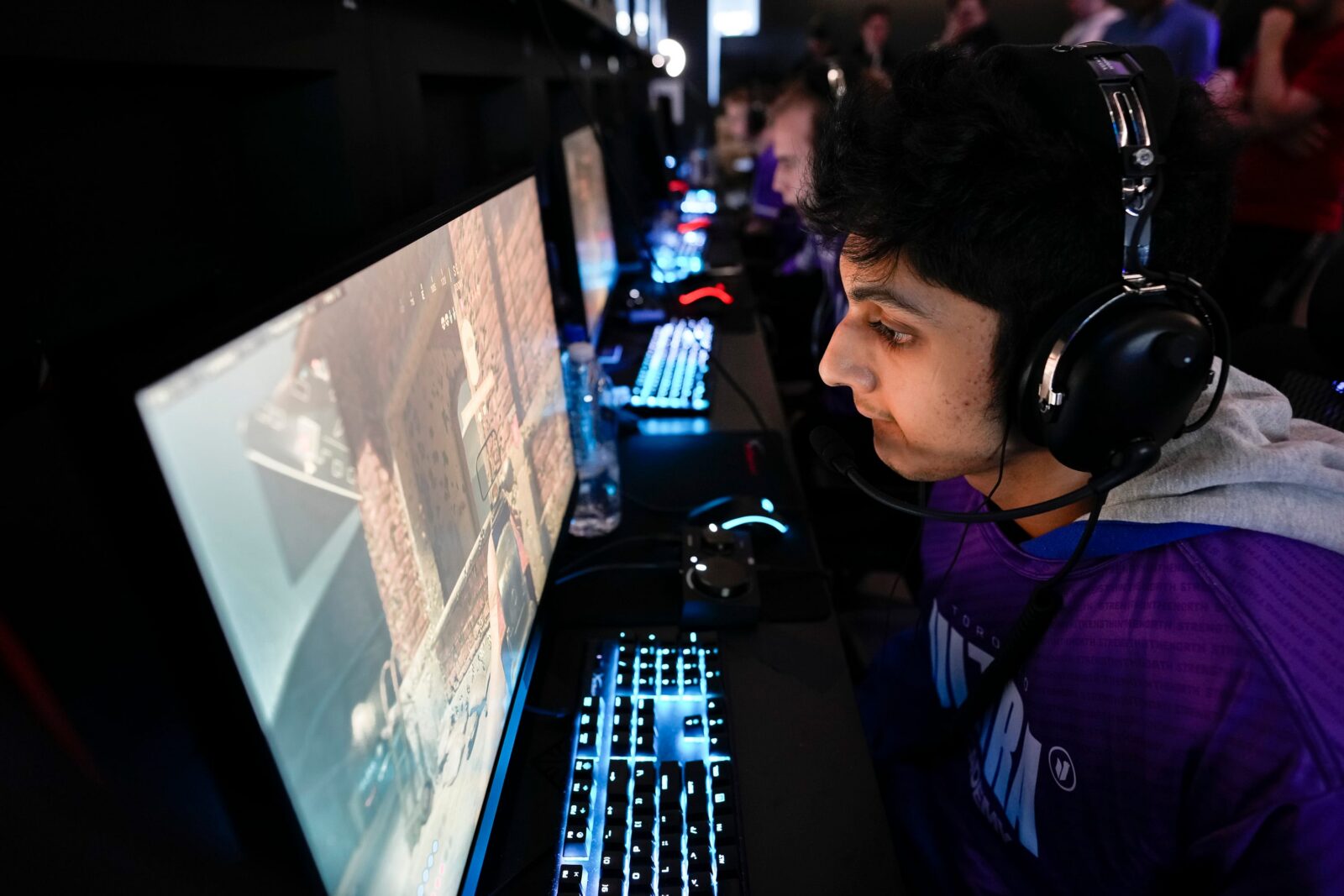
Most competitive players hit a ceiling not because they lack skill, but because all of it is tied to one game.
One meta shift, one dying esport, one roster change — and suddenly years of grinding feel worthless. The players who keep competing, keep getting picked up, and keep building careers are the ones who can adapt. They’re the versatile ones.
And versatility isn’t just a personality trait. It’s a trainable skill set.
Here’s what actually separates players who transition successfully between games from those who get stuck rebuilding from zero every time.
What “Versatile Gamer” Actually Means
A versatile gamer isn’t someone who casually dabbles in ten different titles. It’s someone whose core skills transfer — aim, game sense, communication, decision-making — so that switching games doesn’t mean starting over.
Think about nitr0, who competed at the highest level in CSGO before moving to Valorant and eventually back to CS. Or Snip3down, who stacked Halo championships and then walked into Apex Legends and won X Games medals. These aren’t flukes. The fundamentals carried over.
Esports organizations now actively recruit for this quality. When formats shift and titles rotate, a player who can slot into multiple ecosystems is worth far more than a one-trick specialist. Multi-title festivals like DreamHack and the Esports World Cup have only reinforced this — orgs that field competitive rosters across several games are better insulated against the inevitable ups and downs of any single game’s scene.
The Skills That Actually Transfer Between Games
Not everything moves cleanly from one game to another. But some things do, almost perfectly.
Mechanical Aim
Raw aiming ability transfers strongly across any FPS title — CS2, Valorant, Apex, Warzone, Rainbow Six Siege. The mechanics are different, but the underlying motor skill isn’t. The key is standardizing your sensitivity so your muscle memory doesn’t have to relearn anything when you switch games.
Mouse sensitivity converters let you calculate an identical cm/360 across titles. Once you lock that in across every game you play, your aim trainer sessions start building transferable skills rather than game-specific reflexes. Tools like 3D Aim Trainer and Aim Lab track shot accuracy and reaction time independently of any single title, which means you’re measuring real mechanical improvement instead of just rank progression.
This is exactly what competitive gaming software providers like Battlelog understand intuitively— the dimensions of FPS performance that matter most (tracking accuracy, recoil consistency, visual awareness) are the same across almost every shooter. The variables don’t change. Only the engine does.
Game Sense and Macro
Game sense — knowing when to push, when to rotate, what the enemy might be doing — transfers surprisingly well across MOBAs, tactical shooters, battle royales, and even RTS games. It’s pattern recognition built on repetition, and patterns in competitive games rhyme more than they differ.
Players like Sacy (League of Legends to Valorant) and Gamsu (League to Overwatch) are the clearest proof. The mechanical demands changed completely. The macro thinking didn’t. Understanding wave tempo in League makes rotating in Valorant feel intuitive. Both reward players who think one step ahead of the fight rather than just reacting to it.
Cognitive Flexibility
This is the skill most players overlook. Controlled research on RTS training — specifically StarCraft — found that players who practiced in complex strategic scenarios improved their ability to switch between tasks and adapt plans faster than control groups. That’s a real, measurable cognitive benefit that bleeds into every competitive game you play.
The more a game forces you to re-evaluate decisions under pressure, the more your brain gets trained for exactly that. Cross-training between fast FPS titles and strategic games is genuinely like mixing sprint drills with chess— one builds raw speed, the other builds smart decision-making.
How to Structure Multi-Game Training
Eight hours in one game doesn’t build versatility. It builds tunnel vision. A block-practice approach works far better for players chasing cross-game competence.
A practical daily structure:
- 60–90 minutes: Aim training plus your primary competitive title.
- 60 minutes: Secondary game in an adjacent or different genre (MOBA, RTS, or a different FPS subgenre).
- 30–45 minutes: VOD review — watch your own deaths, your positioning errors, the decisions that cost you rounds.
The VOD review piece is critical and dramatically underused. It’s what separates players who grind the same mistakes for months from players who actually fix them. Esports performance research consistently shows that structured review habits — not raw hours — are what drive long-term skill development.
For time allocation across the week, a sensible split is roughly 50–60% in your primary flagship game, 20–30% in a mechanically adjacent title (Apex and Warzone pair naturally, so do CS2 and Valorant), and 10–20% in something cognitively demanding like a MOBA or RTS to keep your strategic thinking sharp.
The Mental Side of Switching Games
Shotzzy went from being one of Halo’s best players to competing in Call of Duty — and had to rebuild his reputation from scratch in an entirely new community. Patiphan won an Overwatch League championship, then crossed into Valorant and had to earn credibility all over again.
The players who handle those transitions well share one thing: they set process goals rather than rank goals. Instead of obsessing over hitting a specific rank in a new game, they track how many VODs they reviewed, how consistent their aim trainer scores are, and how often they correctly predicted an enemy’s rotation. Metrics they control.
That mindset shift also prevents the frustration spiral that kills most multi-game attempts. Losing in a new title feels different when you’re measuring your improvement against your own process rather than against a leaderboard you’ve barely touched.
Hardware and Settings: The Foundation Everyone Rushes Past
Standardizing your settings before you try to build cross-game versatility is non-negotiable. The most common mistake is adjusting sensitivity for each game separately, then wondering why aim feels inconsistent.
Pick one DPI setting — 800 and 1600 are the most common competitive choices — and never change it. From there, convert your in-game sensitivity for every title using a cm/360 calculator so your physical movement stays identical across games. Once that’s locked in, your aim trainer data becomes meaningful, and your adaptation time when switching titles drops significantly.
Beyond sensitivity, turn off everything that creates visual noise— shadows, post-processing, unnecessary overlays. Consistent performance across titles matters more than visuals. FPS stability, low input lag and a clean visual read of the map are the same priorities whether you’re playing a tactical shooter, a battle royale, or an extraction game.
Building the Right Competitive Network
Versatility isn’t just about individual skill— it’s about being plugged into multiple competitive ecosystems at once.
Official game discords, LFG channels, and local tournament platforms give you access to scrims and premades across different titles. Multi-title events like DreamHack and Esports World Cup weeks now run brackets across several games under one roof, which means a versatile player can legitimately compete in more than one tournament during the same event weekend.
The pros who’ve navigated successful game switches — nitr0, Snip3down, zombs, Patiphan — have all talked extensively about what transferred and what required deliberate relearning. Their streams and interviews are genuinely worth studying, not just for inspiration but for the specific habits they describe: heavy VOD study, cross-game aim routines, staying flexible in their roles rather than locking into one playstyle.
Final Thoughts
Versatility in competitive gaming isn’t about being average at many games. It’s about building skills deep enough that they survive the transition between titles and genres.
Standardize your sensitivity. Train your game sense across multiple formats. Review your mistakes as obsessively as you grind your rank. And treat every new game you pick up as a lab— a chance to practice adapting quickly rather than starting from scratch.
The esports landscape in 2026 rewards players who can move. The ones who stay locked to a single title are one bad patch away from irrelevance. The versatile ones keep competing.












Leave a comment