

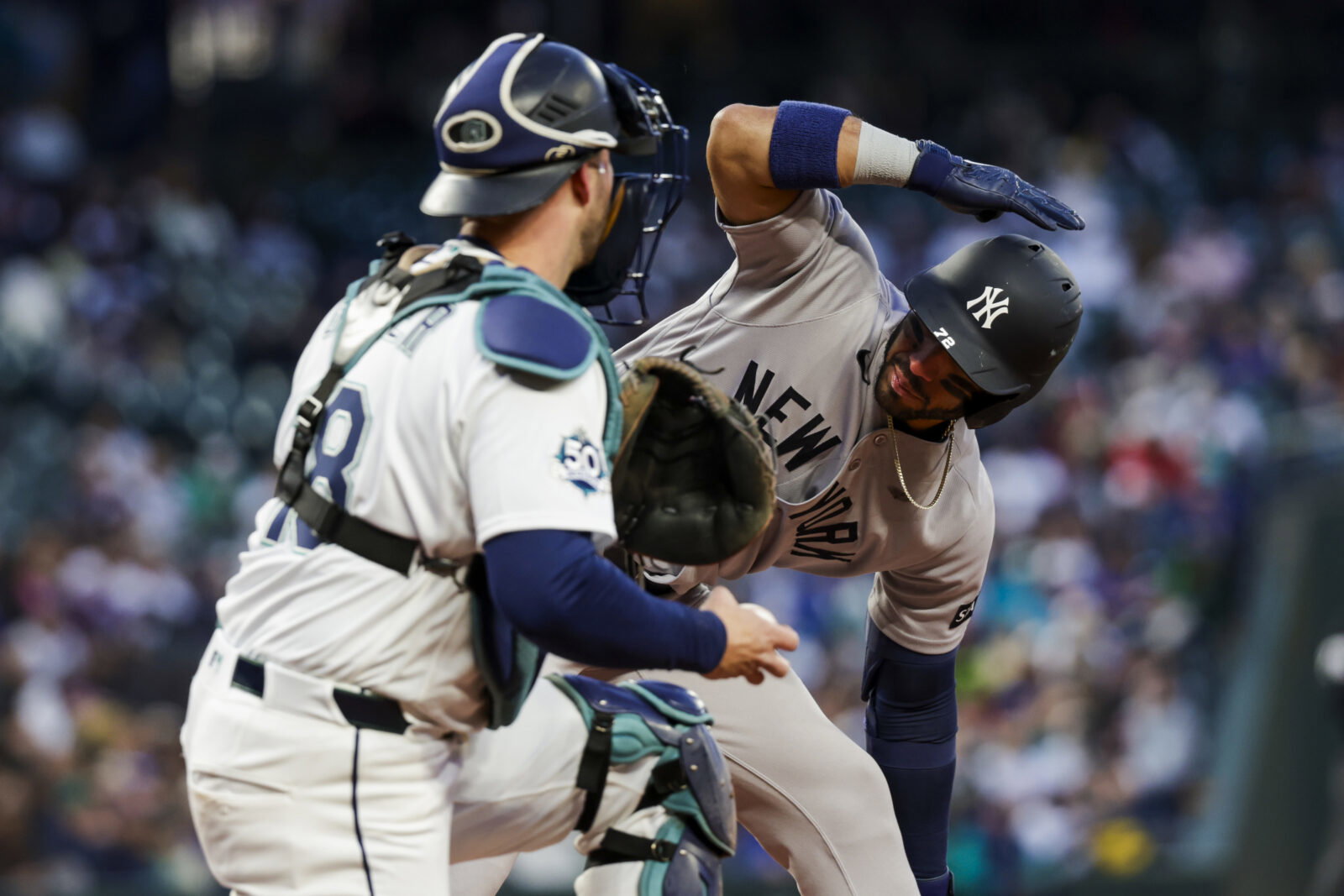
Major League Baseball changed forever last week with the opening act of the Automated-Ball Strike challenge system. Now, for the first time, the pitcher, catcher, or batter can challenge an umpire’s ruling of a ball or strike. Everyone watching can now see if the pitch hit the mathematical strike zone, down to the tenth of an inch.
This is the most prominent change to the sport amid the influx of rule changes over the past couple of years. ABS now tops off a weighty list of the pitch clock, banning the shift, and adding a ghost runner to extra innings in baseball’s recent transformations.
First Challenges
The first challenge took place four innings into the season between the New York Yankees and the San Francisco Giants. New York’s batter Jose Caballero initiated the challenge, but the call ultimately stood.
The first successful ABS challenge came the morning after by New York Mets catcher Francisco Alvarez. He overturned a full count pitch called a ball and amended it into a strikeout.
First Week Statistics
Surprisingly enough, as of the first week (March 25 – April 1), the win percentage of challenges was a close split down the middle at 55%.
Catchers had the most amount of challenges while getting the most correct of the three parties, at nearly 60%. Hitters challenged the second most, but hovered around 50% getting overturned.
Of the 342 total challenges in the first week, 12 came from pitchers. It’s likely that clubhouses are telling pitchers to try to leave challenges up to the catcher, who collectively have the best sense of the strike zone. Pitchers got 41% correct (5/12).
Team Statistics
The Minnesota Twins simultaneously had the most challenges and the most correct, going 16-for-21. However, the Baltimore Orioles had the best overturned percentage at 85%, going 12-for-14.
The Cleveland Guardians landed on the south side of that spectrum, with by far the lowest win percentage at 16%. 11 teams had under a 50% overturn rate, while only five achieved over 70%.
Beyond the Numbers
You’d imagine less, even zero controversy over ball and strike calls would decrease the amount of player and manager ejections. However, a handful of moments – including a managerial ejection over ABS – came from the byproducts of the challenge system.
One of the initial controversies over ABS has nothing to do with the pitches themselves, but the timing between receiving the pitch and engaging the challenge. The rulebook says the player must tap their head immediately after the pitch to enforce the challenge.
In the ninth inning of a two-run game on Sunday between the Twins and Baltimore Orioles, O’s closer Ryn Helsley dropped in a slider that was called for ball four. After his momentum took him off the mound, Helsley steps later tapped his head. A challenge commenced, and resulted in an overturned strike for the punchout. New Minnesota manager Derek Shelton was enraged that the umpires allowed Helsley to challenge it, and was promptly thrown out of the game.
One glaring example of this came in the series finale between the Toronto Blue Jays and Colorado Rockies. Blue Jays’ batter Jesus Sanchez took a called strike three and evidently paused before tapping his head. While this should disqualify a challenge, the umpiring crew at the Rogers Center allowed the dispute, which was eventually overturned by nine-tenths of an inch.
Community Reception
The reception of ABS among baseball fans and players has been generally positive in the first week.
“It’s good for the game to get the big misses out,” Philadelphia Phillies catcher JT Realmuto said. “It creates a little more stress on my night where I’m constantly second-guessing … but overall I like it for the game.”
An MLB fan account on X with close to 20,000 followers, MLB Scoring Changes, claims there’s no losing within ABS. Jomboy Media, a giant within baseball media, titled one of their latest episodes of the Talkin’ Baseball podcast “ABS Challenge System has been AWESOME for MLB”.
The natural drama that comes from an in-person challenge is a fresh, new twist on the sport. While it does inadvertently add a true threat to the purpose of a home plate umpire, that’s a conversation for another day. For now, baseball fans and managers can sit back knowing there’s justice and accountability for every pitch of the game.









Leave a comment