

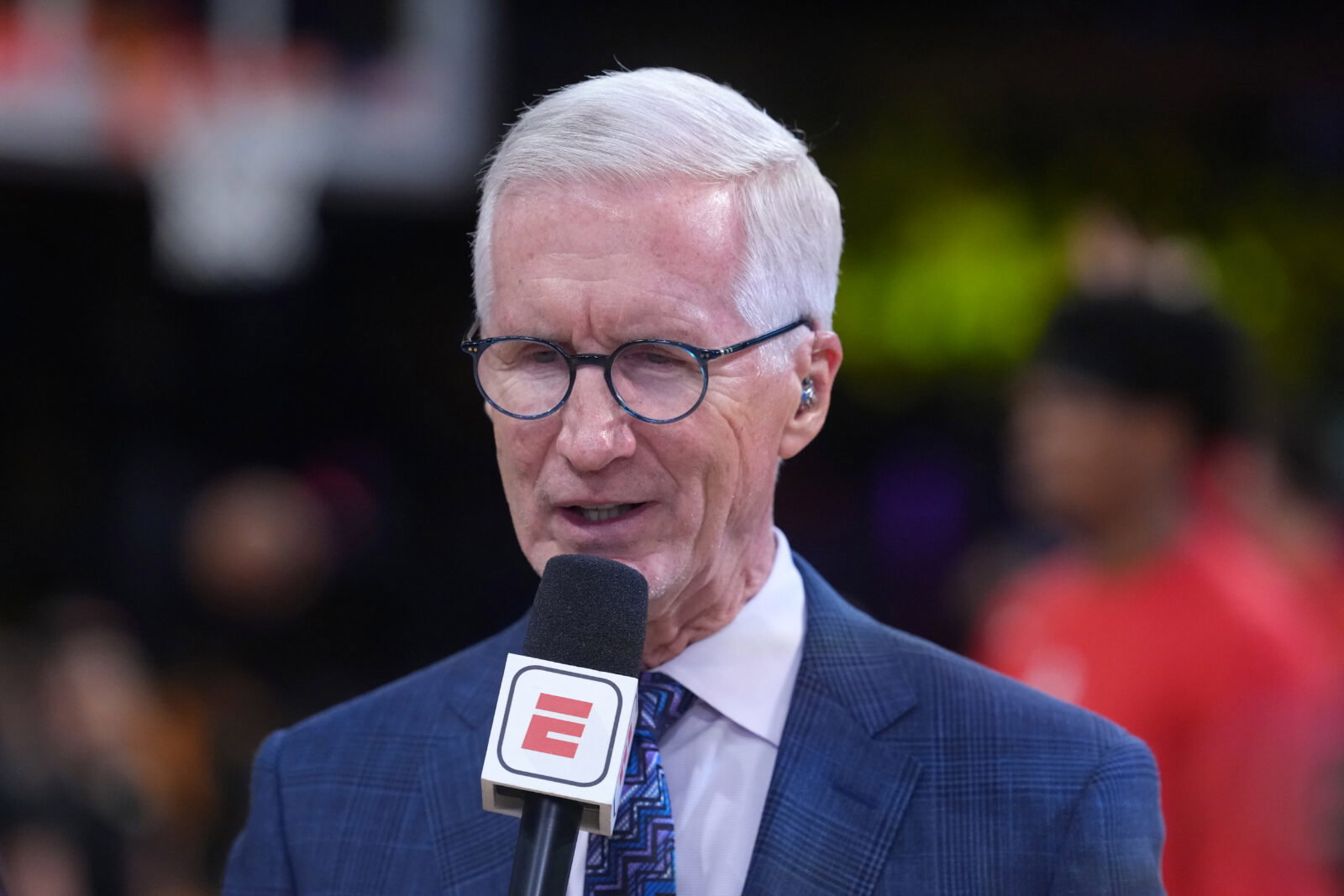
With the NBA playoffs now officially underway, the shift to the first round has brought more than just higher stakes. For fans across the league, it has also meant new voices narrating the action.
In arenas across the league, all postseason coverage is now exclusively led by national broadcasters. The change represents a broader trend. The league is reshaping how it presents its biggest games to a global audience.
The NBA Strikes a Deal
In July of 2024, the NBA announced the renewal of its contract with The Walt Disney Company. In addition to the extension, the league revealed new partnerships with NBCUniversal and Amazon. Beginning in the 2025 season, NBA telecasts were shown across ESPN, Peacock, and Prime Video. This marked the start of the league’s new 11-year, $76 billion deal. The rollout ushers in one of the most significant developments in basketball’s media landscape in years.
“Our new global media agreements with Disney, NBCUniversal, and Amazon will maximize the reach and accessibility of NBA games for fans in the United States and around the world,” said NBA Commissioner Adam Silver in a statement following the deal. “These partners will distribute our content across a wide range of platforms and help transform the fan experience over the next decade.”
The deal focuses on expanding fan access. It also signals a major shift in how audiences will watch the NBA. Games are now spread across a variety of platforms. As a result, there will be a significant reduction in reliance on regional sports networks. For decades, these broadcasts served as one of the primary connections between teams and their local audiences. Now, the league looks to transition towards a more national, streaming-focused model that will bring greater reach but also larger barriers.
As the broadcasts of basketball’s highest league evolve, so too will the voices accompanying them—prompting responses from many of those behind the mic.
The Potentially Final NBA Regional Broadcast
Roughly a year after the deal was struck, the Houston Rockets hosted the Golden State Warriors in a first-round Game 7. Headlined by stars like Jimmy Butler, Alperen Sengun, and Stephen Curry, the game captured the stakes and intensity that define the NBA postseason. It delivered high-stakes in-game drama and as much national spotlight as conceivable.
However, it also carried a storyline with much less attention: the league’s final regional playoff telecast for the foreseeable future.
Craig Ackerman and Bill Worrell Chime In
Rockets play-by-play announcer Craig Ackerman was on the call that night. It was his first and potentially last game seven as the team’s lead announcer. At the time, though, it hadn’t fully crossed his mind.
“I guess I really haven’t thought about the finality in that this is the last chance we’ll ever have to do it,” Ackerman told The Houston Chronicle‘s Greg Rajan before the game. “My colleagues and I, we’ve been talking about this all season long. To me, more or less, the finality with (this game seven) is this is our last show of the season—period. That’s always a little bit sad because you’re doing this and you’re in this mode for six consecutive months, and then all of a sudden, it’s over.”
“I’ve noticed on all these national games, the guys are well prepared, but they don’t see (these teams) play every game. They don’t know how the slumps go or which matchups the Rockets favor,” Worrell told Rajan. “…I think that’s what makes it so much fun—you want your guys calling the game…and I feel bad for our people with the Rockets because I know how hard they work and how hard they prepare.”
That contrast has brought to the forefront what the NBA’s new broadcast era preserves—and what it leaves behind.
Mike Breen Responds Mid-Broadcast
Fast forward to today, and local NBA telecasters are beginning to comment on the situation as the reality of these changes takes shape. Mike Breen, the New York Knicks play-by-play announcer and NBA sound for ESPN, gave his thoughts after the Knicks’ final regular-season game. Speaking to veteran broadcasting partner Walt “Clyde” Frazier, he shared:
“I think, personally, Clyde, it’s a poor decision. Fans want to hear their home team announcers, at least in the first round. For so many of us, they become part of the family,” Breen said. “…But fans deserve to be thrown a bone once in a while in terms of letting the home team have a little bit of the first round.”
As the conversation continued, Breen’s focus shifted from critique to reflection. Acknowledging the weight of what these changes could mean for the future as the season nears its end, he continued:
“Somehow, if there’s any way they can work out some kind of compromise,” Breen said. “I’m not hopeful for that, but it would be wonderful to have it because this is our final telecast of the season.”
Marc Zumoff Acknowledges Both Sides
From a fan’s perspective, the value of local broadcasting often can come down to familiarity. This sense of continuity can, in many cases, help a fan connect with a team’s defining moments. Former longtime Philadelphia 76ers play-by-play announcer Marc Zumoff offered his thoughts. He highlighted the connection between announcers and audiences, particularly how fans digest regional coverage.
“We enjoy it because we know that the broadcasters are telling the story of our team from our point of view,” Zumoff said. “And I think, because of that, we want to continue to hear them. And when we don’t, it becomes discombobulating.”
Zumoff also reflected on how that familiarity extended into the postseason. Fans could tune into their local voices leading up to and during the big games. For networks and announcers alike, it also marked a transition. Coverage pivoted to the national system, passing the torch elsewhere as the postseason advanced.
“I always thought that the playoff games were the reward for experiencing a full season, which, while a privilege to do, could be arduous at times,” Zumoff said. “…I think our fans liked it as well, because I think predominantly they liked the local broadcast.”
However, Zumoff also acknowledged the league’s perspective and the broader considerations that influenced the decision.
“Still, I would be foolish to try to be righteous about this,” Zumoff said. “That’s what the NBA is. It is still a business, and the owners are in it to, among other things, maximize profits where they can, and they’re doing what they have to do.”
What Happens Now?
The perspectives of these former broadcasters reflect the variety of angles on the evolving landscape of NBA broadcasting. Media rights will continue to change. The structure of how games are both called and watched will shift alongside them. This balance—one between fan familiarity and national reach—will continue to shape broadcasts as the league moves forward.








Leave a comment