

Every season, NFL fans circle back to the same argument: who actually deserves the MVP?
The conversation starts in training camp and runs until the votes are in. Stats pile up, teams surge or slide, and “valuable” starts meaning something different depending on whose narrative fits best for fans, pundits, and roster builders.
Stick with it long enough, and the patterns get easy to spot.
How NFL MVP Voting Has Evolved
The Associated Press first awarded the MVP in 1957. Today, a panel of 50 media members who regularly cover the league votes before the playoffs begin. Since the 2022 season, each voter ranks a top five instead of picking a single winner. A first-place vote is worth 10 points, and second through fifth are worth 5, 3, 2 and 1. That change means a candidate can win without the most first-place votes, and a strong second-place showing across many ballots now carries real weight.
In the 1960s and 1970s, running backs won the award far more often than they do today. Walter Payton won it. O.J. Simpson did too, and so did Earl Campbell. Quarterbacks like Johnny Unitas and Bart Starr won their share as well, but the run-first era gave backs a legitimate path to the trophy, since offenses were built around the run far more than they are now (full list of AP MVP winners).
The league tilted toward the pass in the 1980s and 1990s. Rule changes opened up space, quarterbacks threw more often, and the award soon followed. Since 2000, quarterbacks have won all but four times: Marshall Faulk (2000), Shaun Alexander (2005), LaDainian Tomlinson (2006), and Adrian Peterson (2012). Quarterbacks touch the ball far too often for voters to look away.
Why Quarterbacks Dominate the Award
A running back might get 20 carries. A receiver may see six or seven targets. The quarterback is involved in every offensive snap, reading the defense and distributing the ball, and that volume makes it hard for any other position to keep up.
Patrick Mahomes’ 2018 season is a clear example: 50 touchdowns and 5,097 yards. Put that next to even a great non-quarterback season and the difference is obvious.
Voters also connect team success directly to the quarterback. Lamar Jackson led Baltimore to a 14-2 record in 2019 and won unanimously, which shows how tightly quarterback play and team record are tied in this race.
The Importance of Team Success
Big individual numbers only go so far if the team finishes mid-pack. MVP winners almost always come from teams near the top of the standings. In most seasons, that means double-digit wins and a real playoff résumé.
Even elite numbers on a good team aren’t always enough if someone else’s team is better. In 2011, Drew Brees threw for a then-record 5,476 yards and 46 touchdowns while leading New Orleans to 13-3. He received just two of 50 votes. Aaron Rodgers took the other 48 after leading Green Bay to a 15-1 record.
Statistics vs. Narrative in MVP Races
A stat line alone usually isn’t enough. A quarterback who throws 40 touchdowns while lifting his team from 8-8 to 13-3 often has the cleaner argument than someone who throws 42 on a roster that was already loaded.
Dominance helps, too. Rodgers’ 2011 season came on the heels of a Super Bowl title, and his 45 touchdowns against only six interceptions on a team that nearly went unbeaten made him an easy choice.
Moments voters remember without checking a spreadsheet also matter. A late game-winning drive in primetime stays with people longer than three solid early-afternoon games in September. Tom Brady’s 2007 season had the undefeated regular-season storyline attached, which made those 50 touchdown passes feel even bigger.
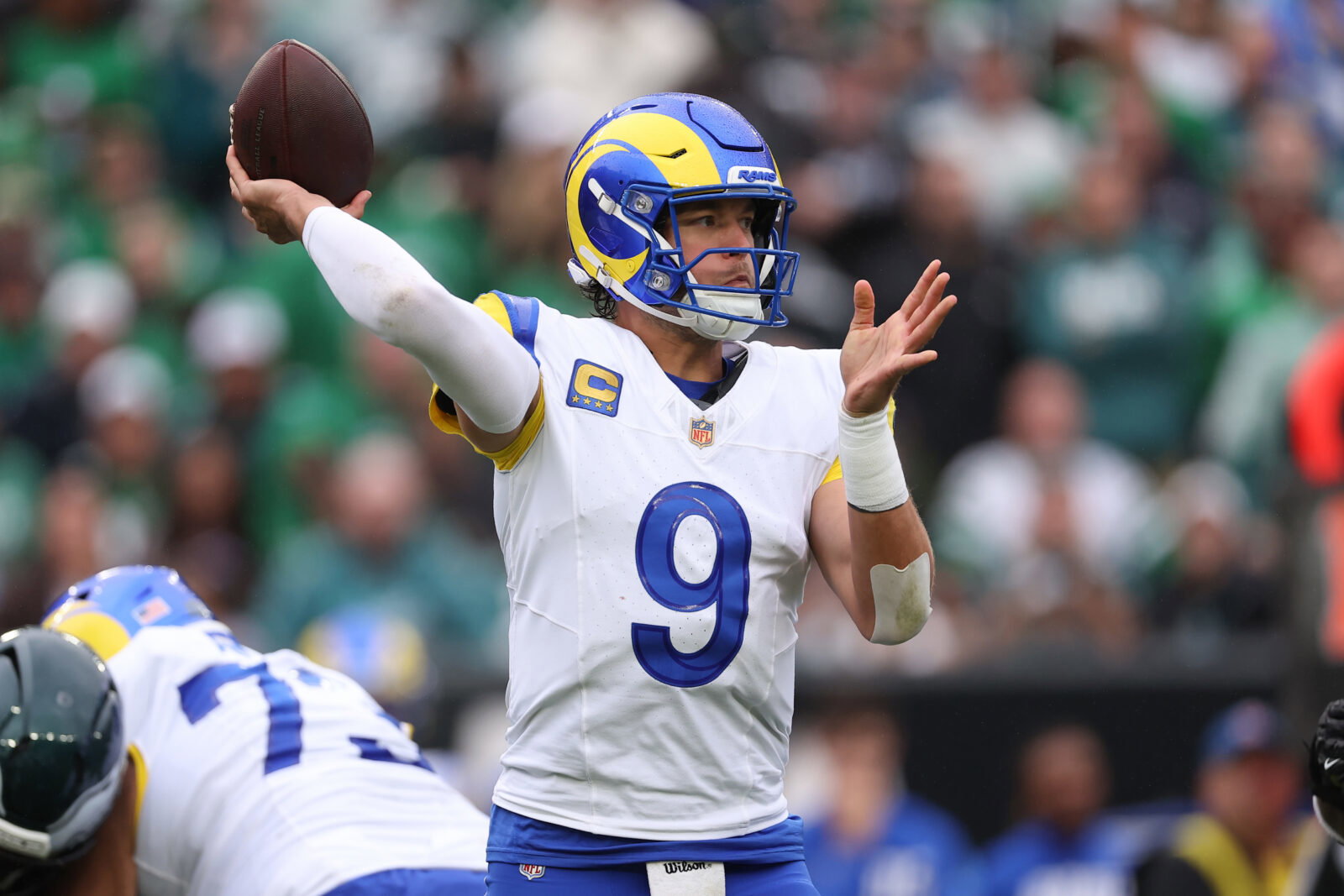
Case Study: Matthew Stafford, 2011 vs. 2025
Few players show how much context shapes an MVP case better than Matthew Stafford. In 2011, he threw for 5,038 yards and led Detroit to a 10-6 record and its first playoff berth in 12 years. He was named Comeback Player of the Year, but he didn’t receive a single MVP vote.
Fourteen years later, Stafford won the 2025 award with the Rams after leading the league with 4,707 passing yards and 46 touchdowns against just eight interceptions. His yardage was lower than in 2011, but the efficiency, the team context, and the veteran storyline all lined up.
It was also the clearest example yet of why the ranked ballot matters. Stafford edged Drake Maye 366 points to 361, the closest MVP vote since 2003. He had 24 first-place votes to Maye’s 23, so the race was effectively decided by how voters filled out the rest of their ballots.
Which Metrics Best Predict MVP Seasons
For quarterbacks, touchdown-to-interception ratio works as shorthand for efficiency and ball security. Voters tend to value that balance as much as raw volume. A passer with 35 touchdowns and five interceptions will usually finish ahead of one with 40 touchdowns and 15 picks.
A few other stats, along with the sports data that helps explain them, often line up with MVP-type seasons:
- Yards per attempt (Y/A): Measures how many yards a quarterback gains per throw, not just total yardage.
- Rushing impact (for dual-threat QBs): Quarterbacks who hurt defenses with their legs change games in ways that don’t always show up in passing totals.
- Win probability added (WPA): Measures how much a player’s plays raised or lowered his team’s chances of winning, usually totaled across a full season.
Running backs usually need both heavy volume and strong efficiency to get serious attention, and almost always need a team near the top of the standings. Adrian Peterson’s 2012 season (2,097 rushing yards at 6.0 yards per carry) remains the modern example of a non-quarterback season too big to dismiss.
What Fans Should Watch as the Season Unfolds
Preseason favorites rarely stay in front the whole way. Injuries happen, schedules get tougher, and a hot September can look different once defenses adjust in October and November.
A few signals come up repeatedly when separating candidates:
- Timing of performance: December usually carries more weight than September.
- Head-to-head matchups: When two contenders meet late in the season, the winner often gets a noticeable push in the discussion.
- Division-clinching games: Big stat lines that seal a title or playoff berth leave a stronger impression than the same numbers in a low-stakes finale.
To see how the MVP race evolves throughout the season, track how candidates move as new results come in. That gives the clearest picture.
Summing the Modern MVP Race Up
Most modern MVP races narrow to three main ingredients: elite quarterback play, a team record that points to real contention, and a story voters can explain quickly. The numbers matter. So do the games people remember in December.
Once you know what moves voters, you can spot seasons building a real MVP case and separate them from the ones that only look impressive in the box score. Votes go to the Most Valuable Player, not just the Best Statistical Performer.









Leave a comment