

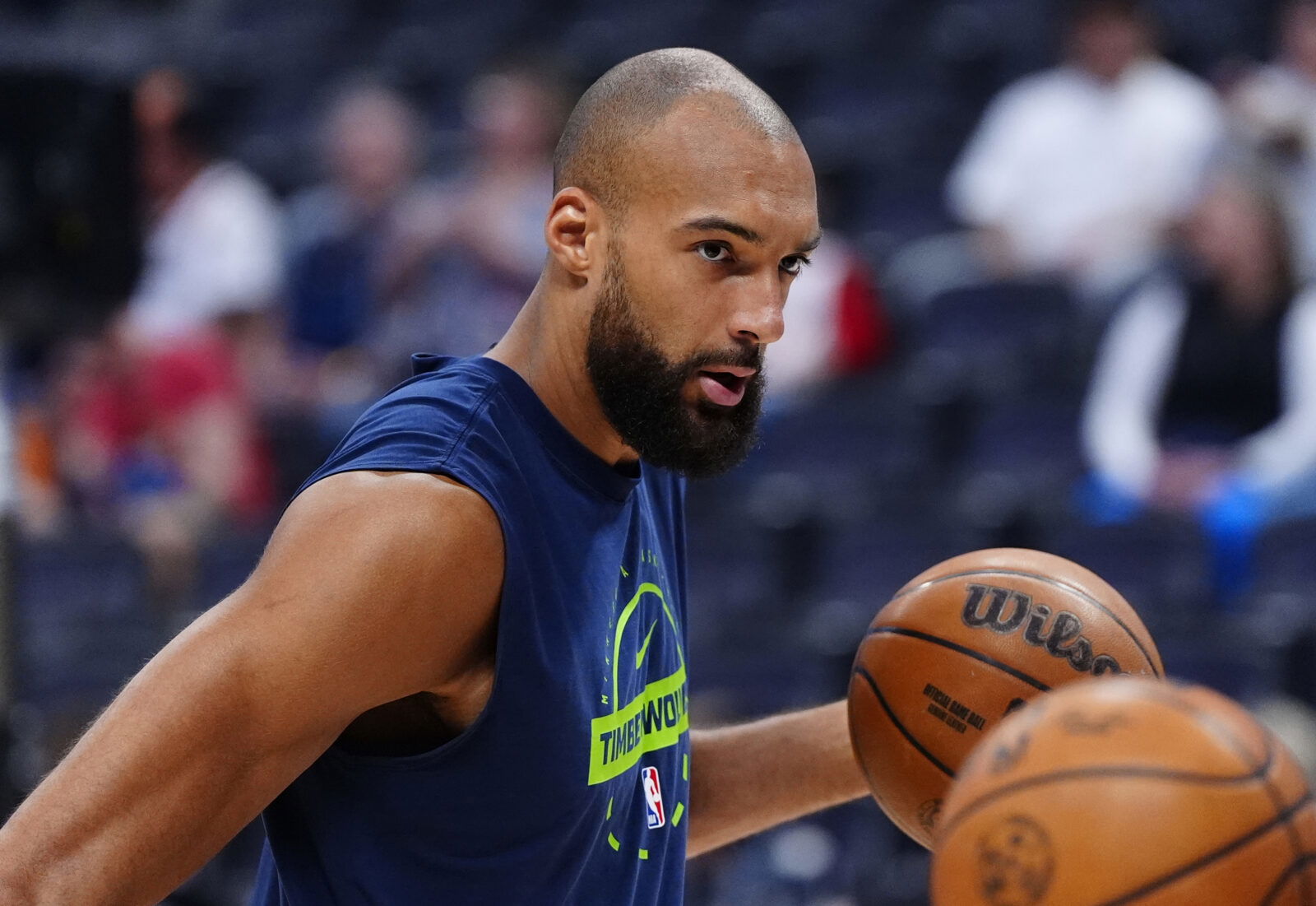
Although the Rudy Gobert trade on July 6, 2022, may have achieved its initial goal in the short term, the Minnesota Timberwolves are now experiencing a sharp decline in productivity from the 7’1” French center.
The trade sent Patrick Beverley, Malik Beasley, Jarred Vanderbilt, Leandro Bolmaro, Walker Kessler (draft rights), and unprotected first-round picks from 2023, 2025, 2027, 2029, along with a 2026 pick swap to Utah in exchange for “The Stifle Tower.” In the short term, the trade was successful — Rudy won the Defensive Player of the Year award in 2023-24, and the Wolves reached the Western Conference Finals in the 2024-25 season.
However, he has not been a DPOY candidate since, and the Wolves are starting to pay a heavy price for it.
The Primary Positive of the Trade
When Tim Connelly executed what is widely regarded as one of the biggest trades in NBA history, the trade market was immediately thrown into chaos. The deal successfully increased the value of other star players in the league.
This essentially marked the end of the “Big Three” era in the NBA. Teams seeking big-name stars suddenly lacked enough assets to make such deals, and GMs around the league had to become more creative.
Today, the league is characterized by parity, and most NBA fans are content.
The Money Problem—And Where It Gets Messy
After the 2024-25 season ended, Minnesota faced a significant financial challenge. They had previously given beloved big man Karl-Anthony Towns a supermax contract extension. The contract, which had a cap hit of about $49.2M in 2024-25, was clearly player-friendly. KAT’s salary rose to $53.1M in 2025-26, $57M in 2026-27, and included a $61M player option for 2027-28. For a small-market team like the Wolves, that’s nearly impossible to manage.
This explains the reasoning behind the three-team trade on October 2, 2024, that sent KAT to the New York Knicks. The deal brought three-time All-Star Julius Randle and Donte DiVincenzo to Minnesota, along with a protected 2025 first-round pick via Detroit. The Charlotte Hornets participated in the draft compensation. The Wolves cleared cap space and avoided the costly second apron of the luxury tax.
While the financial wizardry has positioned Minnesota for long-term flexibility, the current roster around Gobert needs pace in transition. It’s clearly one of Rudy’s biggest weaknesses. As shown in the recent playoff series, the French center has been heavily exploited. His limited rotational ability and poor lateral movement are obvious.
With the promising recent additions of Joan Beringer and Rocco Zikarsky via the 2025 NBA Draft, the Wolves no longer desperately need defensive big men. They still lack the offensive firepower that Towns provides, which Rudy cannot match.
The Offensive Nightmare
Gobert often finds himself in unfamiliar territory within the Wolves’ offense. With Rudy on the court, Minnesota’s ball movement slows considerably. Spacing issues become apparent, and often he doesn’t even make it back to the offensive end. Recently, he’s been falling into obscurity, frequently positioned on the perimeter of offense.
Additionally, he’s had trouble securing the ball and finishing putbacks and dunks. Keep in mind, he’s 7’1.
Although Wolves fans have greatly appreciated his defensive presence in recent years, the fun is ending quickly. His defensive aura appears to be diminishing. With his “battle buddy,” Mike Conley, likely in his final season in Minnesota, it’s natural to wonder if this will be Gobert’s last as well.
His plus/minus stats over the past three games have been terrible: -13 against Orlando, -11 versus the Los Angeles Lakers, and most recently -38 in another blowout loss to the LA Clippers. Yes, you read that right, -38! To make matters worse, he finished with ZERO field goal attempts in 27 minutes against the Lakers.
Change is Imminent
To be blunt, Gobert no longer fits on this Timberwolves roster. It will be interesting to see what Tim Connelly plans to do this offseason to make major changes. One thing is certain: performances like these won’t last long if the Wolves GM has anything to do with it.
Based on his October 2024 extension, Rudy Gobert has a $35 million cap hit for the 2025-26 season. By declining his original $46.6M player option to sign this new 3-year, $109.5M deal, he significantly reduced his immediate cap figure for the Timberwolves. This could turn out to be a blessing in disguise if they choose to release him outright. If they can find a trade partner for Gobert after this season, it would be a real miracle. After all, in Tim we trust.











Leave a comment