

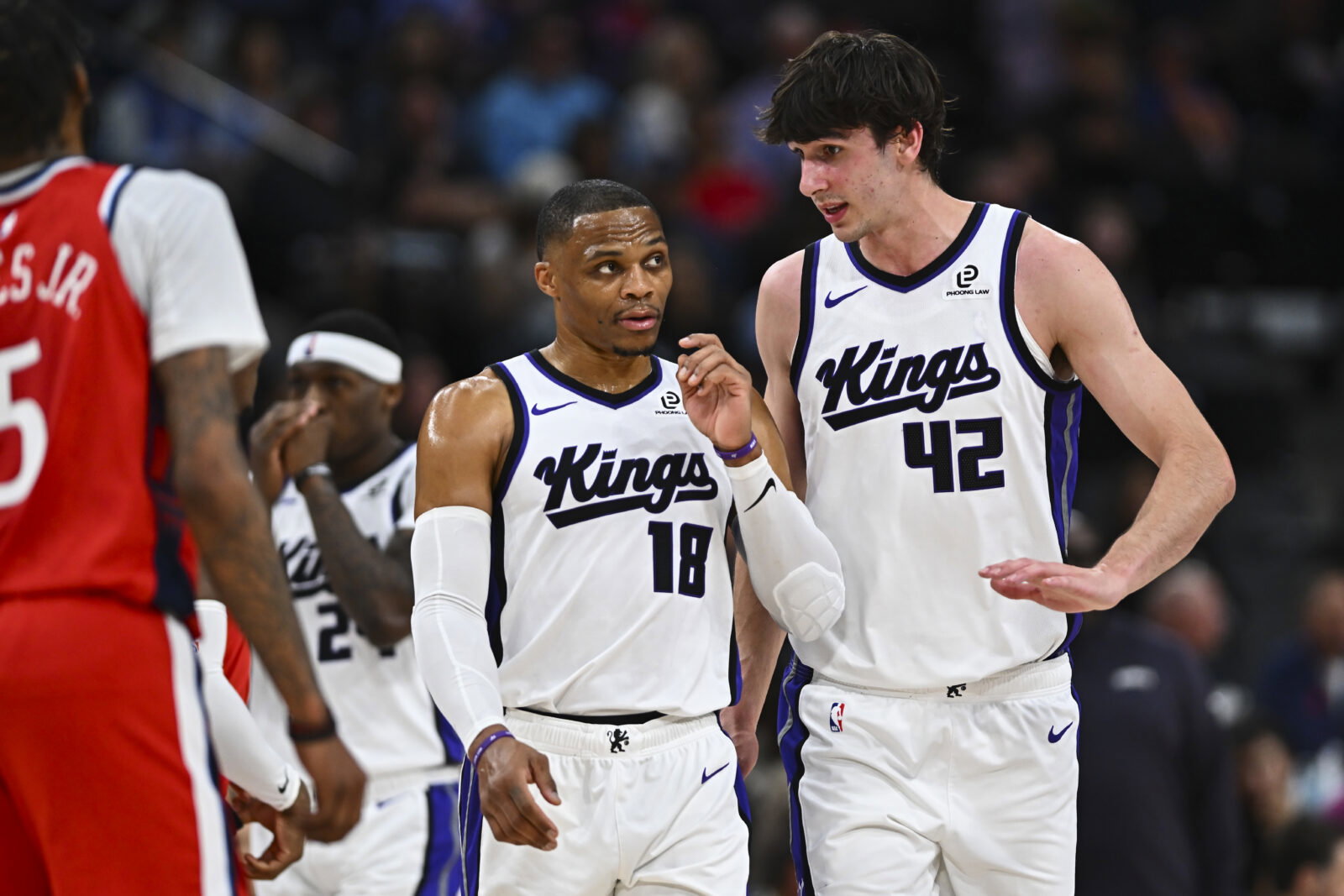
Russell Westbrook is no longer the player he once was, but his value to the Sacramento Kings goes beyond star-level production.
In a season where Sacramento has struggled to find consistency, Westbrook provided steady play, energy, and experience. As the Kings look ahead to next season, his presence could offer something just as important as production: stability.
Visit the SimpCity community portal today for tech, sports & forum discussions.
Still Productive in a Smaller Role
Westbrook’s numbers show a player who has adapted.
In 64 games this season, he averaged 15.2 points, 5.4 rebounds, and 6.7 assists. He also shot 42.7 percent from the field and 33.8 percent from three. While those numbers fall below his career averages, they reflect a more controlled role that is critical for a team’s success.
His efficiency has also improved in certain areas. A 50.3 effective field goal percentage reflects better shot selection and a willingness to adjust his game.
Westbrook may not dominate possessions the way he once did, but he still contributes as a playmaker and secondary option.
A Valuable Veteran Presence
The most important part of Westbrook’s case may not show up in the box score.
For a team with developing talent, experience matters. Westbrook brings leadership and an understanding of the league that younger players can benefit from. His ability to set the tone with effort and intensity remains consistent. That approach can influence a roster that has struggled with dependability.
That impact is already visible with younger players on the roster.
Russell Westbrook says he’s supportive of rookie center Dylan Cardwell‘s energy that he brings on the floor:
“I told him it’s important to stay true to who you are. I’m loving how he’s impacting the game in a variety of ways. It’s good for our team.”
Moments like that highlight the role Westbrook can play beyond production. His willingness to guide younger players like Cardwell, Devin Carter, Nique Clifford, and Maxime Raynaud reinforces their strengths and adds value that goes beyond numbers.
Sacramento’s future could include adding another young guard in this loaded 2026 NBA Draft class. In that scenario, Westbrook’s role becomes even more valuable. Rather than being asked to carry an offense, he can serve as a mentor, helping guide a younger player through the transition to the NBA.
That type of presence is difficult to replace, especially at a low cost.
The Financial Reality
The Kings will likely pay $200 million next season, which makes flexibility a priority.
Re-signing Westbrook only becomes realistic if Sacramento can get under the first apron, but if that happens, a veteran minimum deal presents a low-risk option.
At that price, the Kings avoid committing significant resources while adding experience and depth.
The Case for Bringing Him Back
Bringing back Westbrook would not be about recreating his prime years.
It would be about adding a veteran who can still contribute on the court while helping shape a younger roster off of it. Westbrook himself has expressed openness to returning, saying, “If I’m welcome back, then I’ll be back,” a statement that reflects both his willingness and the simplicity of the decision.
For a team balancing development with financial constraints, that combination holds real value.
Westbrook’s role may be different now, but for Sacramento, it could be exactly what the team needs.











Leave a comment