

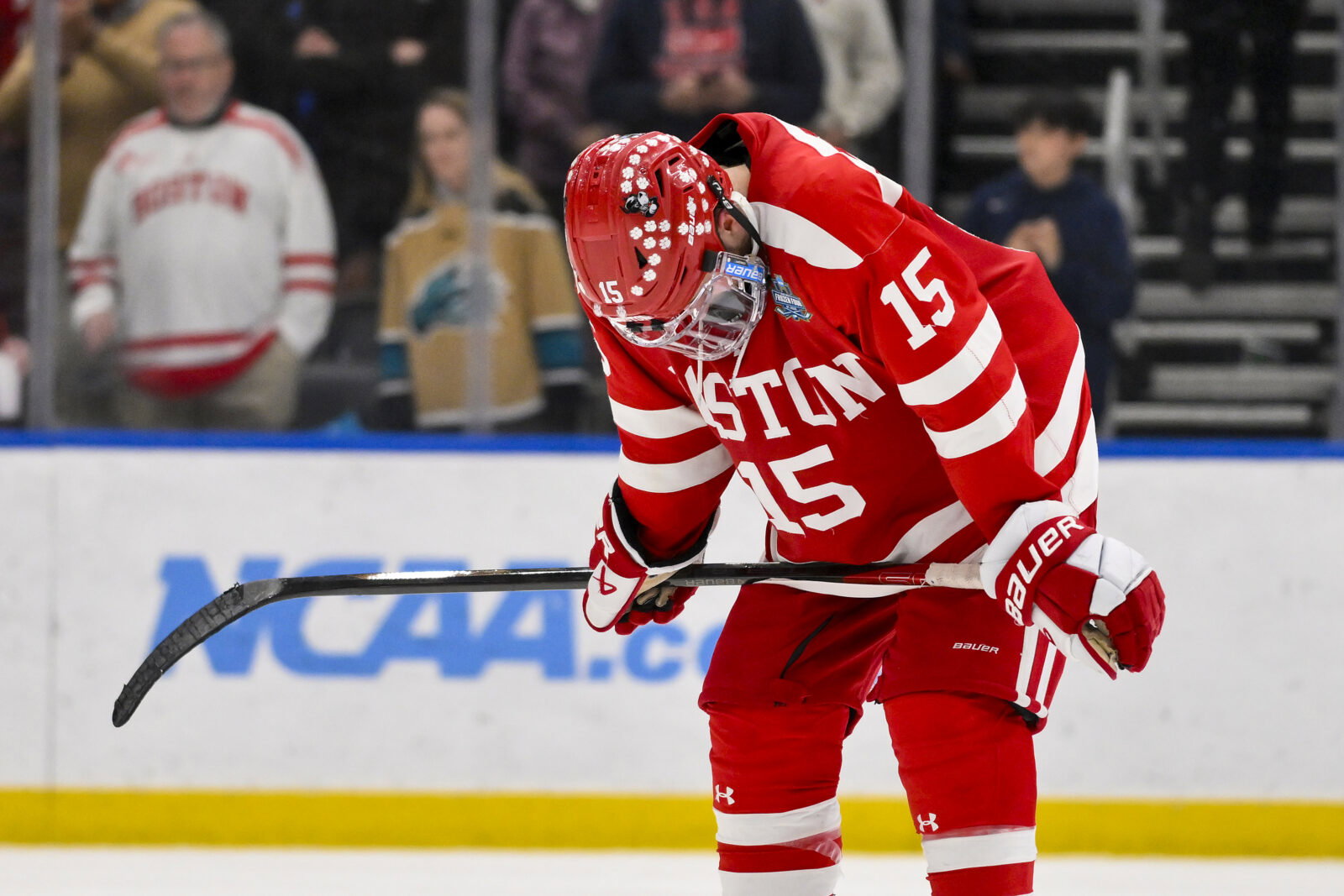
The NCAA is limiting college hockey.
The reality is that the sport is growing more now than ever due to the talent and the international spotlight. At the same time, the landscape of college sports is positioning hockey to become a much more prominent figure in the sporting world.
With that in mind, the NCAA needs to implement changes. This begins with hosting the NCAA hockey tournament on college campuses rather than at neutral-site locations.
Why College Hockey Is Booming
College hockey has experienced more changes than any other college sport in the past year. Previously, CHL players were ineligible for the NCAA because they received payment. Now with NIL, that rule has been eliminated.
Top prospects are now eligible to play in the NCAA. The Sporting News predicts that three of the top five picks in the 2026 NHL draft will be players from the NCAA. This has only happened once before, in 2021. It’s now the most exciting time of the year for college hockey. However, in what was its most critical postseason so far, the NCAA has fallen notably short.
Why This Tournament Has Been a Failure
The issue isn’t just that the NCAA hasn’t promoted its stars at all. The bigger problem is that they are detracting from what makes hockey special—the playoff atmosphere. The NCAA weakens any big-game vibe by choosing regional venues instead of campus sites.
Let’s examine the host sites overall. Albany, NY; Worcester, MA; Sioux Falls, SD; and Loveland, CO were the four host venues. Here are the top seeds at each location in order: Michigan, Michigan State, North Dakota, and Western Michigan. The only team with a slight geographic edge of being near home is North Dakota. Even then, it’s a four-hour drive from their campus to Sioux Falls.
If the NCAA is using these neutral sites to create an even playing field, it isn’t working. Travel between teams is highly inconsistent, and top seeds get little to no advantage. No team faced a worse situation than Western Michigan in this regard. The Broncos had to travel to Colorado for altitude—and then faced Denver in a regional final just about on their doorstep. It doesn’t add up.
Attendance Is Alarming
The data indicate that these venues aren’t effective. The most attended game of the four regional finals was the North Dakota vs. Quinnipiac matchup at the Denny Sanford Premier Center in Sioux Falls, with 6,209 in-person spectators, which ranks among the top 10 in NCAA averages. Despite this decent turnout, that number is still over 5000 less than North Dakota’s average at their home arena.
The Michigan State–Wisconsin game, featuring two Big Ten schools, drew the smallest crowd of the four matchups. With just over 33,700 in attendance at the Frozen Four qualifier, it lagged behind their January game in Wisconsin, which attracted more than 12,000 fans. In a must-win game with a spot in the national semifinals at stake, the NCAA still scheduled the game 13 hours away from the nearest campus.
It doesn’t get any better when you look at the third matchup. It’s between two college hockey powerhouses in Michigan and Minnesota Duluth. Despite featuring some of the biggest brands in the game, the game is played in a more-than-half-empty arena in Albany.
The Top Seeds Deserve an Advantage
Passion is the foundation of college athletics. Just imagine what the atmosphere inside Yost Ice Arena would have been like for a top-six matchup between Michigan and Duluth. If the NCAA justifies these neutral-site games by claiming they don’t give either team an advantage, then why did the defending national champions have to compete in a hostile environment in Colorado? Even though they were not the top seed, Denver still received every advantage going into the game.
That’s why now is the perfect time for the NCAA to move these games to on-campus venues. College hockey isn’t comparable to football or basketball; the college football playoff and March Madness will attract viewers regardless of where they’re held. College hockey thrives on the intense atmosphere created by a home student section during its most critical moments.
It’s what makes playoff hockey truly special: home ice advantage. The top-seeded teams deserve the right to compete in front of their home crowd with a trip to the Frozen Four on the line. It’s up to the NCAA to elevate college hockey by doing right by both the players and fans of the teams. Host games on campus.












Leave a comment