

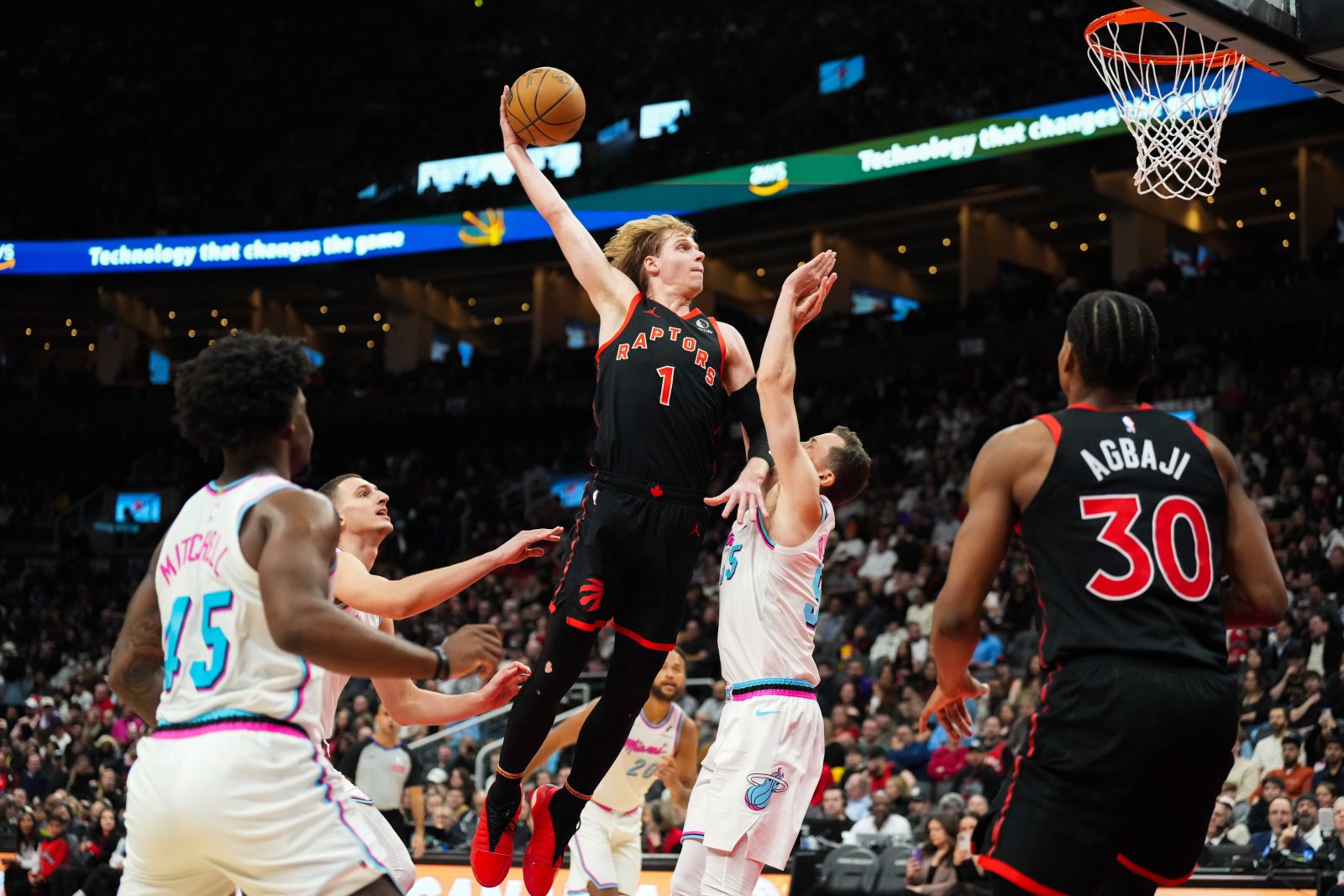
The Toronto Raptors face a familiar crossroads: how to climb back into playoff relevance without intentionally gutting the roster to lose games and chase a top draft pick.
The Raptors have leaned on an unconventional playbook, one that mixes targeted trades, internal development via Raptors 905, and selective veteran additions. The club believes its approach can return the Raptors to contention faster and with less franchise damage than a full teardown.
Below is a detailed look at how Toronto is trying to thread that needle, and how it compares with classic “tear-it-down” rebuilds such as Oklahoma City and Houston.
The Core Idea — Develop Talent, Keep Competing
Rather than gut the roster for lottery odds, Toronto has emphasized player development and controlled asset management. The organization keeps young players in the rotation, uses its G League affiliate as an extension of the NBA staff, and adds veteran pieces when they fit, avoiding long multi-year selloffs that leave fans watching losses for years.
Their philosophy depends on two pillars: a functioning development pipeline and front-office patience to let prospects grow. Evidence of the approach, and why the team favors it, appears repeatedly in reporting on the Raptors’ use of Raptors 905 and public comments from team leadership. An article from 2019 titled “The Raptors are using their G League team like a European soccer club, and it’s working” describes it perfectly.
Raptors 905 — The Organization’s Laboratory
Toronto uses Raptors 905 as more than a place to stash fringe NBA players. The G League team operates like a true secondary squad, where prospects get defined roles, more minutes, and repeatable coaching plans designed to address specific weaknesses (shooting mechanics, pick-and-roll reads, on-ball defense).
Their methods produced core contributors for Toronto’s 2019 title team, including Pascal Siakam, Fred VanVleet and Norman Powell, and continue to supply rotation players today. Recent assignments (for development rather than punishment) and structured minutes show the front office’s continued faith in the 905 model.
Practical examples this cycle include Gradey Dick, Ja’Kobe Walter, and Jamal Shead’s G-League stints, which helped the young prospects build confidence through late-season reps and minutes.
Raptors media members have talked about Gradey Dick‘s growth during his sophomore season, showing how the Raptors’ development pipeline is playing a huge role in his career..
Targeted Asset Moves, Not Wholesale
Toronto’s roster moves have avoided mass asset dumping.
Instead, the club has pursued targeted trades that try to upgrade the roster without mortgaging the long term. We saw that just last deadline when the Raptors acquired Brandon Ingram for quite the bargain. Front-office decisions have balanced short-term competitiveness and longer-term control of picks and young players.
Recent coverage also indicates internal continuity in basketball ops, as GM Bobby Webster has taken on expanded duties — a sign the organization wants one coherent long-term plan rather than repeated directional shifts.

That differs from classic teardown examples, where teams intentionally clear salary and playing time to accumulate draft assets. Toronto’s approach keeps pieces who can help now while giving prospects time to develop into larger roles.
Why Full Teardowns Work — and the Costs
Teams that endure deep rebuilds typically accept several losing seasons to accumulate draft capital, then spend those picks (and cap space) to assemble stars.
The Thunder are the best example of this method.
Oklahoma City’s post-Paul George strategy provided a template; the Thunder leveraged multiple future firsts and draft flexibility to acquire young building blocks (including the Shai Gilgeous-Alexander era path) and eventually convert those assets into a legitimate contender. The Thunder’s model shows how a high inventory of picks and draft flexibility can produce a rapid ascendancy once the right pieces emerge.
Why Toronto Took the Other Road
Full teardowns have clear upside but also clear costs: prolonged losing, development in an intentionally bleak environment, and uncertainty about draft outcomes. Toronto’s hybrid plan reduces those costs.
Keeping competitive players on the roster preserves culture and development habits and makes it easier to attract complementary veterans who keep fans engaged. It also reduces the risk of draft busts derailing a multi-year plan.
That said, the hybrid approach requires excellent scouting, a high-functioning G League program (Toronto 905 has been perfect), and disciplined contract management. Missed evaluations (injuries, players who plateau) can leave a middling roster stuck on the precipice of contention.
Injuries and Youth
The Raptors’ strategy still faces headwinds. Rookie center Ulrich Chomche suffered a season-ending MCL injury after promising 905 minutes, a setback for Toronto’s depth and a reminder that development paths are fragile.
Reuters and other outlets reported Chomche’s injury and the timeline for his rehab, which pushed more responsibility onto other young wings and rotation players.
https://twitter.com/nbagleague/status/1952766632444477886
At the same time, Gradey Dick’s improvement into a reliable scoring option — punctuated by G League work and rising-stars recognition — shows the upside when the system works. Those mixed signals encapsulate the hybrid strategy’s risk/reward profile: success means under-the-radar contributors emerge; failure means the team lacks the elite draft assets to pivot quickly.
What to Watch This Offseason and Next Year
Bobby Webster’s consolidation of duties suggests Toronto wants a consistent plan; any public shifts in personnel or strategy would signal a move toward a deeper teardown.
The team must also show it can upgrade without trading away its core. Any high-priced, long-term swap of picks for veterans would indicate a different strategy than what they’ve been sticking with recently.
Injury recoveries and two-way development will continue to be critical. The timeline for Chomche and the growth of guys like Dick or Walter will affect Toronto’s competitive ceiling.
Bottom Line
Toronto’s alternative to tanking is deliberate and identity-driven. They use Raptors 905 as a development engine, make targeted trades, and keep a contending culture intact.
That path avoids the fan-unfriendly stretch of multi-year losing and has preserved the chance to surprise in a wide-open Eastern Conference. The tradeoff is less draft capital and higher reliance on scouting and coaching.
If the 905 keeps producing rotation pieces and the front office continues to find value without surrendering the future, Toronto’s hybrid rebuild could be a sustainable way back to contention, and a model other mid-market teams might study.










Leave a comment