

The Timberwolves are off to a lackluster start.
After seven games, they’re 4-3 and rank 7th in the Western Conference. At times, they’ve looked like one of the top teams in the league, a legitimate championship contender. On other occasions, they’ve seemed unfocused and disjointed.
While it’s still early—less than 10% of the season has been played—some concerning trends have emerged. A bit of a slow start was expected, especially with Donte DiVincenzo‘s and Julius Randle‘s late additions. Though DiVincenzo has struggled with his three-point shooting and Randle is still adjusting to his role, their integration into the Timberwolves’ rotation hasn’t been the primary cause of the team’s struggles.
The Timberwolves’ struggles to start the season can be attributed to turnovers, poor rebounding, and a lack of defensive intensity.
Turnovers
The Timberwolves have lost the turnover battle in each of their first seven games. They’ve committed more than 13 turnovers in each game, placing them among the worst teams in the league. The Timberwolves turn the ball over on 16% of their possessions, ranking 23rd in the NBA.
While the additions of Julius Randle and Donte DiVincenzo have contributed to the turnover issues (both are frequently involved in errant passes) this problem goes beyond their addition. As the team builds chemistry and integrates these new pieces, the turnover problem should improve. That being said, turnovers have been an ongoing issue for the Timberwolves for years. They’ve ranked in the bottom half of the NBA in turnover percentage for the past five seasons, so this is far from a new problem.
What sets this season apart, however, is that in previous years the team’s defense would create turnovers, allowing them to finish in the top 10 in defensive turnover percentage. This, to a degree, softened the impact of the turnover issue. This year, however, they rank just 23rd in that category.
The turnover issue can no longer be chalked up to a young roster—Anthony Edwards and Jaden McDaniels are both in their fifth seasons and are the two youngest regulars in the rotation. If the Timberwolves are serious about contending for an NBA title in June, they’ll need to clean up their turnover differential and at least become league-average in that department.
Rebounding
Rebounding—especially defensive rebounding—has been another issue for the Timberwolves to start the season. While they aren’t consistently losing the overall rebounding battle, the number of offensive rebounds they’re allowing is concerning and unsustainable.
In four of their first seven games, the Timberwolves have either allowed 10 or more offensive rebounds or been out-rebounded altogether. These second-chance opportunities provide momentum for opposing teams and deflate the Timberwolves’ energy.
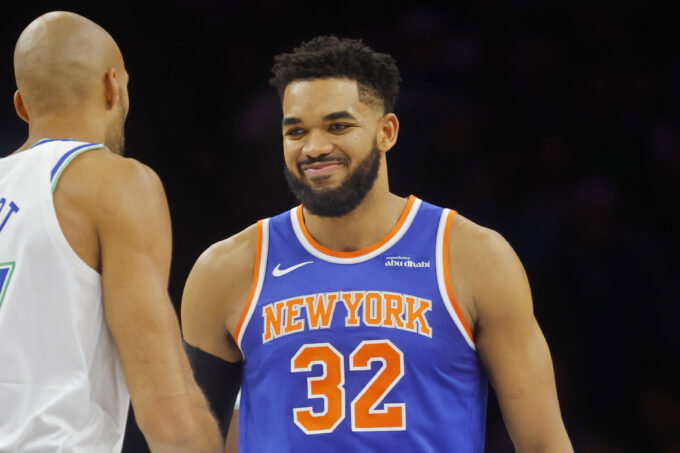
The departure of Karl-Anthony Towns in a trade this offseason is certainly a factor. His size and length made him an excellent rebounder. While Julius Randle is a solid rebounder in his own right, he’s a smaller player and less capable of dominating the boards. To compensate for this gap, head coach Chris Finch will need to encourage perimeter players like Anthony Edwards, Jaden McDaniels, and Nickeil Alexander-Walker to put more effort into crashing the boards on the defensive end.
Defensive Intensity
Last season, the Timberwolves’ defense was the best in the NBA.
Their defensive performance in the playoffs was widely discussed as one of the greatest of the century. With elite on-ball perimeter defenders, an abundance of size and length, and 4-time Defensive Player of the Year Rudy Gobert anchoring the paint, their defense was truly impressive. Having only lost Karl-Anthony Towns and Kyle Anderson in the offseason, there was little reason to believe the Timberwolves’ defense would be anything less than elite again this year. However, so far, the results have been disappointing.
For one, Towns was a far better defender than he gets credit for. He earned more recognition for his solid defensive play during last year’s playoffs, particularly in his matchup against Nikola Jokić. While his absence is felt, it’s not the primary reason for the Timberwolves’ defensive regression. A lack of focus and intensity is.
Last season, especially in the postseason, the Timberwolves defense was frantic, energetic, and in-your-face.
This season, the effort has been sporadic, and the focus is noticeably lacking. Opponents are getting easy backdoor cuts for layups and dunks. Timberwolves’ defenders have been caught staring at the ball, losing track of their assignments, and giving up wide-open corner threes. These lapses were rare last season, but to start this year, they’ve become far too frequent.
There’s Plenty of Time
It’s still incredibly early in the season.
There’s plenty of time for the Timberwolves to work out the kinks and address these issues. Their schedule lightens over the next week. Three of their next five games are against the Portland Trail Blazers, a team headed for the bottom of the Western Conference. Their next game is against a middle-of-the-road Chicago Bulls team. These upcoming matchups present a valuable opportunity for the Timberwolves to shore up their problems before the NBA Cup begins and the season picks up in earnest.
Head coach Chris Finch has proven himself a capable coach. And the Timberwolves players have shown they’re coachable and capable of improving over the course of a season. It’s not time for Timberwolves fans to panic, but these trends are worth monitoring over the next month or so.









Leave a comment