

Everyone knows the Boston Celtics need frontcourt help. The question is whether the 2026 NBA Draft offers a solution worth investing in.
With more than 24 hours until the draft, the Celtics hold picks 27 and 40. Brad Stevens has multiple chances to address a position group that remains a major long-term concern. Neemias Queta and Luka Garza anchored an overachieving regular-season frontcourt, but their value in a championship run is uncertain. Continuing to add and develop center talent is essential to the team’s future.
Boston’s decision to target a center—early in the draft, later on, or through other means this offseason—will shape their frontcourt and could make or break their championship pursuit.
Given these circumstances, there are several promising options in the draft class. With two picks in the top 40, the Celtics are well positioned to add valuable reinforcements.
Here are the Celtics’ top frontcourt options in the 2026 NBA Draft:
Centers Worth Considering at Pick 27
UConn’s Tarris Reed Jr. has already worked out for the Celtics, and there is clear mutual interest.
Reed is a physical presence. He’s the heaviest player in his draft class at 264 pounds, heavier than anyone on the Celtics’ roster. Boston could use his size as an active screener, rebounder, and post anchor.
Read a full breakdown of Tarris Reed’s fit with the Celtics here.
North Carolina’s Henri Veesaar is the other center that’s being commonly mocked to Boston at pick 27.
Veesaar excels as a floor-stretcher and pick-and-roll big, fitting the Celtics’ offense. However, he may lack the strength to anchor the paint. He weighed 227 pounds at the combine, and there’s a history of stronger opponents overpowering him. He recorded 37 blocks (31st in Division I), so he can protect the rim, but he’ll struggle against many NBA centers.
Reed’s size and Veesaar’s offensive skill set are both valuable traits the Celtics could utilize in the regular season. However, their flaws could likely restrict them from being tenable in a playoff series, at least early in their NBA careers, making the evaluation even more critical.
The Celtics must decide if either player’s long-term upside justifies spending a first-round pick at this crucial point.
Trade-Up Candidates and Potential Fallers
The Celtics have appeared in mock trades involving the Clippers’ No. 5 pick and the Hawks’ No. 8. Given their win-now approach, it’s unlikely they’d pay up for a mid-lottery pick. Boston’s realistic range for trading up probably starts at the end of the lottery, around 16.
Michigan Bigs
Aday Mara is the best true center prospect in the class, but he’s a likely top-10 pick, and the cost to move up to get him is probably out of Boston’s range.
The most logical trade-up target for the Celtics is Mara’s teammate, Morez Johnson Jr. While Johnson is more of a power forward than a center, his ability to play both positions would make him easy to find opportunities for.
Johnson’s defensive versatility and strong connective skills give him instant contributor potential for Boston and offer exciting long-term upside. However, because Johnson likely won’t be available past pick 20, Boston would need to act aggressively if interested.
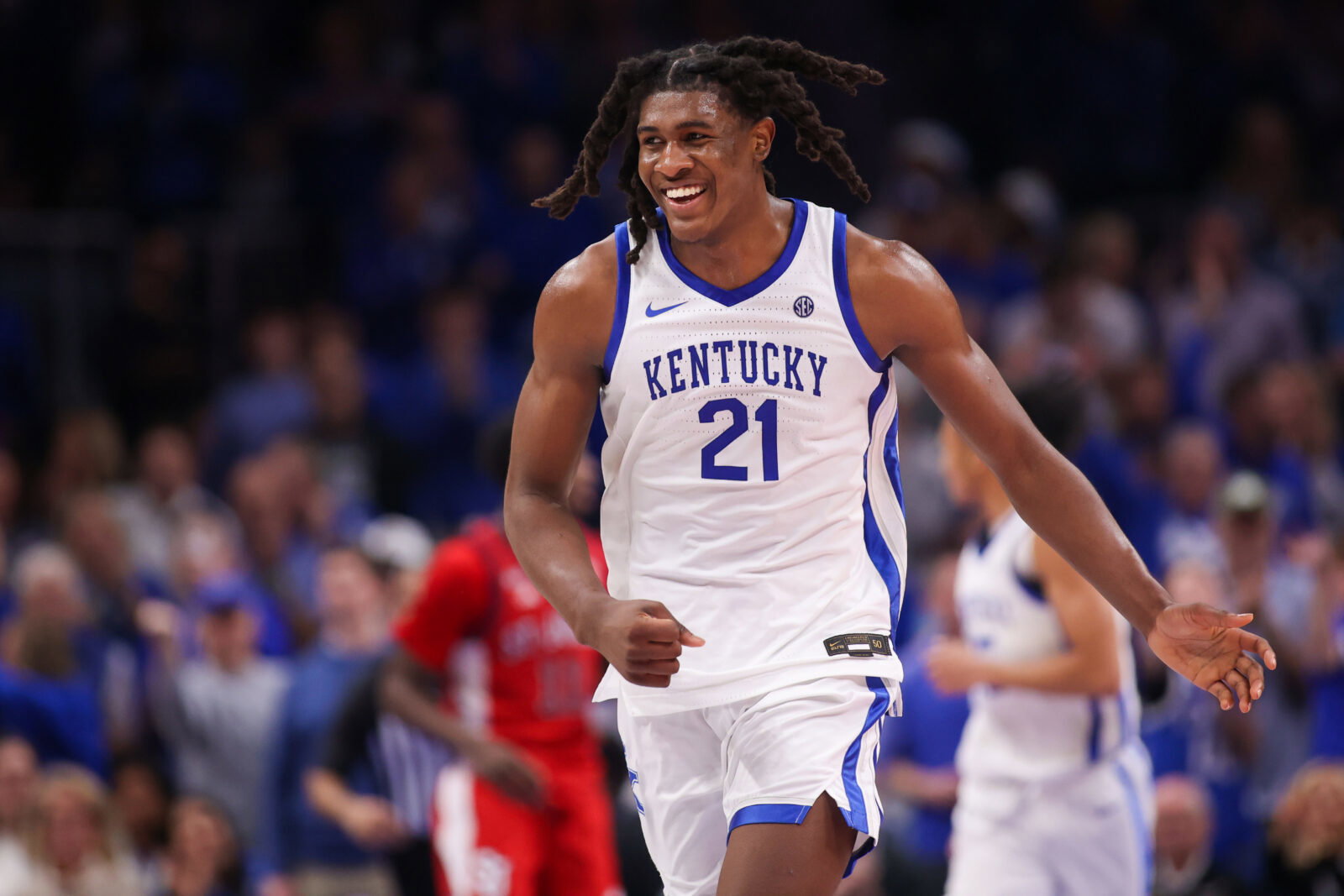
Jayden Quaintance
Jayden Quaintance was once expected to be one of the first bigs taken in this year’s draft, but injury concerns have reshaped his outlook. Quaintance dominated at Arizona State during the first 24 games of his freshman season. He was an explosive athlete and incredibly coordinated for someone with a 7-foot-5 wingspan.
Quaintance then tore his ACL in February 2025 and transferred to Kentucky, hoping to raise his draft stock while rehabbing with a bigger program. He was limited to four games because his knee was not fully ready. Nevertheless, his first game against St. John’s and potential first-round pick Zuby Ejiofor demonstrated Quaintance’s natural instincts and physical dominance.
Injury concerns may cause Quaintance to slide in the draft. If he reaches the 20s, the Celtics should start considering moving up. He turns 19 in July and will be over a year and a half removed from his initial tear when the 2025-26 season starts.
Quaintance’s upside would be too high to pass up at 27, but the Celtics may realistically have to move up to select him.
Chris Cenac Jr.
Chris Cenac Jr.’s production and consistency failed to match the hype of a top-six prospect, but his physical tools and willingness to learn make his floor high. With a 7-foot-5 wingspan and 240-pound frame, he has a strong foundation. He won’t turn 20 until February 2027, giving him plenty of time to bulk up as well.
Playing big minutes under Houston coach Kelvin Sampson is a testament to player coachability. With the right tools, mindset, and coaching, Cenac could thrive in his role and would be a valuable addition.
Cenac’s draft projections range from late lottery to outside the first round. The Celtics should be ready if Cenac falls within their range, as a former blue-chip prospect with Sampson’s stamp of approval could be a major opportunity.
Celtics Second Round Options
With the rights to the 40th pick, the Celtics could be positioned to trade if a desired prospect falls to the second round — Veesaar, Reed, or Cenac being possible candidates.
The other second-round option is Virginia’s Ugonna Onyenso. His offensive game is limited, but he is a talented and disciplined defender. He led college basketball in the ratio of steals and blocks to fouls (2.8 per DataBallr).
The Celtics could draft a center in the second round, sign him to a two-way contract, and give him development reps while competing for championships. It’s what they did with Amari Williams last season, whom they reportedly view as a player with significant development.
What Should Boston Do?
The Celtics must add at least one center this offseason—via draft, free agency, or trade. They can’t afford to hope last season’s weaknesses fix themselves.
There is no such thing as too much frontcourt talent. Boston should continue adding and developing players to maintain a healthy frontcourt for years to come.
Landing Reed, Veesaar, or Cenac in round two would represent excellent value. Quaintance, meanwhile, may be one of the few center prospects worth considering a move up relative to price and long-term upside.
There are multiple center prospects for the Celtics to get excited about, but none are guaranteed answers. Boston can’t afford to be passive in adding talent to the position group, yet it also can’t afford to force a selection based solely on need. If the right opportunity presents itself, whether at No. 27, No. 40, or via a trade-up, Stevens should be prepared to act.
Stay up to date with all things Celtics by subscribing to the Celtics Lead Newsletter at https://theleadsm.com/celtics/










Leave a comment