

Every great league has its legends. But it also has its lowlights. Fans love to debate the best teams of all time, but there’s another interesting question to think about: what is the worst team of all time?
Sometimes a team simply can’t compete. When the losses pile up, the morale disappears, and the season spirals completely out of control.
Understanding the worst NBA team of all time isn’t just about stats. It’s about analyzing how a professional group hits rock bottom. The stories behind the worst teams may involve broken rosters, but sometimes it’s simply a matter of bad luck.
Let’s look at what happens when everything goes wrong on the hardwood.
Why Do We Care Who Is the Worst NBA Team of All Time?
NBA fans love stats, streaks, and stories.
That includes the epic meltdowns. Knowing which team is the worst in league history is part of understanding how unpredictable pro sports can be. For sports bettors and trivia nerds alike, the numbers behind these historic flops are just as compelling as championship wins.
You like tracking betting lines? We recommend exploring this verified list of casinos with 150 free spins for $1 bonus, where you’ll find sports betting options, too. Betting with minimal amounts of money is fun because you can take risks on bets that no one thinks are possible. But if you bet on a “loser” and win, the thrill is unexpectedly sweet. That’s the kind of underdog payoff that reminds you why you fell in love with betting in the first place.
You don’t have to be betting, even. If you’re an NBA fan, there’s real entertainment in exploring how a team goes from hopeful to historically bad. It’s proof that in sports, as in life, sometimes the odds just aren’t in your favor.
Defining the “Worst Team of All Time”
When we talk about the worst team of all time, we’re not just counting losses. We’re looking at a mix of failure factors. The gold standard of futility? The fewest wins in a full season and the lowest winning percentage. These teams didn’t just miss the playoffs. They never had a chance.
But context matters. Lockouts or global events shortened some seasons, so a team’s total number of wins isn’t always a fair comparison. That’s why winning percentage is the truest measure.
And to be clear: we’re talking regular-season performance only. Playoff collapses are another story. This is about the teams that never even got close.
Why Some Records Are Worse Than Others
To fairly judge the worst NBA team, you have to factor in the era. Early NBA seasons ranged from 48 to 68 games, and it wasn’t until the 1967-68 season that the league established the now-standard 82-game schedule.
Lockouts shortened the 1998-99 and 2011-12 seasons. Both lockouts resulted from disputes about the league’s Collective Bargaining Agreement. And we all remember the 2019-20 season, when COVID turned the entire world upside down.
What does this mean? Comparing records across decades isn’t as simple as counting wins. For example, nine wins in a 50-game season might be worse than 17 in 82.
That’s why we’re so concerned about the winning percentage. It’s the most accurate way to evaluate true performance over time.
The Worst NBA Team of All Time
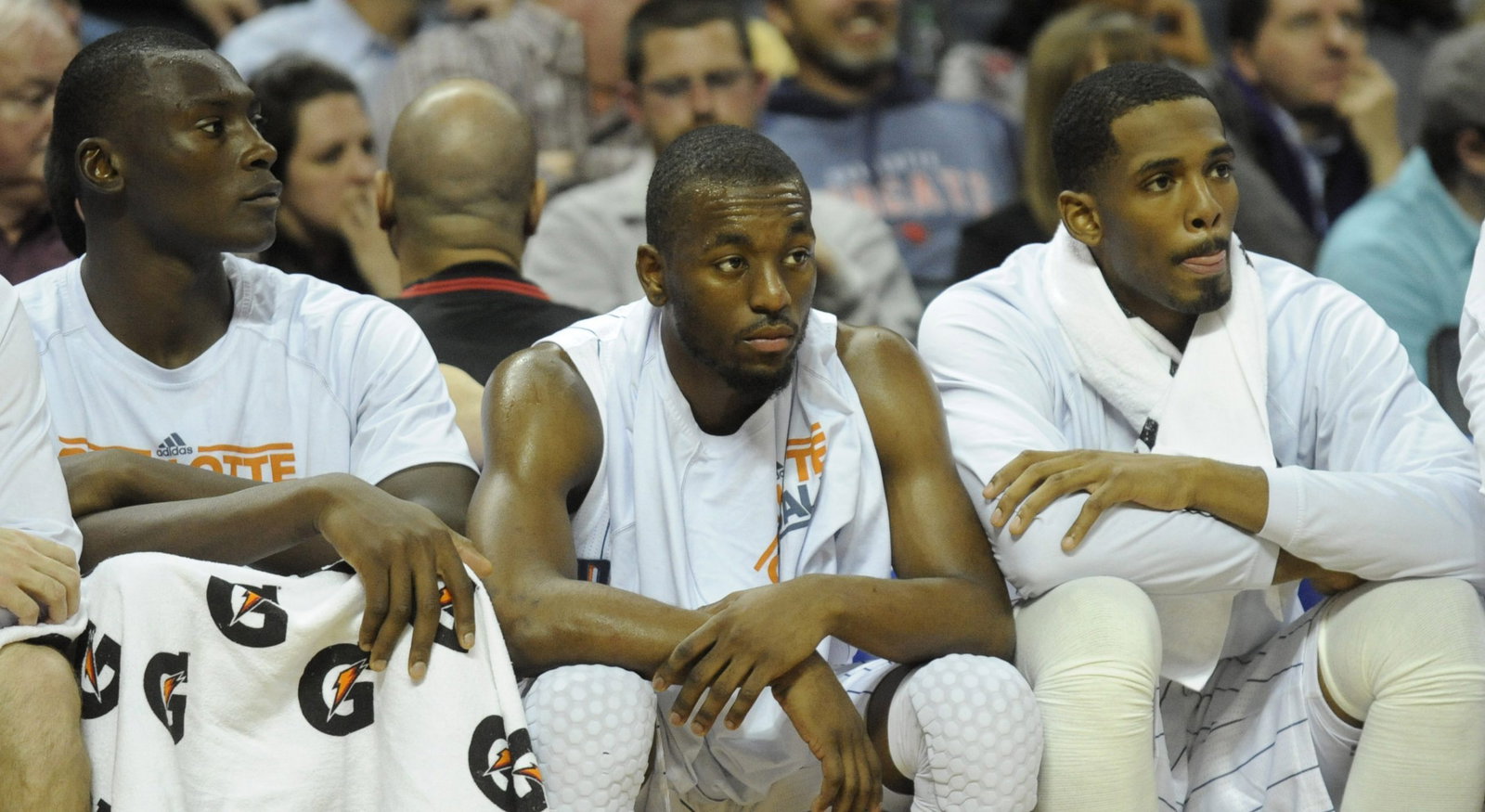
The title of the worst NBA team in history belongs to the 2011-12 Charlotte Bobcats.
They finished with a stunningly bad 7-59 record. Their .106 winning percentage stands as the lowest in the league’s history. It came during the 2011-12 lockout-shortened season. But even with fewer games, the collapse was historic.
This was the team’s eighth season in the league. They ended the previous season with a 34-48 record, and boy, did they fail to improve it. The Bobcats had a roster full of young players and journeymen. They lacked direction, consistency, and leadership. Head coach Paul Silas struggled to find workable rotations, and injuries didn’t help. Leading scorer Gerald Henderson averaged only 15.1 points per game. No All-Stars, no floor generals, and no hope.
For the sake of comparison, the 1972-73 Philadelphia 76ers deserve an honorable mention. They finished 9-73, with a .110 winning percentage. That gives them the title of the worst full 82-game record.
More recently, the 2023-24 Detroit Pistons were in the running to become the NBA’s worst team of all time when they lost a record twenty-eight straight games.
They were the laughingstock of the season, prompting Kyle Kuzma to send out this tweet.
https://twitter.com/kylekuzma/status/1740557176345956625
The Pistons, however, would have the last laugh. They would later beat Kyle Kuzma’s Wizards the following season.
What Did the Bad Result Mean for the Team’s Future?
The fallout from the Bobcats’ historically bad 2011-12 season was immediate and long-lasting. With the No.2 overall pick in the 2012 NBA Draft, they selected Michael Kidd-Gilchrist. Although he brought defensive intensity to the team, he never became the star that Charlotte needed and was often ridiculed for his bizarre shooting form.
The Bobcats remained stuck in rebuild mode and rebranded as the Hornets shortly after in 2014. That was a symbolic reset, but they’ve only made the playoffs once since making the change.
The 2011-12 Charlotte Bobcats team quickly became a league-wide punchline. It’s a benchmark for how bad things can get. Analysts, fans, and even players pointed to the Bobcats when referencing total collapse. Internally, it forced a hard look at management. Ownership and front-office changes followed. Naturally, a more cautious approach to roster building also took place.
What’s the long-term lesson? Tanking doesn’t guarantee success. High draft picks are only part of the puzzle. Culture, leadership, and development are just as critical. Charlotte’s record served as a cautionary tale across the league: without a clear plan, chasing the bottom can leave a team stuck there. Still, the Bobcats had one thing going for them: a loyal fan base and a market strong enough to survive the storm. Even in a disaster, there’s room for growth.




![May 2, 2026; Boston, Massachusetts, USA; Philadelphia 76ers center Joel Embiid (21) celebrates with guard Tyrese Maxey (0) and guard Vj Edgecombe (77)] following their win over the Boston Celtics in game seven of the first round of the 2026 NBA Playoffs at TD Garden. Mandatory Credit: Winslow Townson-Imagn Images](https://theleadsm.com/wp-content/uploads/2026/08/2026-05-03T023431Z_178259642_MT1USATODAY28868982_RTRMADP_3_NBA-PLAYOFFS-PHILADELPHIA-76ERS-AT-BOSTON-CELTICS-680x453.jpg)






Leave a comment