


With the 2026 Winter Olympics underway, the NHL season has hit pause. While the break provides recovery time, it also risks amplifying existing weaknesses. For teams already underperforming beneath the surface, advanced analytics suggest the Olympic hiatus may not be the reset they need.
Using possession metrics, shot-quality data, and situational performance trends, four teams stand out as being in particularly deep water heading into the post-Olympic stretch: the Ottawa Senators, New York Rangers, Chicago Blackhawks, and San Jose Sharks.
Atlantic Division: Ottawa Senators
From an analytics standpoint, Ottawa’s struggles stem from poor sustainability. While their October record was strong, underlying metrics hinted at trouble ahead. The Senators’ early success was driven largely by finishing efficiency rather than dominant play.
Since November, Ottawa has ranked poorly in expected goals against (xGA) and high-danger chances allowed, indicating defensive-zone breakdowns that are not the result of bad luck. Their Corsi For percentage (CF%) has hovered below league average, showing they spend extended stretches without puck control.
Additionally, Ottawa’s inconsistency in goals saved above expected (GSAx) suggests unstable goaltending performance, making it difficult to mask defensive lapses. Teams with weak possession numbers and unreliable goaltending rarely improve after long breaks, placing the Senators at risk once play resumes.
Metropolitan Division: New York Rangers
The Rangers’ advanced stats reveal one of the starkest declines in the league. Early-season results masked deeper issues, particularly in five-on-five play. Since late November, New York has struggled in expected goals for (xGF), indicating an inability to generate quality scoring chances despite reasonable shot volume.
Defensively, the Rangers’ slot chances against and rush chances allowed have increased, pointing to breakdowns in neutral-zone structure. This has forced goaltenders to face higher-quality shots, a trend reflected in declining team save percentage relative to expected.
Perhaps most concerning is the Rangers’ performance in score-adjusted possession metrics, which show the team fails to tilt the ice even when trailing. Sitting at the bottom of the Metropolitan Division heading into the Olympic break, the Rangers’ analytics suggest structural problems rather than temporary variance.
Central Division: Chicago Blackhawks
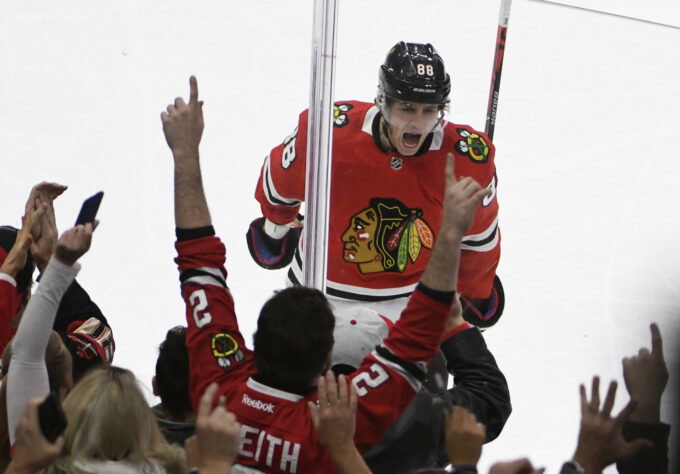
Chicago’s advanced metrics tell a story of early progress followed by regression. In October and November, the Blackhawks showed improvement in zone entry success and forecheck pressure, allowing them to stay competitive against stronger opponents.
That progress faded in December. Chicago’s expected goals differential (xGD) dropped significantly, driven by declining offensive-zone time and an increase in defensive-zone turnovers. The Blackhawks have struggled to generate high-danger chances, relying too heavily on perimeter shots that inflate shot totals without improving scoring probability.
Defensively, Chicago’s inability to suppress shots from the slot has resulted in a rising xGA per 60, making them vulnerable even in games where the score remains close. The shutout loss to Columbus before the Olympic break was a clear reflection of these trends.
Pacific Division: San Jose Sharks
San Jose’s concern is rooted in contextual analytics. The Sharks’ overall metrics are not disastrous, but in the Pacific Division, “average” is rarely enough.
The Sharks’ expected goals share fluctuates heavily game to game, reflecting inconsistency in execution. While they perform adequately against weaker teams, their xGF% against playoff-caliber opponents drops sharply, suggesting difficulty sustaining pressure against elite competition.
Special teams further compound the issue. San Jose’s penalty kill expected goals against and power-play chance generation have both underperformed relative to division rivals. In a tightly contested Pacific Division, even marginal inefficiencies can be the difference between playoff positioning and falling behind.
Final Analysis
Advanced statistics reinforce what the standings only partially reveal: these four teams face systemic challenges that the Olympic break alone will not solve.
Ottawa lacks defensive structure and possession stability.
New York shows declining shot quality and neutral-zone control.
Chicago struggles with chance generation and defensive suppression.
San Jose faces razor-thin margins in an analytically unforgiving division.
As the NHL season resumes, teams that control play, limit high-danger chances, and sustain positive expected-goals trends will separate themselves. For these four clubs, the numbers suggest the post-Olympic stretch could determine whether their seasons stay afloat—or sink.












Leave a comment