

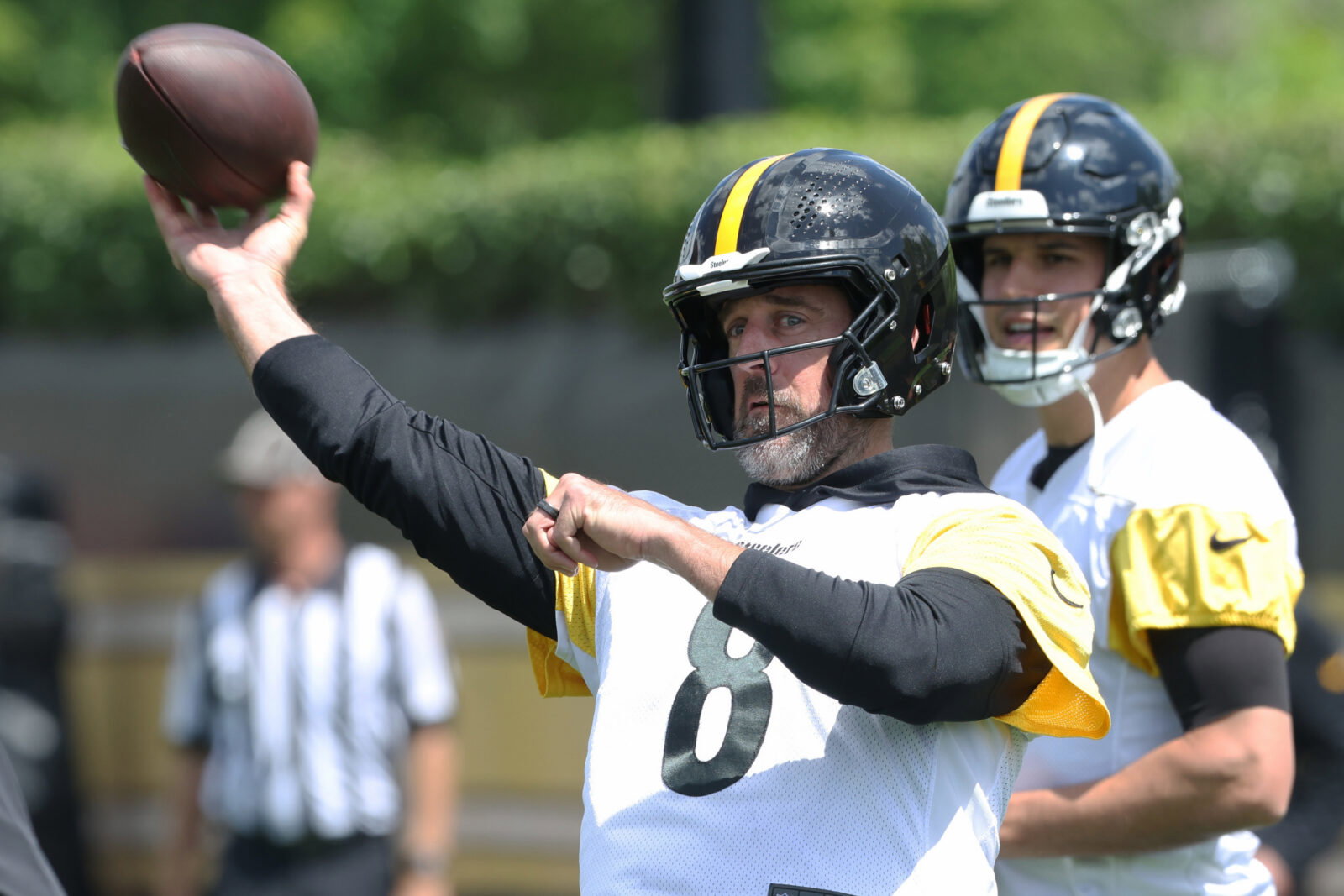
The Steelers have spent nearly two decades avoiding the question every NFL franchise fears most:
Who comes after the franchise quarterback?
Ben Roethlisberger made Pittsburgh’s answer easy for 18 seasons. Since his retirement, the Steelers have cycled through first-round picks, reclamation projects, familiar faces, and future Hall of Famers in search of stability at the sport’s most important position.
Some moves bought the franchise time, while others sent it back to square one.
Here’s how Pittsburgh’s biggest quarterback decisions since Roethlisberger stack up.
No. 5: Drafting Kenny Pickett
No decision carried higher expectations than drafting Kenny Pickett.
The Steelers used a first-round pick on the hometown product, hoping the transition from Roethlisberger would be smoother than most franchises experience. However, it ended up prolonging the uncertainty instead.
Pickett wasn’t asked to be a bridge quarterback. He was supposed to be the answer.
Whether the issue was with Pickett, the offensive environment, or the organization’s evaluation process, the outcome was the same: Pittsburgh was back to searching only two years later.
When a first-round quarterback doesn’t become the future, the cost extends beyond draft capital. It also costs time.
No. 4: Trading for Justin Fields
For once, the Steelers took a swing.
The acquisition cost was minimal, and Justin Fields arrived with the athletic upside that once made him a first-round pick. The risk was low, and the intrigue was high.
But ultimately, the move didn’t alter Pittsburgh’s trajectory.
Fields represented possibility more than production. Even if the experiment was worth trying, it didn’t provide the stability the Steelers desperately sought.
No. 3: Signing Russell Wilson
The Russell Wilson move always felt temporary.
Still, it had value.
Wilson brought experience, leadership, and the credibility of a quarterback who had succeeded on the league’s biggest stages. He gave Pittsburgh a chance to remain competitive while buying time to figure out what came next.
The problem was that everyone knew another quarterback decision was coming.
Wilson wasn’t a franchise reset. He was a placeholder.
No. 2: Re-signing Mason Rudolph
No quarterback move in the post-Ben era says more about the Steelers than Mason Rudolph.
He has never been the flashy choice. Fans have debated his roster spot for years. Yet every time Pittsburgh has needed him, Rudolph has embraced the role assigned to him.
Starter. Backup. Insurance policy. Veteran voice.
He knows the organization, understands expectations, and has delivered meaningful wins when called on and accepted reduced roles without complaint.
Rudolph may never be the answer Steelers fans have been searching for, but reliability matters. In an era defined by uncertainty, few quarterbacks have brought Pittsburgh more of it.
The Steelers keep coming back to Rudolph for a reason.
No. 1: Acquiring Aaron Rodgers
At his age, Aaron Rodgers was never brought to Pittsburgh to be Ben Roethlisberger’s long-term successor.
That’s exactly why this move tops the list.
For the first time since Roethlisberger retired, the Steelers stopped pretending they had an immediate answer.
Rodgers offers the chance to compete now while younger quarterbacks develop behind one of the greatest players the position has ever seen.
The Steelers’ search for Roethlisberger’s successor has produced more questions than answers. But for the first time in years, Pittsburgh appears to be prioritizing patience over panic.
Rodgers’ greatest contribution may not be a playoff run.
It may be buying Pittsburgh enough time to finally make the right next decision.
Whether he can help guide Drew Allar and Will Howard into the next era remains to be seen.
But if Pittsburgh has learned anything from the last few years, it should be this:
The worst quarterback decision isn’t admitting you don’t have the answer.
It’s convincing yourself you do before you’re ready.










Leave a comment