

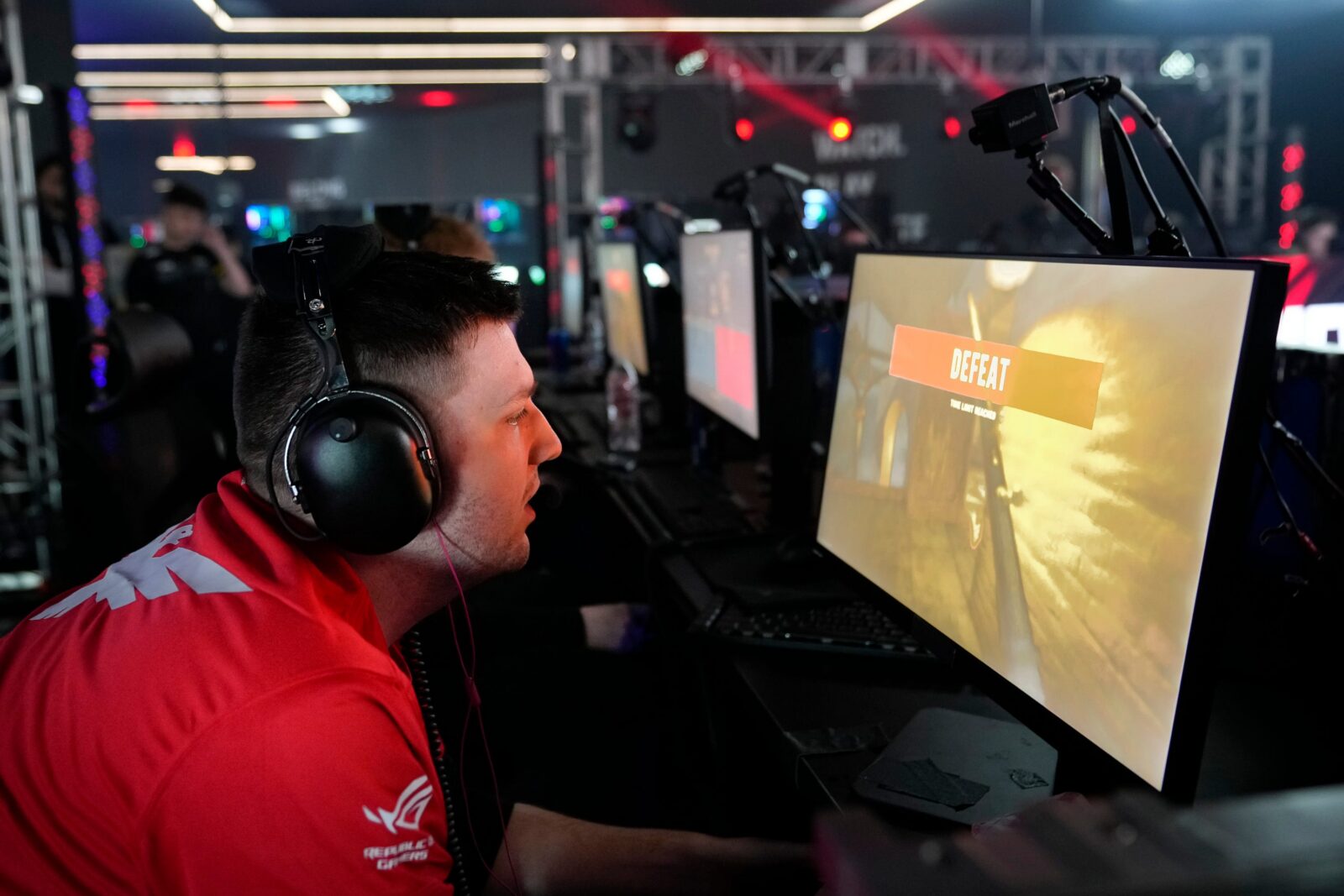
The video game industry is massive.
In 2018, 43% of Americans reported playing video games on consoles, PCs, or phones, with more than 84% of teenagers reporting playing video games frequently.
Why such high numbers? Are made-up words in games so much better? What drives people to choose gaming over other hobbies? Let’s take a look.
Psychology of Gaming: 7 Reasons Why Gaming Feels Easier Than Real Life
It’s worth keeping in mind that people may be especially drawn to video games because they are designed to intentionally keep people engaged for as long as possible.
Still, some people are addicted to gaming, others play games as recreation, and some are completely indifferent to made-up worlds. These seven reasons can explain why gaming feels easier than real life for some people.
1. The Real World Is Overwhelming
Living is hard: work stress, financial pressure, social expectations, relationship problems, endless notifications. Moreover, living in the 21st century means living in uncertain times and almost certainly having attention problems.
It’s also the reason that 90% of neurodivergent youth escape into games and 58% say that gaming makes them happy. When wondering how to tell that you’re neurodivergent, your special interest in gaming can be a sign to look for an assessment. Keep in mind that ADHD, OCD, autism, etc., diagnoses have more criteria than an intense interest in gaming.
Video games have clear instructions. Life doesn’t. What you won’t always find in real life is:
- Everyone being ready to help you
- Immediate feedback
- Clear understanding of results/consequences
- Clear image of success
Is such predictability always good? That’s a completely different question, but video games are surely an effective way to feel the control that may be lacking in the real world.
2. Visible Achievements
One of the most psychologically satisfying parts of gaming is that progress is visible almost immediately. You gain experience points, level up, unlock abilities, improve rankings, or earn achievements. Games constantly communicate that your efforts were worth it.
In real life, progress is usually invisible unless enough is collected. Even worse, it can go unrecognized by your family, partner, boss, and even yourself. Not to mention that life progress is harder to measure: real life doesn’t give XP points.
Psychologically, visible progress is motivating because the brain loves rewards. It can’t tell the difference between an achievement in the real world and one in an imaginary world.
3. Complete Freedom With No Consequences
The stereotypes that video gamers enjoy violence are fault. Most gamers who play shooters or horror games simply enjoy the thrill and catharsis that the no-boundaries world offers.
In video games, you can also experiment without being scared to make mistakes. If something goes wrong, you can reload a save, but in life, mistakes can cost you money, relationships, reputation and more.
The stakes are lower in video games; hence, players can experiment with:
- different identities
- risky decisions
- alternative moral choices
- routine behaviors
In this sense, gaming is liberating. For some people, games become spaces where they can act more authentically than they feel able to in everyday life. For example, someone who is shy in real life may become socially confident online.
4. Stress Relief
In 2023, 78% of gamers in the United States said gaming made them feel less stressed. Gaming helps with stress in a few ways:
- letting your authentic self out
- staying out of daily stressors
- emotional processing
Gaming functions the same as movies, books, music, and social media. Video games provide escapism that can be healthy in moderate amounts.
Stress relief itself is not unhealthy. The problems may appear only when gaming becomes the only coping mechanism a person has or when it fully replaces real-world functioning, relationships, or self-care.
5. Cognitive Stimulation
Video games are first and foremost for entertainment, but they can also be a form of cognitive self-care. Healthy amounts of gaming stimulate the brain through:
- fast decision-making
- problem-solving
- strategy
- curiosity
- focused attention
- reaction speed
This mental engagement can not only feel energizing and satisfying but also be actually helpful. Video games are regularly used in mental health practice, pain management, and physical therapy.
Pro tip: To make the real world more engaging, gamify your routine. For example, give yourself an award after completing each task.
6. Self-Exploration
Video games can also function as spaces for identity exploration and self-expression. In virtual worlds, people can be what’s impossible in real life. Games can explore:
- different personalities
- leadership roles
- morality choices
- gender expression
- mythical creatures
These things can be interesting for self-awareness. For example, why does one person prefer playing farming games, while others like zombie survival games more? These preferences can symbolize something personal.
This doesn’t necessarily mean they are “escaping reality.” Sometimes games simply provide safer opportunities to explore parts of themselves that feel harder to express in everyday life.
7. Video Games Are Fun
Sometimes the explanation is much simpler than people make it sound: video games are genuinely fun.
People as a species constantly seek stimulation and playfulness. That’s why it’s so vividly noticeable in children, but many adults slowly lose playful habits because of societal expectations.
Games temporarily reintroduce something many people are missing: simple, careless fun.
Gaming itself is not inherently unhealthy. As with movies, sports, books, or hobbies, it becomes problematic mainly when an imbalance arises and virtual life completely replaces real-world needs.












Leave a comment