

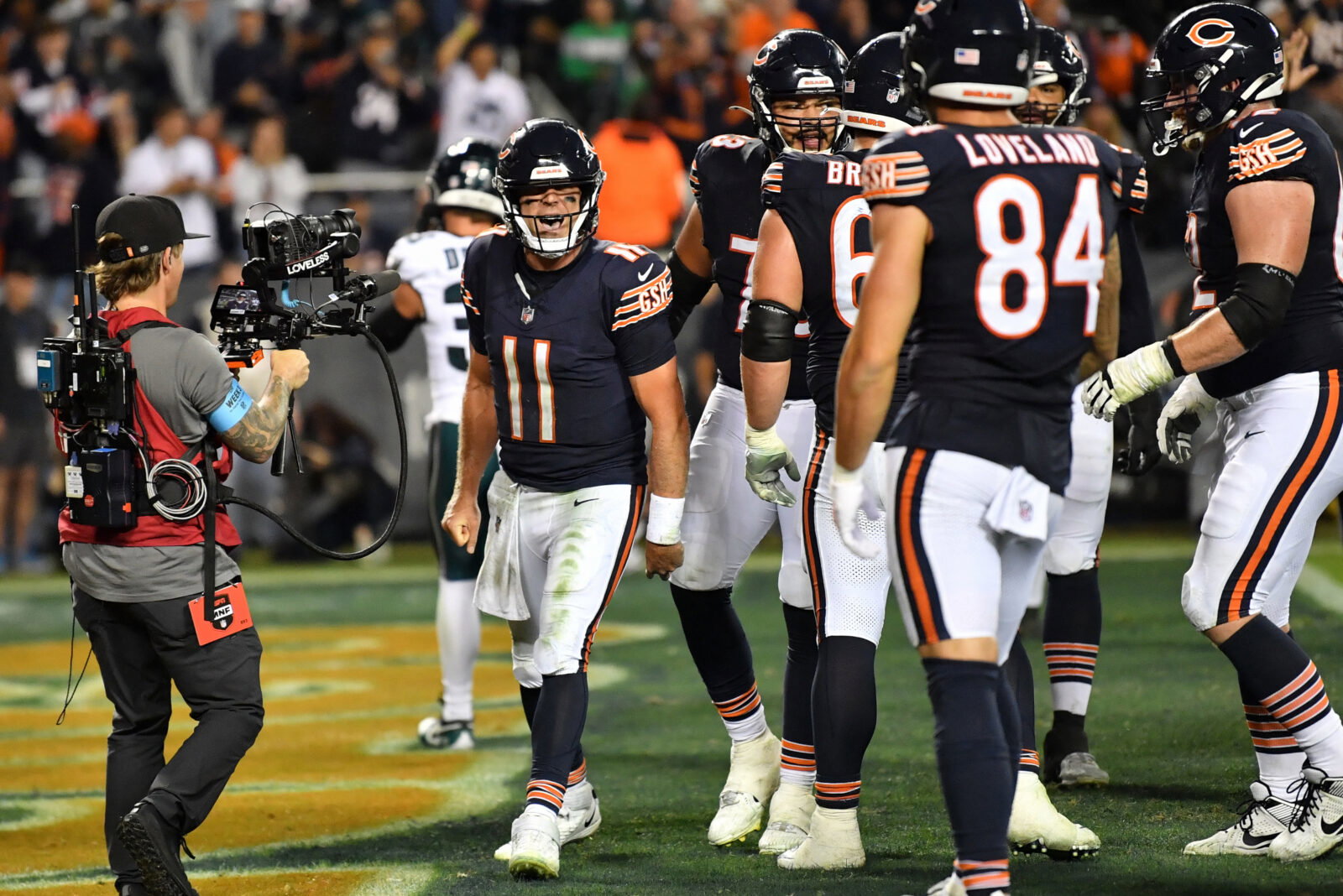
The Chicago Bears completely controlled the game against the Philadelphia Eagles on Monday night. After a loss to the Vikings a week before, this Week 3 matchup was expected to be a major test for the Bears. However, Chicago delivered one of its most impressive performances of the young season, defeating the Eagles 27-7 at Soldier Field.
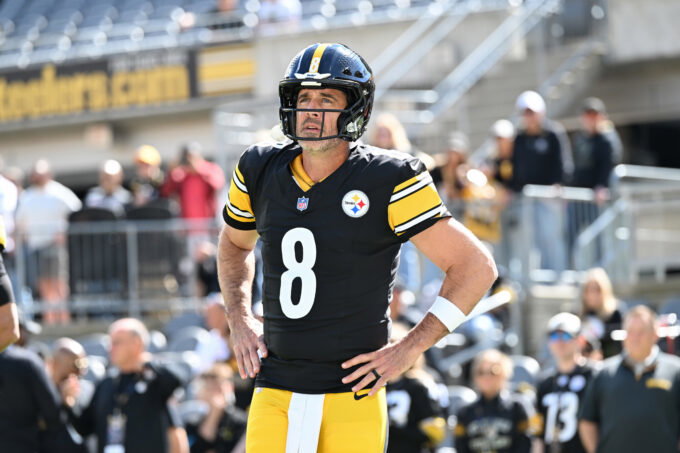
The circumstances made the victory even more notable. With Caleb Williams sidelined with a hamstring injury, veteran Case Keenum made his first start since 2023. Rather than simply trying to survive with their third-string quarterback, the Bears played as a collective on both sides of the ball and pulled away in the second half.
Here are five things we learned from Chicago’s statement win.
5. The Bears Changed the Conversation
It’s only Week 3, so there is plenty of season left, but this was the type of victory that gets people around the league to take notice.
Chicago entered the night coming off a frustrating loss and missing their starting quarterback. They faced an Eagles team that was 2-0 and had talent all around. Instead of playing cautiously, Chicago dictated the game. They stuck with their normal aggressive style under second-year head coach Ben Johnson. They went for it on fourth down and took deep shots, almost as if Williams were still out there.
The Bears now have wins over Carolina and Philadelphia, with the latter coming under circumstances that make it particularly impressive. They also have a clear blueprint for what they need to do while Williams recovers: protect the football, play complementary football and let the defense create extra possessions.
Monday night’s win gave Chicago evidence this team can respond to adversity, which is something they desperately needed.
4. Chicago Can Win in Different Ways
Chicago’s Week 1 victory over Carolina was an offensive explosion. The Week 2 loss to Minnesota was a defensive battle that ended without a touchdown and the Bears losing by six. Against Philadelphia, the Bears put together something much closer to a complete performance.
Overall, the Chicago Bears played complementary football this week. The offense protected the football. The defense created turnovers. Special teams avoided giving Philadelphia consistent field position. Chicago controlled the clock as well, holding the ball for nearly 37 minutes.
That versatility is important because NFL games rarely follow the same script. Monday night showed that Chicago can adjust when circumstances change.
3. Ben Johnson Found a Winning Formula With Keenum
Monday night was also a significant test for Ben Johnson.
It was his first time calling a game with a backup quarterback since taking over as Chicago’s head coach, and he didn’t radically change the offense. Instead, Johnson found ways to make the entire group productive.
The Bears opened the game with a touchdown drive featuring five different players touching the ball. Later, Johnson created a huge opportunity for Kalif Raymond, who broke free for a 41-yard touchdown.
Chicago also became increasingly effective running the ball as the night went on. After managing 27 rushing yards in the first half, the Bears found more success after halftime and finished with 128 rushing yards.
The offense wasn’t perfect. There were moments when Chicago became conservative, particularly in the red zone. Nevertheless, Johnson’s ability to adapt to Keenum and keep the Eagles’ defense from simply loading up against the run was one of the biggest reasons the Bears were able to pull away.
2. The Defense Finally Looked Like the Real Deal
The biggest question surrounding Chicago entering Monday night was whether its defense could hold up against a legitimate offense.
After allowing 37 points in the season opener, fans questioned the Bears’ defense. Then, two weeks later, they held the Eagles to just seven points and 248 total yards. More importantly, Chicago forced three turnovers and consistently made life difficult for Jalen Hurts.
Hurts finished with 153 passing yards and an interception, while Philadelphia’s offense managed only 52 net yards after halftime. The Bears also completely changed the game after Saquon Barkley had success early. Barkley ran for 73 yards in the first half, but Chicago effectively shut him down. He finished with 82 yards on 15 carries.
The second-half adjustment might have been the most encouraging part of the defensive performance. The Bears repeatedly created opportunities for themselves, including takeaways from Austin Booker, rookie safety Dillon Thieneman and T.J. Edwards.
After two weeks of questions, the defense finally produced a performance that looked like the aggressive and opportunistic unit fans hoped it would become.
1. Case Keenum Was More Than Good Enough
Nobody expected Keenum to replace Williams and suddenly become the focal point of the offense. Instead, Keenum played within the offense, got the ball out quickly and consistently made the right decision.
He finished 24-of-34 with 247 yards and two touchdowns without throwing an interception. Perhaps more importantly, Keenum looked comfortable in Ben Johnson’s offense. Johnson’s system allowed the veteran quarterback to operate efficiently, spreading the ball around and giving him manageable throws.
Five different Bears had at least three receptions, while Raymond emerged as the game’s biggest threat with six catches for 90 yards and a touchdown. Keenum’s performance doesn’t change the importance of Williams to Chicago, but it does provide the Bears with confidence that the offense doesn’t completely fall apart when its starting quarterback is unavailable.
https://twitter.com/ESPNNFL/status/2104771370634617152










Leave a comment