

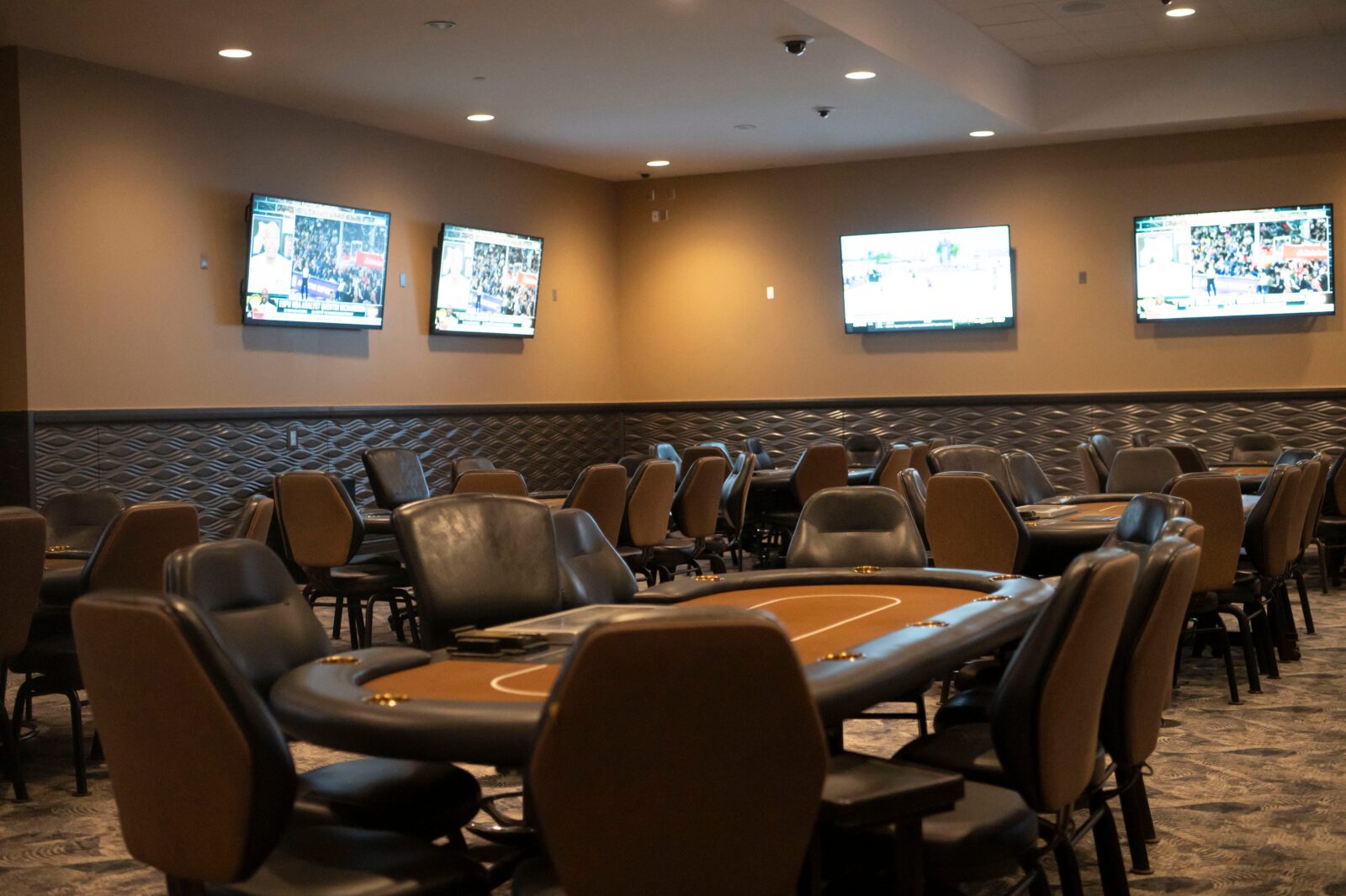
Poker tournaments may have multiple formats. Just as important as knowing what your hand will be is determining the structure you’ll play. Tournament structures define how chips are awarded during a session, when players are removed from competition (and how), and ultimately reduce the number of players participating throughout. Understanding tournament structures before moving beyond casual home game sessions provides a great starting point.
In this article, we discuss various ways a tournament can occur and how the pace of the session and the decision-making process for players will vary based on that format.
Freezeouts: The Traditional Format
A classic or “freezeout” style tournament is probably the most recognizable form of tournament poker. Each participant pays the same buy-in and receives a fixed starting stack of tournament chips. After all participants have bought in, players compete until all but one have been eliminated and one player holds all the chips. If a player runs out of chips, he is eliminated from the tournament.
The beauty of the freezeout lies within its relative simplicity. Since there is no chance to rebuy into a freezeout, players become very conservative in the early going, protecting their stacks by limiting the number of hands played per level to avoid losing a significant portion of their stack in marginal situations. As the blinds increase and the number of players decreases, so does the amount of time to make decisions. The freezeout format emphasizes the importance of patience and properly managing your stack.
Rebuys and Add-Ons: A Second Bite at the Apple
In contrast to freezeouts, tournaments where players can buy back in after running low — or completely — out of chips offer a second chance at a larger prize pool.
Most rebuy tournaments allow a player to buy back in at some point prior to a predetermined closing time, but then revert to a freezeout format for the remainder of the tournament. Some rebuy events also allow players to participate in an additional optional buy-in called an add-on, allowing them to receive additional chips at some point in the late goings of the tournament, regardless of how small their original stack was.
Both the rebuy and add-on elements significantly alter a player’s strategy in the early stages of a rebuy event compared to a freezeout. Players know if they have enough chips and are playing conservatively (waiting for stronger hands) or if they want to put themselves at risk by taking a shot at building a large stack. Many online platforms like BC Poker list many variations of tournaments, including rebuy. However, when deciding whether to enter into either format, one needs to consider just how much they are willing to invest, because the actual cost of participation in rebuy events can climb well past the entry fee.
Bounty and Knockout Tournaments
Tournament bounty adds an incentive to eliminate opponents. A portion of each player’s buy-in will be set aside as bounty. When you knock out one of these bounties, you get to collect all of your share of the bounty. All other portions of the buy-ins contribute to the typical prize pool used to determine payouts according to where players place.
The progressive knockout (PKO) format takes the concept of bounties even further. Once a player gets knocked out by another player, they get rewarded with a portion of their bounty. That money then goes toward their next opponent. While the original amount of money is removed from the table, some of the bounty money is now also tied to that new player. Because of this type of payout structure, many players tend to play more aggressively, especially when playing against shorter-stacked players. Players have a specific reason to push against players who may have fewer chips left.
The bounty component overlays the traditional payout structure, creating two competing interests for the duration of the event.
Satellites and Sit-and-Gos
A satellite is a qualifying event. Instead of paying out cash, satellites pay entrance fees into a larger and more expensive event. By providing a way for players to qualify into larger buy-in events for a much lower price, satellites are very attractive for getting into large series. As such, strategy changes in satellites since players do not need to worry about winning. If a player wants to make it through to the larger event, finishing within the required number of positions will be the primary concern rather than accumulating chips near the end.
In contrast, a sit-and-go has no fixed start time. It begins once enough players enter to complete it. Sit-and-gos can be played as a single table or multi-table, and because they begin when enough players have entered, they provide flexibility for players who want to play in a defined, stand-alone tournament without waiting for a designated start time.
Which Format Is Best for You?
There is no one-size-fits-all format. Playing freezeouts requires patience and discipline; playing rebuy tournaments requires aggressive early play and a willingness to keep investing your money if you lose early in a tournament. Bounty events encourage players who like to put pressure on their opponents. Satellites give access to larger tournaments, and sit-and-gos allow you to quickly play a self-contained tournament.
Understanding how each tournament format impacts your overall level of aggression, risk-taking, and potential reward allows you to pick formats that fit your budget and style, which is the first step in creating a long-term plan for your tournament poker game.










Leave a comment