

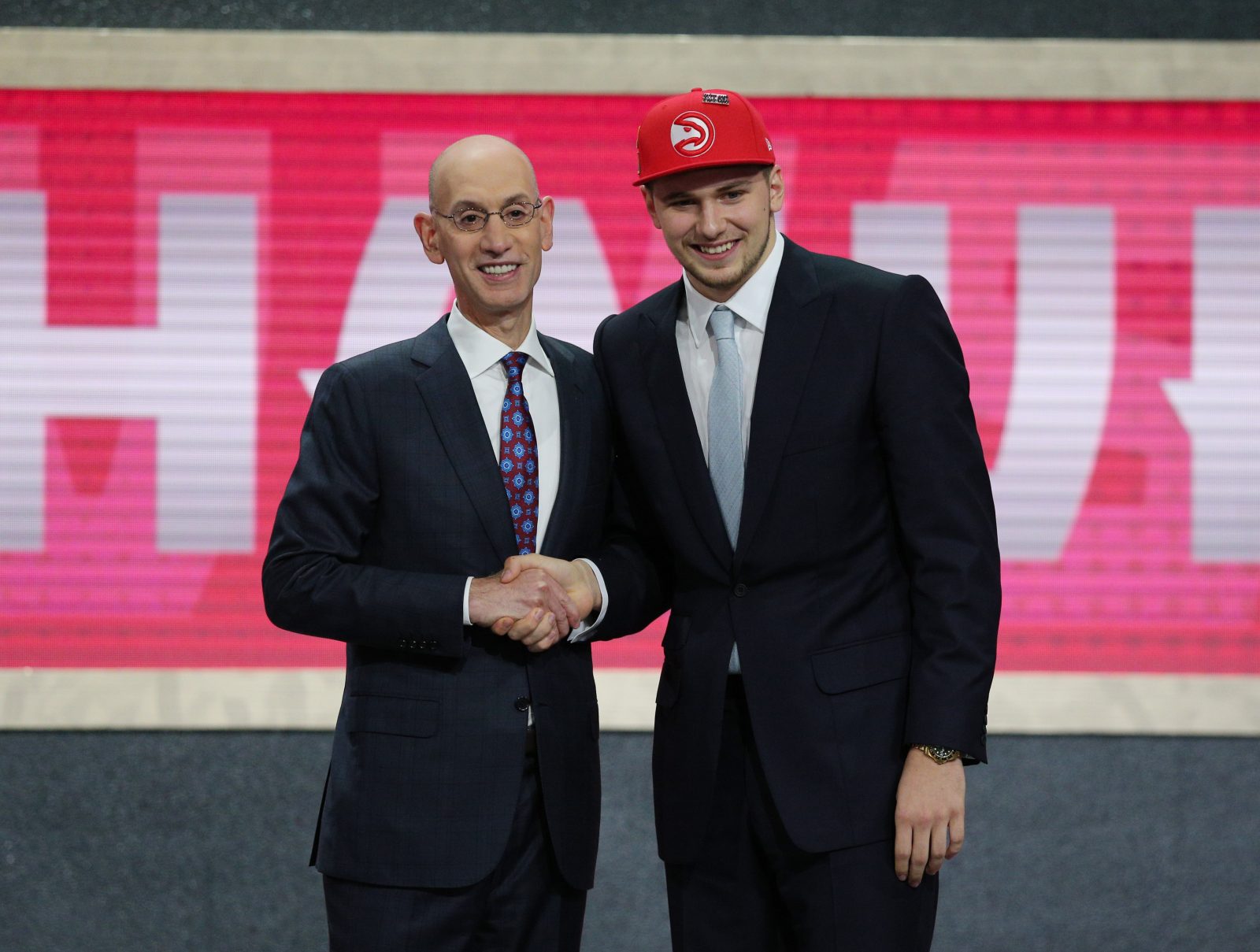
The lifeblood of the NBA, where the league injects millions of dollars into the talent pool every year, is the NBA Draft —a high-stakes influx of talent that can change the trajectory of a franchise over a decade or longer.
It is a night of suspense and excitement for the fans. However, to an NBA front office, it is a one-year, multi-disciplinary war waged on the fronts of talent analysis, data science, risk analysis, and savvy negotiation. In a league with a salary cap, it is not only convenient to know how to draft— it is the main road to creating a sustainable competitor in the championship.
This manual explores the complex mechanics that characterise the present NBA draft. We will explore how the lottery works, the science and art of player assessment, the guiding philosophies that inform decision-making, and the chess game of draft-day deals. This is the model for how teams transform draft picks into champion teams.
The Foundation: Navigating the NBA Draft Lottery
The fortunes of a team are usually determined by the roll of 14 ping-pong balls before a single prospect is considered. To encourage competitive balance and prevent tanking (the art of intentionally losing to get a better draft pick), the NBA Draft Lottery was established in 1985. It governs the draft order of the 14 teams that missed the playoffs, and the mechanics of the draft order are the first step in draft strategy.
The league made the lottery odds flat in 2019, further to discourage strategic losing. In the past, the team with the worst record had a 25 percent chance of getting the first pick, which was a strong reason to be the last one to finish. Now, the three poorest teams have the same chance of reaching the summit, with 14.0 percent each.
This change in reform fundamentally altered the team-building strategy. It is no longer a race to the bottom, but a race to the bottom three. The greater variance makes it much harder to ensure that a team picks at the top by making the most losses. This change puts a higher emphasis on front office scouting and evaluation capacities, as it can no longer count on a near-lock top-three selection to discover a franchise-changing talent. The lottery is a prelude of things, but the actual NBA draft work starts way before the drawing of the ball.
The Art and Science of Player Evaluation
It is a challenging task to predict which young athletes will succeed in competition against the best in the world. Contemporary front offices are no longer just box score-oriented, but instead have a holistic approach that combines old-style scouting with profound data mining and psychological evaluation to reduce the staggering risk involved in each selection.
The Pre-Draft Gauntlet
Prospects go through an extreme evaluation circuit between the conclusion of the collegiate season and draft night. The NBA Draft Combine is a centralized event, with over 30 teams in attendance. All athletes undergo standardized athletic testing, measurements, shooting drills, and 5-on-5 scrimmages. This is then followed by separate team workouts, where the teams gain close experience in evaluating the suitability of a player for their particular system.
https://twitter.com/NBADraft/status/1922710707998441847
Beyond the Box Score: The Analytics Revolution
The Moneyball era has come to the NBA in full force. There are now sophisticated single multi-measures, such as Value Over Replacement Player (VORP) and Win Shares (WS), used by teams to measure the overall effectiveness and contribution of a player. Proprietary predictive models correct the college or international statistics of a prospect based on factors such as quality of competition and pace of play, and permit more accurate comparisons.
Nevertheless, the best front offices do not replace scouting with analytics, but consider it as a potent and complementary tool. The trends can be determined, the biases can be disputed, and more effective queries can be designed, but the contextual insight that a player has based on his game is impossible to replace.
The Mind of a Prospect
Physical talent is not a sure way to success. The teams are now willing to spend a lot of money to learn the psychological makeup of a prospect. Organizations also measure intangibles such as work ethic, coachability, and mental toughness through extensive background checks, interviews, and even formal psychological tests. This is to determine whether a player possesses the mental and emotional strength to optimize their talent.
In tandem with this, the medical examination is a crucial step that cannot be compromised. A consensus pick in a medical field of interest can lead to the downfall of a team’s stock, as a multi-million-dollar investment depends on whether a particular player will remain healthy over the long term.
Core Philosophies: Best Player Available vs. Positional Need
After the assessments are made, the front office should make its draft board. The philosophy that drives this ranking process is highly controversial and forms the basis of a team’s strategy.
The Foundational Debate
The most classic strategic conflict in any NBA draft is “Best Player Available” versus “Positional Need.”
- Best Player Available: According to this philosophy, a team should keep the best prospect on their board at all times, rather than focusing on what they have in the active list. The main philosophy is that elite talent is the rarest commodity, and sending a future star to a short-term gap in the roster is the wrong choice. The warning story is the 1984 NBA Draft, where the Portland Trail Blazers made the need selection of center Sam Bowie at the expense of Michael Jordan.
- Positional Need: In this strategy, emphasis is put on a player who responds to a particular weakness in the depth chart. Advocates believe that the long-term aim of the game is to have a unified, balanced roster, and positional logjam would inhibit the growth of players.
A Modern Synthesis: Tier-Based Drafting
The majority of contemporary front offices have grown beyond this fixed dichotomy, utilizing a more detailed, tier-based methodology. The prospects are sorted into levels according to their perceived level of talent. This then becomes the decision-making process:
- In case the top-rated player has a tier of his own, pick him (pure best player available).
- In the event that there are multiple available players within the same tier at the top, then positional need and roster fit serve as tiebreakers.
Context is king. There are not many instances when a rebuilding team tends to lean towards the best player available to acquire as much top-end talent as they can. A late first-round draft pick will be more successful in fulfilling a particular requirement, such as drafting a 3-and-D wing who can play immediately.
The Chess Match: Mastering Draft Day Trades and Assets
Draft picks are not only a system to pick players— it is the main currency of the NBA trade market. The most skilled front offices have their draft capital, which they use to move money and manipulate the board, restructuring their rosters.
Trading Up: The All-In Move
Trading up happens when a war room really wants a specific prospect. The price is high, and it usually demands a high-valued future first-round pick. However, when it fails, it can change the fate of a franchise, as seen when, in 2018, the Dallas Mavericks traded up to draft Luka Doncic.
Trading Down: The Art of Accumulation
A team trades down when it feels that a player it likes will still be available later and can accumulate more picks. The 2017 NBA Draft trade by the Boston Celtics is the gold standard. With the first pick, they sold the first pick for the third, with the right intuition that their target (Jayson Tatum) would be there, and received a future first-round pick worth a lot in the process, an asset maximization masterclass.
The Sixers, who traded up for that pick, selected Markelle Fultz, who, by all accounts, was a bust.
https://twitter.com/BleacherReport/status/1983999264125554692
The “Win-Now” Gamble: Trading Picks for Veterans
Championship-contending teams will typically sell their draft picks for experienced veterans who can provide immediate assistance.
The rationale is that new players need training, which may not fit within the championship period of a team. This is a tremendously risky strategy. The worst example was the 2013 trade between the Brooklyn Nets and Boston Celtics, where the former traded four first-round draft selections to acquire old Paul Pierce and Kevin Garnett. The swap was a failure and the Nets were handicapped over several years.
Pick protections help the teams deal with this risk. As an example, a pick with top-five protection implies that the original team retains the pick in case it falls within the top five. These protections serve as an insurance policy and a source of trade-off, enabling the teams to compromise on high-stakes trades.











Leave a comment