

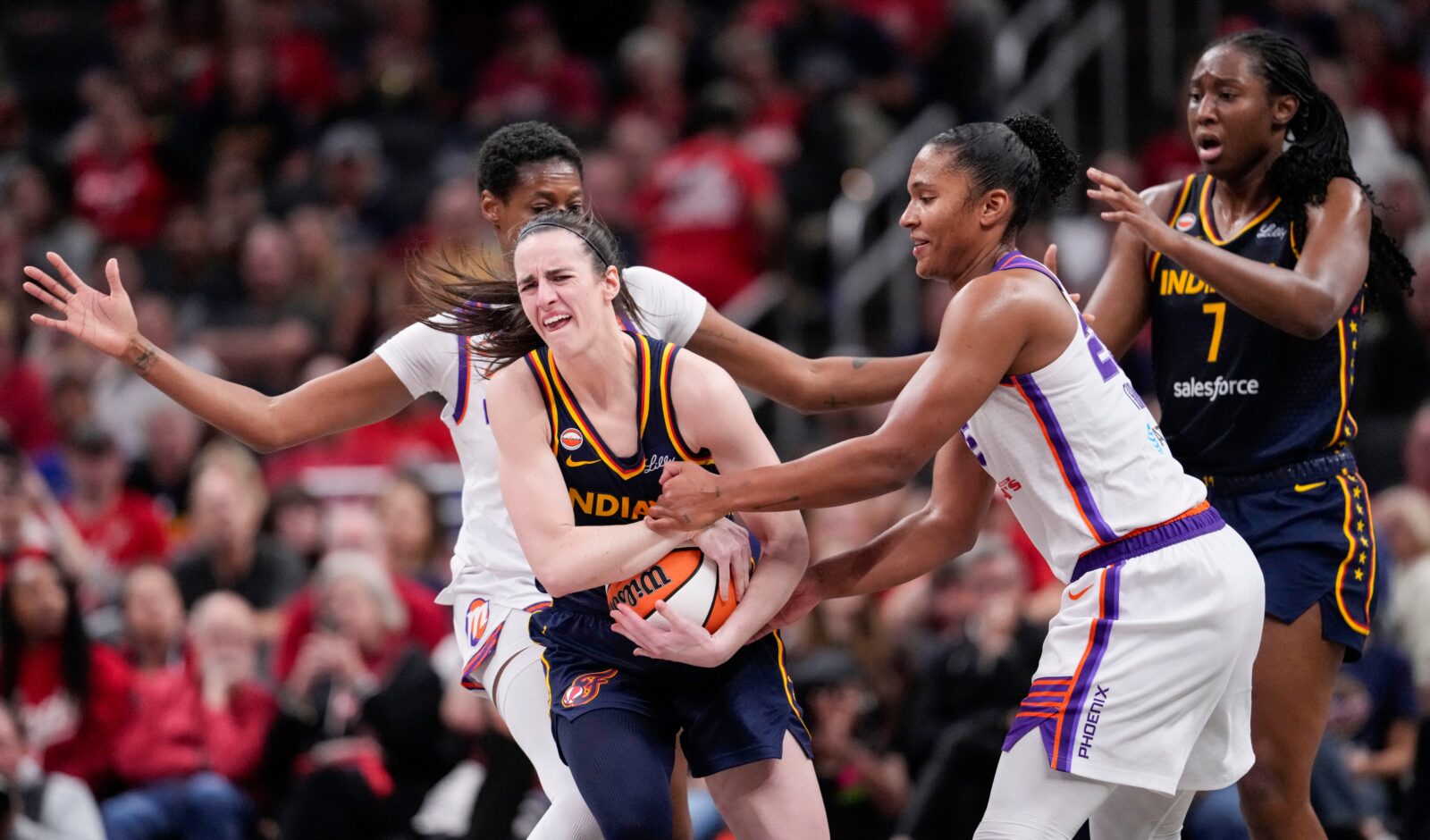
The WNBA is well-known for its competitive, physical play with intense contact. However, this type of contact has drawn in conversations about whether the physicality has gone too far. Over the last few seasons, the league recorded a high number of technical fouls, flagrant fouls (both 1 and 2), ejections and suspensions.
The conversation on social media has increased in the wake of Phoenix Mercury Forward, Alyssa Thomas’ flagrant 2 foul and suspension for hitting Indiana Fever star Caitlin Clark in the throat when she was on the ground during the June 24 game at Gainbridge Fieldhouse.
WNBA veterans such as Sydney Colson have expressed disagreement with the call, as they played during a time when physicality was harsher than it is now.
“Do I think it was a flagrant?” said Colson. “Not at all. But I also grew up in an era where it’s very physical, and this was the least of what I would consider a flagrant 2.”
Fans disagree. The event sparked conversations about hatred toward Clark from other WNBA veterans and overall physicality in the league.
Many argue that being physical during games and creating a dangerous environment for players are two different things.
There needs to be more accountability by officiators and the league to ensure that free-reign, physical play can continue without risking severe injury to players.
Caitlin Clark Takes a Hit From Alyssa Thomas
The Phoenix Mercury visited the Indiana Fever on June 24 at Gainbridge Fieldhouse in Indianapolis, IN, for their second game of a back-to-back game series.
This game was physical. Every player on both teams, except one on the Mercury, earned one personal foul, and 10 players earned three or more.
The two teams had met two nights prior. In that game, officials issued six technical fouls and one ejection. Clark earned her fifth technical foul of the season during this game. Thomas also earned a technical foul.
Alyssa Thomas earned a flagrant foul 2 and a one-game suspension following a physical play in the June 24 game in which Caitlin Clark suffered a fist to the throat with 6:52 left in the second quarter. Screenshots and videos quickly circulated on social media by upset fans after officiators failed to make the right call.
The league later reviewed the play and gave Thomas the flagrant 2 foul and a one-game suspension.
Fever Coach on Altercation
Indiana Fever Head Coach Stephanie White addressed the play and officiating after the game.
“Number one, you got to call [the foul on Thomas],” White said. “It’s absolutely egregious and utterly disrespectful. And then No. 2, you’re coming in here aware of what happened two nights ago and that s— still happens? Absolutely unacceptable. Absolutely unacceptable.
“And the reckless closeout that they’ve actually reviewed, and the foot still comes down on top of the defender’s foot that wasn’t upgraded? Absolutely disrespectful.”
Later, she expressed gratitude when the league upgraded the call. However, White still addressed the importance of officiating in real time.
“I didn’t see it in real time, so when I went back to see it, yeah, I was surprised,” White said at practice Friday. “I was more surprised that it wasn’t seen by the officials in real time. I think the eye discipline, for lack of a better term, sometimes I feel like all the officials are watching the ball and nobody’s watching the play. You have a player that’s down on the ground; certainly, some things are going to happen, so I was very disappointed they didn’t see that in real time.”
Players, coaches and fans alike agree that the league needs to be better at officiating plays in real time. It is important that officials officiate carefully and make the right calls before plays become dangerous.
What Does the WNBA Need to Change?
To protect players, there needs to be a clearer consensus and communication between officials and the league about exactly what warrants each foul call. Fans often complain about inconsistent calls across the league. They compare similar plays with different calls across games. With a clearer definition of what each call means, consistency should even out and decrease this common problem.
WNBA Fouls Deserve Harsher Fines and Penalties
Penalties for dangerous plays should be higher and taken more seriously. Technical fouls include a $500 fine for the first three, increasing to $1000 for the fourth, and $1500 with an automatic one-game suspension for the eighth. Flagrant 1 and 2 fouls have similar consequences to technical fouls. A $500 fine with a type 1, and a $1000 fine and ejection with type 2.
With the new CBA signed before the start of the season, players are now making more money than ever from their WNBA salaries alone. Top players signed six- and seven-figure contracts at the beginning of the season. That means $500 and $1000 fines are nothing compared to how much they make, including from off-court partnerships and media deals. These fines amount to a slap on the wrist and don’t provide much incentive to make basketball as danger-free as possible. Heftier fines and longer suspensions for conduct that extends beyond the court could be a solution.
Mental Health Resources
The league could also benefit from exploring additional mental health resources for its players. Many unnecessary, dangerous plays stem from the inability to control emotions during high-tension moments. The WNBA already has resources that the players have access to, but having a professional on site, not just to be there for players who need them in-game, but after a game as well, could be beneficial.
Player safety should be the number one priority for the WNBA. That includes providing resources on and off the court, protecting players by being more knowledgeable and reaching consensus on calls to ensure the game’s physical nature isn’t taken too far.









Leave a comment