

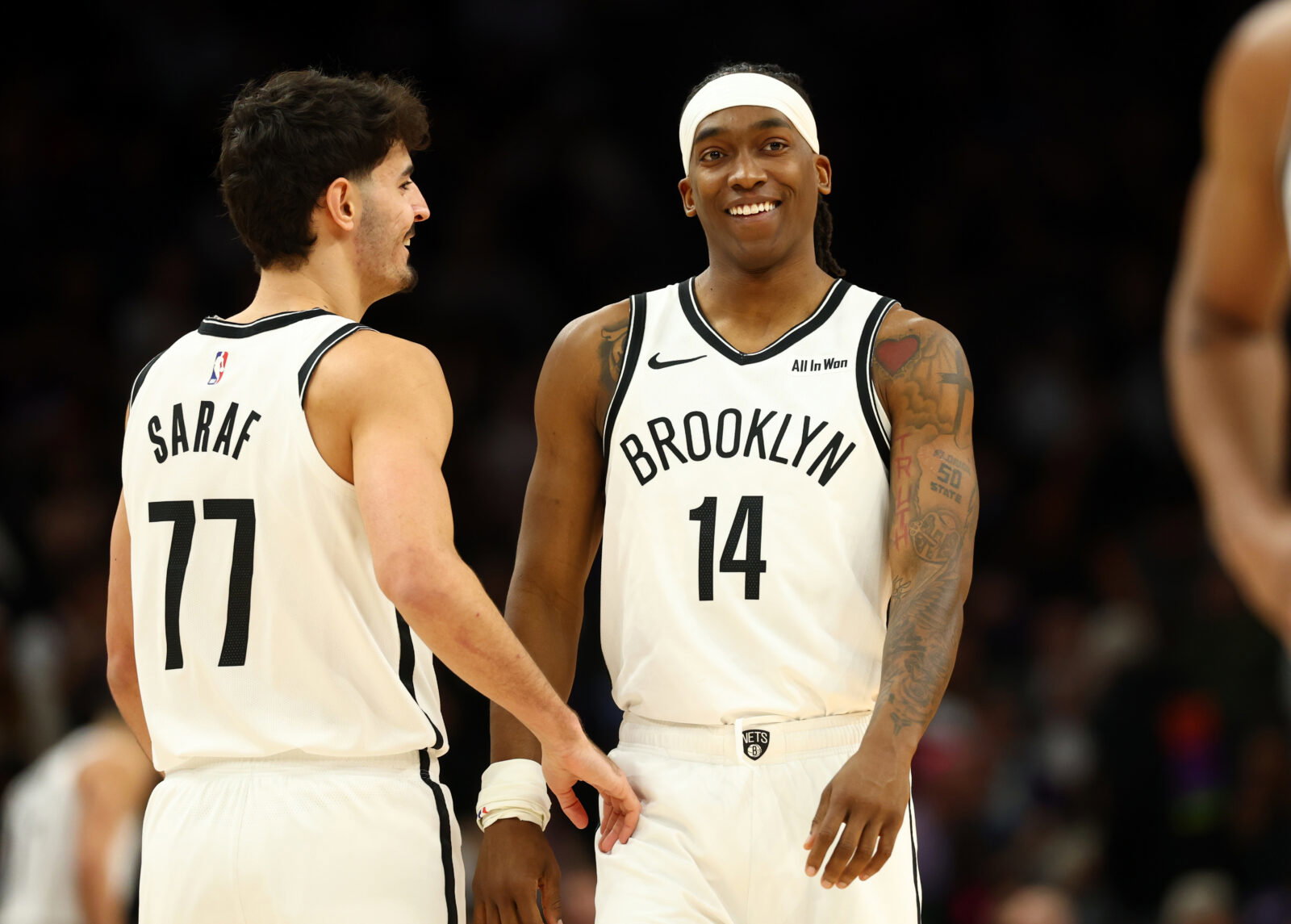
The Brooklyn Nets stayed busy throughout the offseason. They reshaped the roster and positioned themselves to hit the ground running in October, as they push for their first postseason appearance since 2023. Adding veterans like Julius Randle and Moritz Wagner gives fans something to be excited about. The hope is that last year’s 20-62 overall record was merely a learning lesson.
Head coach Jordi Fernández enters his fourth season with a deeper and more flexible roster, as last year Brooklyn navigated injuries and rookie development, forcing them to cycle through lineups nightly. The Nets finished 13th in the Eastern Conference last season and ranked third worst in the league. Brooklyn ranked at the bottom of the league offensively, scoring 108.7 points per 100 possessions, and finished 26th defensively.
While it was a tough season, the Nets never pretended it was easy. This year, Brooklyn may not be on everyone’s radar to push past the playoffs or even the play-in, but here are a few ideas for how the roster can take shape.
Starting Lineup 1: Brooklyn’s Balanced Starters
PG: Mikel Brown Jr.
SG: Egor Dëmin
SF: Michael Porter Jr.
PF: Julius Randle
C: Day’Ron Sharpe
The Nets landed the No. 6 pick in the 2026 NBA Draft, giving them Mikel Brown Jr., despite having a 14% chance at odds of getting the No. 1 pick. Conversations surrounding the 6-foot-5 guard argue whether he’ll start or come off the bench, but Brooklyn may want to think about diving in headfirst with a promising player like him.
At the University of Louisville, Brown was one of the top offensive producers, averaging 18.2 points and 4.7 assists. Transitioning to the NBA looks different on every rookie, which is why Summer League is vital for development. Brown played three games for the Nets in July, averaging 16.7 points, four assists, 1.7 steals and 1.7 rebounds per game.
Adding in Brown next to sophomore Egor Dëmin can help generate more open looks, as both guards will need to take on the responsibility of helping the Nets improve this season. Brooklyn took Dëmin with the No. 8 pick in the 2025 NBA Draft out of BYU, with hopes he can lead the team to new growth.
The 20-year-old averaged 10.3 ppg, 3.2 rebounds, and 3.3 assists while shooting 39.9% from the floor through 52 games in his rookie season for the Nets. However, Dëmin spent the offseason by getting in the weight room and improving his game as he averaged 21 points, 3.7 rebounds and 4.3 assists during the summer, and shot 42.6% from the field. Even with Porter Jr. and Randle in the mix, Dëmin is the piece that can ignite Brooklyn’s turnaround.
The Vets
Randle gives Brooklyn a proven interior scorer and playmaking forward who has shown he can be consistently productive down the stretch. Last season, the three-time All-Star averaged 21.1 ppg, 6.7 rebounds and five assists for the Minnesota Timberwolves through 79 games. His ability to attack downhill and provide veteran leadership to this young Nets backcourt might be just what they need.
Porter Jr. ended last season bringing the spacing element that Brooklyn lacked. Over 52 games, Porter Jr. averaged 24.2 points, 7.1 rebounds, and 3 assists per game, giving the Nets an efficient scorer and key offensive driver. Though the team won just 20 games, Porter Jr. was a reliable rebounder for Brooklyn and contributed significantly to the offense. His off-ball movement and catch-and-shoot reliability can open lanes for Brown and Dëmin while stretching opposing defenses.
Starting Day’Ron Sharpe at center can round out the group. He provides interior defense and rebounding and gives Brooklyn that balance and protective presence. After trading away Nic Claxton to the Chicago Bulls, Sharpe now has the chance to step into a full-time starting role. This gives him significantly more minutes and responsibility on the floor. The 24-year-old had a breakout season as a rotational big man. He posted 8.7 points, 6.7 rebounds, and 2.3 assists all while shooting 60.1% from the field. In an ESPN article, Dean Oliver shared a list of the top 7 most efficient players per net point per 100 possessions. By these statistics, Sharpe is predicted to be Brooklyn’s most efficient player (+1.3), ahead of Porter (+1.1) and Randle (+0.5).
https://twitter.com/BrooklynNets/status/2092419730573336719?s=20
Starting Lineup 2: The Nets’ Power Lineup
PG: Egor Dëmin
SG: Ben Saraf
SF: Julius Randle
PF: Moritz Wagner
C: Danny Wolf
While there are many adjustments to make throughout the year, Brooklyn has to also solve its shooting troubles after tying for last in 3-point percentage (34%) last season. This lineup features a more physical look while being able to space out and keep the offense moving. Dëmin and Saraf operate as dual playmakers, allowing the Nets to initiate action while Wagner further opens up the floor.
Saraf and Wolf were part of the haul Brooklyn received in the first round of the 2025 NBA draft, alongside Dëmin, Nolan Traoré and Drake Powell. Saraf played 44 games for Brooklyn last season, averaging 7.5 points and 3.3 assists.
Relying on Randle can create mismatch potential, allowing him to attack smaller wings or even serve as a secondary facilitator. Wolf saw limited starting opportunities last season but carved out a meaningful role as a developing interior presence. He averaged 8.9 points and 4.9 rebounds on 40.5% shooting from the field through the 57 games.
Starting Lineup 3: Brooklyn’s young defensive core
PG: Mikel Brown Jr.
SG: Drake Powell
SF: Terance Mann
PF: Michael Porter Jr.
C: Noah Clowney
If Brooklyn wanted to lean into a more defensive lineup while still showcasing its young core, this might be one way to go. Pairing Brown Jr. and Powell could create a high-energy, athletic backcourt that pressures the ball and pushes the pace. Powell started 24 games last season and appeared in 63, the most of any rookie on the roster. Through those matchups, he averaged 6.5 points while shooting 40.2% from the field. Powell is entering just his second season. He will have to mature fast with a roster full of favorable guards if he wants to fill a bigger role.
Mann’s presence at the wing can help stabilize the group while providing veteran discipline, cutting and versatile defense without demanding touches. While Porter Jr. remains an offensive anchor, Clowney can protect the rim while supplying interior offense. Clowney averaged 12.3 points and 4.6 rebounds for Brooklyn last year. His combination of mobility and paint defense makes him a strong candidate for a breakout season if Fernandez feels comfortable starting him at the five.











Leave a comment