

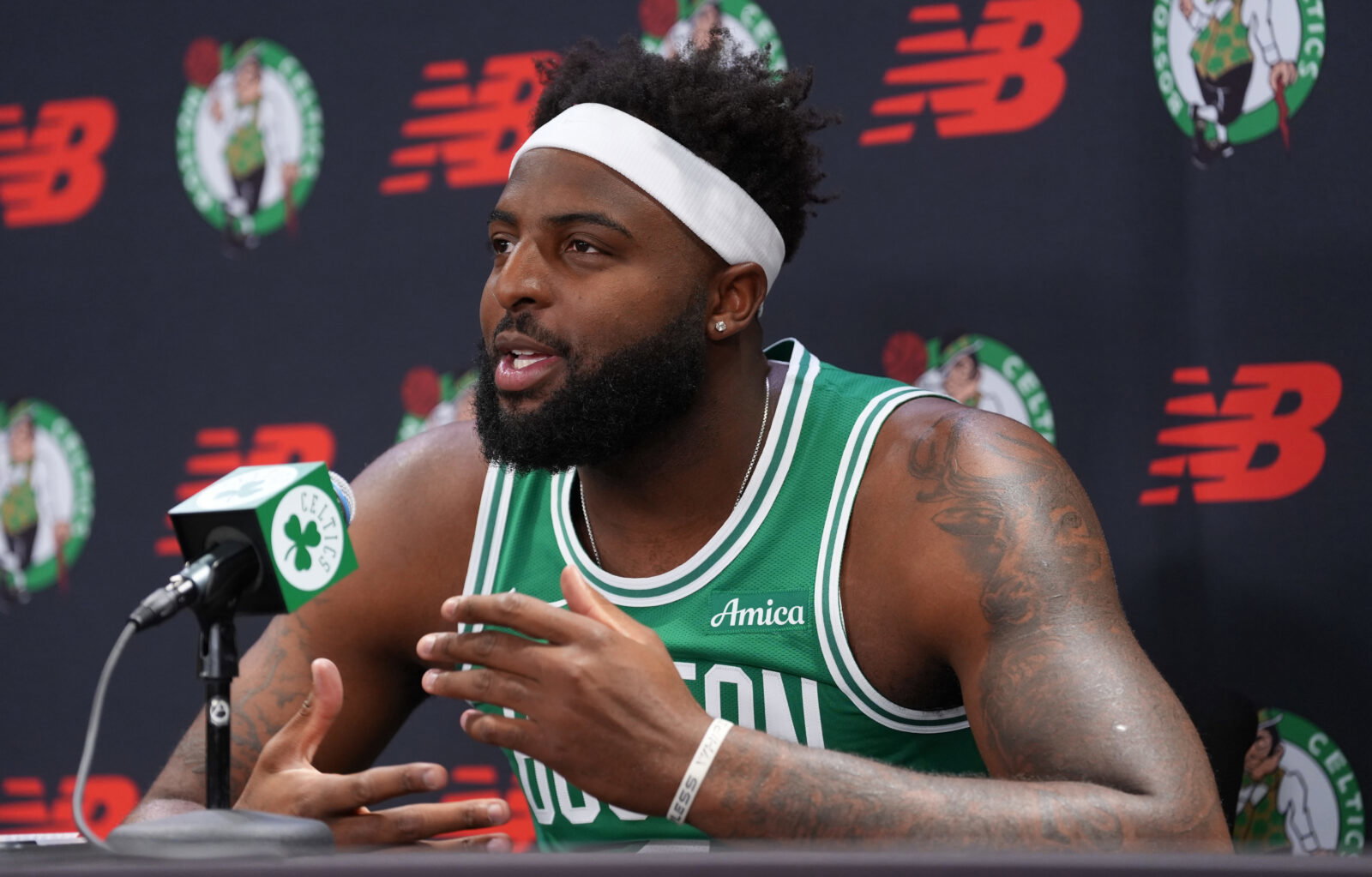
As the Boston Celtics deconstructed their 2024 championship core during the 2025 offseason, their center rotation became the team’s biggest question mark. At Monday’s Media Day, Celtics president of basketball operations Brad Stevens highlighted how far the group has come, calling it a “position of strength.”
Their centers appear equally optimistic. Neemias Queta, who broke out as Boston’s starter last season, gave the group a name: “Big Fella University.” The BFU cast includes Queta, free-agent signing Mitchell Robinson, returning contributor Luka Garza, and recent draft picks Amari Williams and Chris Cenac Jr.
Boston locked up Queta and Robinson on multi-year deals and added young talent in the draft, so the room looks settled for the foreseeable future. With a foundation built on crashing the glass, setting screens, and protecting the paint, the Celtics enter 2026-27 with real depth at the five. Here’s what each of those strengths could mean for Boston.
Offensive Rebounding to Win the Shot Margin
Offensive rebounding became a new weapon for Boston last season. It was central to their philosophy of winning the shot margin: taking more shots than the opponent.
It’s not hyperbole to say Robinson is his generation’s greatest offensive rebounder. His career offensive rebounding rate is 17.2%, per Basketball Reference. He hasn’t played enough minutes to qualify for the site’s official career leaderboard, but that figure puts him on par with Dennis Rodman, who tops the list at 17.2% as well.
Boston leaned on aggressive crashing from Garza and Queta last season. They finished 11th and 16th, respectively, in qualified offensive rebounding rate, per NBA tracking. Queta turned that work into easy points, too. He finished eighth in the league in total second-chance points.
Now add Robinson, who ranked first in offensive rebounding rate last season by more than four points in NBA.com’s tracking: 20.1% to Clint Capela’s 15.8%. The Celtics now have a three-headed gauntlet of bruisers in the paint to crash the boards again this upcoming season.
Screening and Creating Offense for Others
With Jayson Tatum sidelined for most of last season, Boston’s ball-handlers took on bigger offensive roles. To help with that adjustment, Queta and Garza set relentless screens.
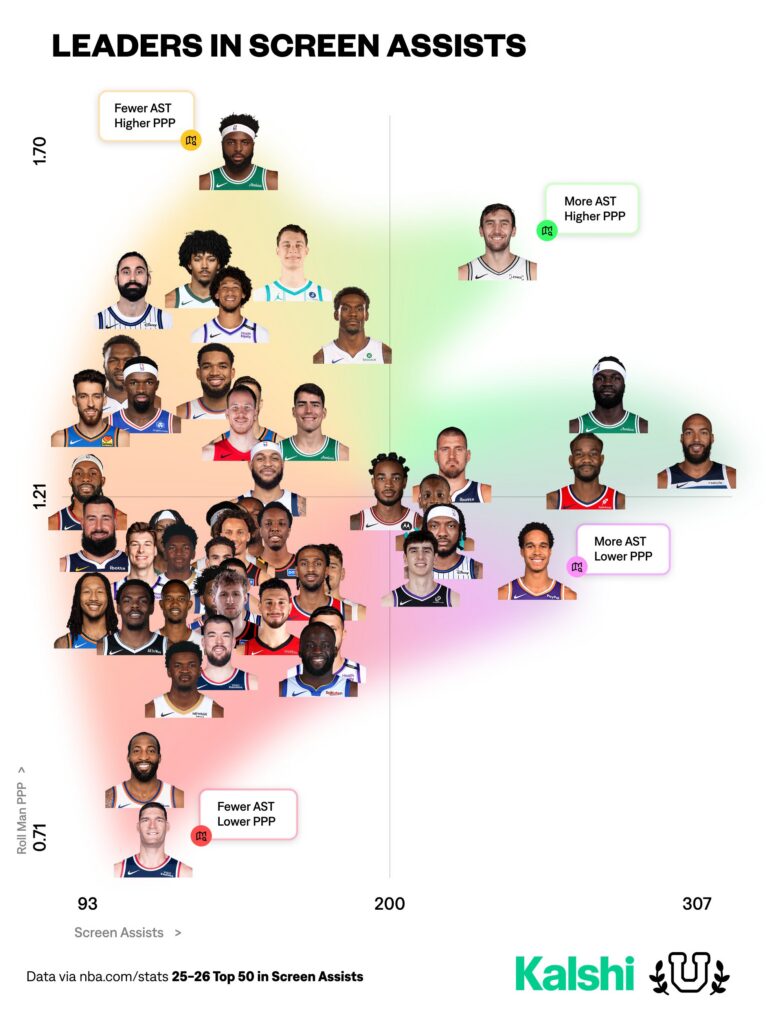
Payton Pritchard and Derrick White leaned heavily on their bigs in the pick-and-roll. Both Queta and Garza ranked in the top 22 in efficiency as rollers among players with at least 40 possessions, per NBA tracking. Queta even ranked second in total screen assists recorded.
Robinson’s addition strengthens that part of the frontcourt, too. His volume was far lower than Queta’s or Garza’s, but his efficiency was off the charts: 1.7 points per possession, the league leader over that same sample size.
Pritchard and White now have a year of heightened pick-and-roll usage and built-in chemistry with their returning two centers. Robinson should slide into Boston’s screen-heavy offense and make a big impact. Tatum’s return should further elevate that aspect of the Celtics’ offense as well. He has thrived in the pick-and-roll with several Celtics centers, and his pairing with Queta and Robinson could be as deadly as any iteration he’s yet played with.
More Ways to Defend
https://twitter.com/_nydyl/status/1920467999141642485
The Celtics ranked fourth in defensive rating last season despite questions around their centers entering the year. Before the season, Queta showed flashes as a rim protector but struggled to step outside the paint, particularly against pick-and-rolls. Garza was similarly challenged in space, so the Celtics shifted from a switch-heavy scheme to drop coverage more.
Queta has gradually improved his range, but he’s still most comfortable dropping. The Celtics will hope he keeps expanding his game. However, Robinson steps in already offering a more natural look when extending out to the perimeter. Tatum saw that firsthand during his battles with Robinson during his Knicks tenure.
Defense is where the underclassmen of “Big Fella University” could make their mark. Cenac played a lot of power forward during his lone season at Houston. The Cougars already rostered the reigning Big 12 Defensive Player of the Year, Joseph Tugler. That forced him to step outside far more often than he was ever asked to in high school. It was good practice for NBA spacing, but it also distracted from a 6-foot-11 frame and 7-foot-5 wingspan that can protect the paint better than his box score may indicate. At Summer League, Cenac recorded 11 blocks in just four games.
Meanwhile, Williams’s most promising moments in Boston last season also came on defense, including a clutch block as a help defender in double overtime against the Brooklyn Nets.
Put it together, and Mazzulla has options: Queta’s rim protection, Robinson’s ability to switch out, and two young bigs with promising traits. He can build coverages around the matchup instead of locking into one scheme, which is a level of flexibility Boston didn’t have at the position a year ago.
Inside-Outside Versatility
Spacing from their centers was a superpower for the 2024 championship Celtics. Al Horford and Kristaps Porziņģis pulled opposing bigs away from the rim and made them pay when they didn’t. This year’s group can’t match that yet, but it may find its own path to generating offense from the perimeter.
Garza is the clearest floor-spacer. He led all NBA players who attempted at least 100 above-the-break threes in accuracy, hitting 46.4%. Cenac has shown floor-stretching potential too, shooting 33.3% from deep on 2.4 attempts per game at Houston.
The bigger shift could come from Queta and Robinson, the top two centers. Neither has proven himself from the outside, but both hinted at extending their range at Media Day.
Robinson said the coaching staff had him working further from the basket in workouts this summer. Hopes of a consistent jumpshot may be unlikely, but his presence outside could still consist of big-body screens and more chances to attack downhill with momentum, with or without the ball. His efficiency as a roller was already elite.
Queta, meanwhile, has quietly been working on his shot. He has attempted at least one three in each of his eight international games over the last two summers, and he made his first NBA three last season.
“I feel like my versatility has gotten better,” Queta said at Media Day. “My ability to shoot the ball, being able to be more of a mismatch killer too, is going to be something that I’m trying to rely on this season. Those are some of the things I wanted to be better at.”
Experimentation around the perimeter doesn’t change their proven impact in the paint. Queta and Robinson ranked 17th and 24th respectively in total dunks. They will make their interior presence felt, but the Celtics appear supportive of letting them experiment outside more as well.
The Next Steps for Big Fella University
Brad Stevens called their center room a “position of strength.” The group brings elite offensive rebounding, effective screening, defensive versatility, and shooting upside.
Whether “Big Fella University” lives up to the hype will fall on Joe Mazzulla and the Celtics’ player development staff to teach and develop the unit’s skill sets. They have plenty of tools at the five, and how they maximize them will determine whether BFU’s students can become Boston’s next championship frontcourt.











Leave a comment