

What happens when a diehard fan realizes no one is telling the truth about his team? He picks up the microphone himself. That’s how Dime Dropper was born.
It started, like many things do, during the downtime caused by COVID. Fresh out of university, no job, and nothing to do. The Clippers were still the Clippers — a team that had spent decades existing in the shadow of the Lakers, rarely receiving the honest coverage their fanbase deserved. Most of what was out there was soft. Too polite.
“Everybody was just saying only good things about the team, and that’s not always the reality in professional sports,” he explains. So he did what felt natural: he started talking.
Dime Dropper started not out of a business plan or a content strategy, but out of a gap he couldn’t stop noticing. A space where a real fan willing to call out underperformance simply didn’t exist.
Recognizing the Need
Many versions of sports media function like a press release. Safe takes, careful language, an almost institutional reluctance to say what everyone is thinking. Dime Dropper became the antidote to that.
“I think what was missing in the Clippers space was an authentic fan that made content that called out the team when they were not doing well,” Dime Dropper said. “Before I got into the mix, everybody was too nice.”
The best fan voices don’t emerge randomly. They emerge when an audience feels underserved, when something true isn’t being said loudly enough. Dime Dropper spotted that gap and stepped into it. His content blends analysis with the unfiltered emotion of someone who actually cares about the result. Not a reporter covering a beat, but a fan who has (literally) been in the building.
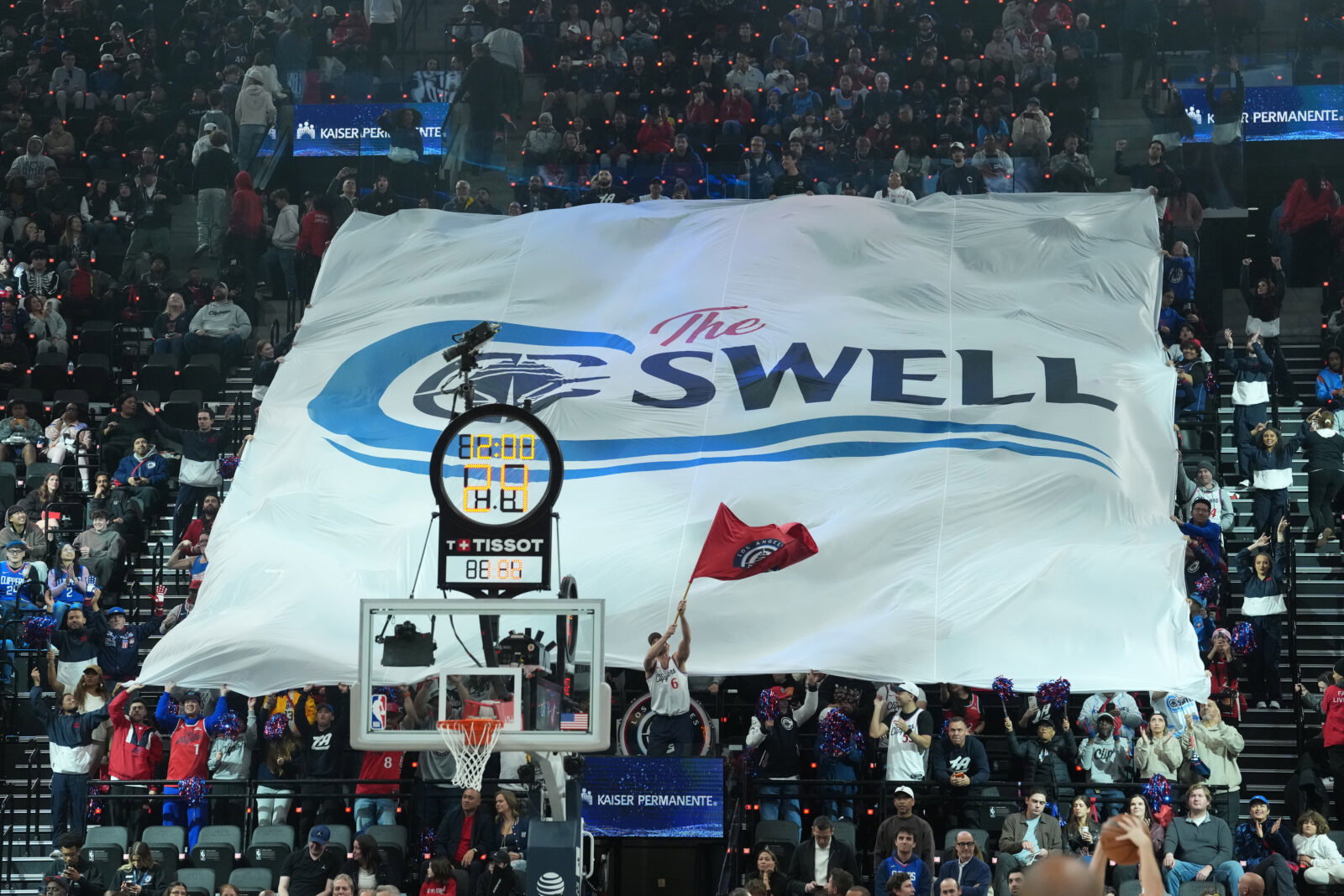
He became a season ticket holder at 25, something he hadn’t expected to happen until he was 40. He has attended over 200 games. All this hard work and dedication started one night in February 2006. He watched the Clippers beat the Lakers and decided he was a Clippers fan for life. That history matters, as it’s what separates genuine fan media from content that just performs fandom.
“I’m a season ticket holder. I want to show everyone that we have a fan base. We have a bigger fan base than everybody realizes.”
The Emotional Question
One of the tensions at the heart of sports media — and one that Dime Dropper thinks about directly — is where passion ends and bias begins. Is emotion a strength or a liability? His answer is clear: it depends on what you’re trying to do, and who’s listening.
“There are a lot of people that like the emotions, like the authenticity and they really gravitate towards that. Some people that think maybe I’m too emotional.” But Dime Dropper isn’t interested in performing neutrality for its own sake. “Sports are emotional and I think you need to embrace that we all have our biases.”
He makes a point that cuts deeper than it might first appear: even a journalist covering a national team has opinions. Even a reporter who never declares a preference still sees the game through a particular lens. The difference with fan media is that the perspective is declared upfront.
What he has built isn’t just content — it’s a position. And holding that position consistently, through winning streaks and bad trades and controversial opinions on Kawhi Leonard and James Harden, is what turns viewers into a community.
Balancing Other Aspects of Life
Another side to Dime Dropper that doesn’t always make it into the videos: he’s also a full-time basketball coach.
He started coaching at 18 years old, volunteering at his local park for free. When he came back from university, he returned to that same park, then got a call about a job at his middle school. Sixth grade. Then sixth and seventh, then seventh and eighth, which turned into a travel team. Now he runs practices every single day.
“It’s the most fun thing I do,” he exclaims. “You really get a chance to make a difference in kids’ lives.”
But doing both — building a media presence and coaching full-time — is not a balance he has fully figured out.
“I don’t sleep a lot. I push myself really hard.” He acknowledges that when the coaching season intensifies, the content drops off. Something is always being sacrificed.
Coaching has also sharpened his media voice. Working with young players daily has confirmed what he was already saying on his channel: that grassroots basketball development in America is broken, driven by money rather than fundamentals.
“I see [talent] in the youth level. I see it translating to the NBA.”
Impact of People Listening
There’s a moment in every creator’s journey when the scale of what they’ve built stops feeling abstract. For Dime Dropper, it came through the community.
“The amount of people that are actually listening that say they listen every day — that part is surreal to me,” he says. He grew up going to games as a kid. He never imagined people would approach him to say his content had mattered to them. “I was just growing up going to games as a kid and I never felt in a million years that people would be coming up to me.”
He also discovered that relationships were harder to manufacture. Specifically, people who showed up consistently and were there during difficult moments, including personal ones. “When my family lost my house… the community, the community aspect, how you make relationships with these people.”
The criticism came too, of course. Opinions on Harden and Kawhi turned sections of the audience against him, at least temporarily. He learned to recognize which critics were actual fans and which were just attached to a player. He realized, slowly, that you can’t respond to everything. “You’ve got to realize that you’re not going to please everyone.”
Future Directions
When asked about the future, Dime Dropper is honest about where his passion is pulling him: coaching is winning. Being part of the outcome, having actual influence on what happens on the court, competing through his players — that’s what makes him feel most alive.
“If I don’t get to be on the court, the next closest thing you can do is be a coach.”
Content isn’t going away, but its shape may change. He talks about exploring film breakdowns of old-school basketball, something almost no one his age is doing consistently. He talks about protecting his players from public exposure while still finding ways to share what coaching has taught him.
What started as a guy with nothing to do during a pandemic and a team he felt wasn’t being covered honestly has become something harder to summarize. A media voice. A coaching career. A community.
Sports media, at its best, works like this: someone notices a gap, steps into it, and refuses to pretend they’re neutral about the thing they love. Dime Dropper figured that out early. The rest has followed.









Leave a comment