

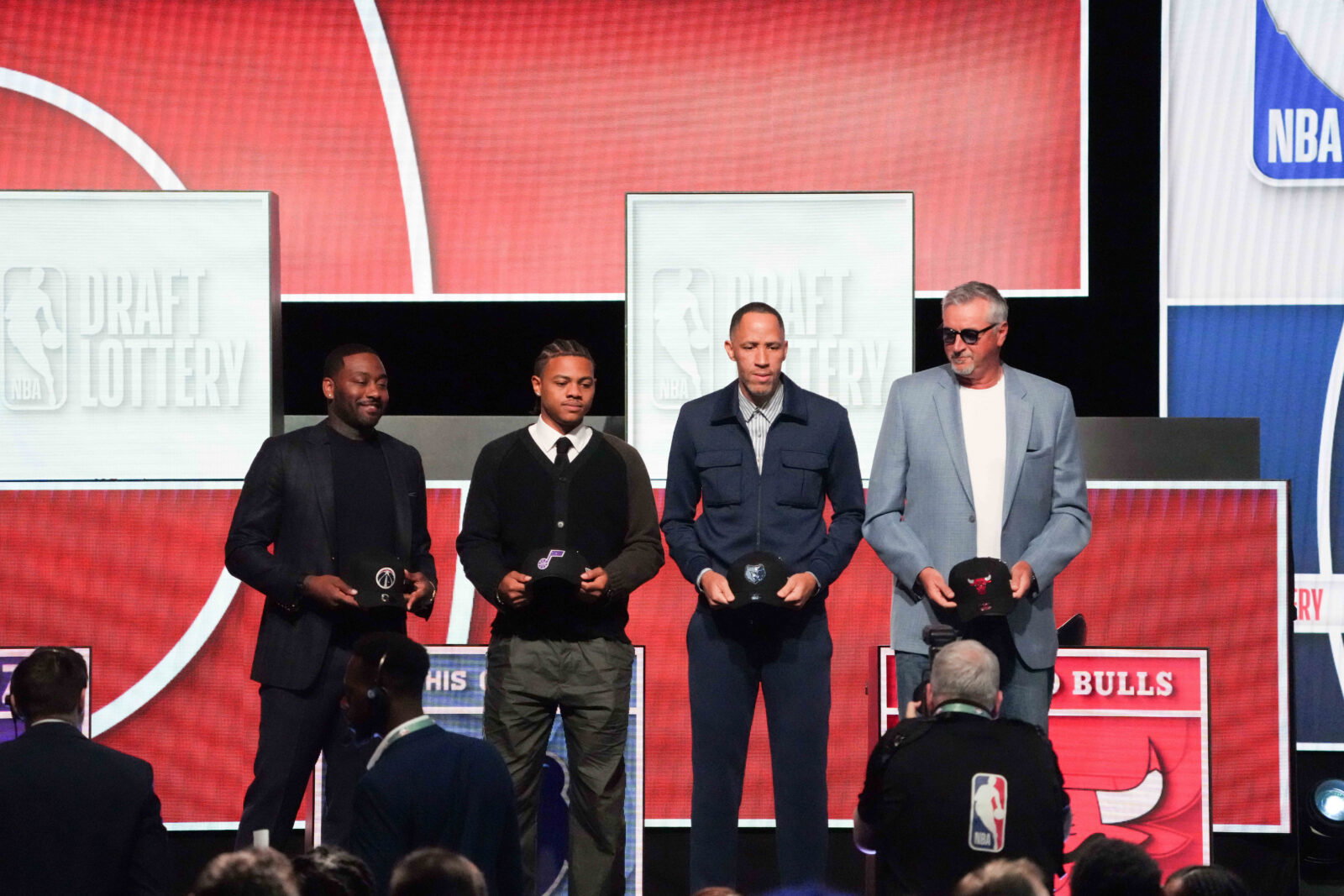
After years of hardship and suffering, the Utah Jazz finally struck gold in the NBA Lottery.
The date May 10, 2026, the date Utah got the No. 2 pick, should be hung up in the rafters of the Delta Center for time and eternity.
Besides capping off the rebuild in a stunning fashion, this day now holds a historical significance. To better understand this moment in Jazz history, The Lead sat down with KSL Jazz beat writer Chandler Holt.
History Made for Utah Jazz
This year’s lottery results marked the first time the Jazz organization ever moved up a spot in the NBA Lottery. If the Jazz ever found themselves in the lottery, the team either dropped or stayed put in the standings. The only time they really “moved up” was in 2005. Utah traded the sixth and 27th picks to the Portland Trail Blazers to move up to the third spot in the draft.
There, they selected franchise cornerstone, Deron Williams. Now that the team has the second pick in the upcoming draft, they can select a franchise cornerstone once again.
What to Do with the Pick?
The No. 2 selection in a deep draft holds much value for the Jazz front office. Whoever falls to the second overall has the chance to be a win-now player. AJ Dybantsa, Cameron Boozer, and Darryn Peterson all can make a case to be the number one pick.
There’s a rumor that Utah is trading up to get Dybantsa and keep him in Utah. Tempting, for sure, but the price for the number one pick sounds astronomical.
“I see a lot of people talking about the possibility of trading up to one (the first pick)”, said Holt. “The whole Ace Bailey and number two (the second pick) for one, is like the most blasphemous thing I have ever heard.”
“The Jazz love Ace Bailey, Will Hardy loves him, the front office loves him,” Holt continued. “That would be a ridiculous overpay of a trade.”
If the asking price for Bailey felt too high for Holt, then the Jazz front office would likely feel the same. If the Washington Wizards call and ask for that price, Utah should hang up. Speaking of trades, the Jazz could use the pick to trade for a win-now veteran star. It seems unlikely that they would entertain the idea, but it is an option to make the team better now; with a player like Giannis Antetokounmpo rumored to want out of his organization, the Jazz front office should consider the avenue.
If no trades happen with the pick, another question remains: Who do the Utah Jazz select in the 2026 draft?
Pick the Hometown Kid
Though it may seem wild to say, the Jazz have a 50% of picking Dybantsa with the second pick. With rumors circulating that he told the media he prefers to stay in Utah.
“I wouldn’t rule it out, I also wouldn’t bet on it,” stated Holt when asked about this subject. “I would probably say less than a 50% chance it happens, but if it did happen, it wouldn’t be the most mind-blowing thing.”
The Jazz are looking for someone who wants to play in Salt Lake City for a long time. So picking the guy who played at BYU and shows interest in becoming a Jazz is logical. The college hooper averaged 25.5 ppg, 6.8 rebounds, and 3.7 assists in his one year at BYU.
The Jazz could use a prospect of that caliber, especially as they look to make a quick run back to the playoffs next season. Dybantsa’s scoring punch off the bench and rebound IQ could benefit them not just in the regular season but in the postseason.
The Comeback Jayhawk
At the start of the college basketball season, Peterson got crowned the undisputed number-one pick contender. For a while, it felt like nobody could challenge his hold on that spot. Then the cramps and early exits from games started. Peterson and his group have since put some of the criticisms of these actions to bed, stating that creatine consumption caused the cramps.
Fancy that this answer comes out around the draft lottery and combine. Though Peterson’s healthy history can get a little murky, fans and pundits alike don’t deny the kid has talent. In head-to-head matchups with Dybantsa, Peterson usually outdueled the player wearing BYU blue and averaged 20.2 points, 4.2 rebounds, and 1.6 assists per game on the season.
With stats like that, organizations drafting in the top three may forgo their fears and do anything to draft Peterson, but is it worth it?
“They’re [the Jazz front office] gonna go into every single thing you could ever think about,” said Holt. “Since it’s a storyline, I’m 100% positive they will look into all the injury stuff, they will talk with him about it, they will go to doctors.”
He later stated, “From the stuff that I’ve heard, it doesn’t sound like the biggest of a deal.”
A Family Reunion
Boozer takes the spot of the most intriguing candidate of this draft. He won the Naismith Men’s College Player of the Year Award this year, and some could argue that he and Duke would’ve gone further in the NCAA Tournament if not for a flukey possession.
He’s No. 1 on some draft boards due to his efficient 56% shooting and his ability to score at will near the basket. On top of that, he ranked second in points accumulated in the entire NCAA, just behind Dybantsa. Others debate whether the forward can become a superstar in the NBA, claiming that Peterson and Dybantsa have a better chance at reaching that level of play.
The combine will give front offices more answers on Boozer’s potential, but the Jazz may have a trump card up their sleeve. Carlos Boozer, Cameron Boozer’s father, scouts for talent to help Utah’s front office. He knows his son better than anyone, yet some fans fear the Jazz might be forced to draft Cameron because of his father’s role in the front office.
“I think the effect on decision making is incremental, it’s tiny, it is minuscule,” said Holt of the Jazz drafting Cameron, because his dad is on the staff. “The Jazz will take the best player available, and for what they feel will be the best for their team.”
The Best Position to Be in
With the draft so far away, Jazz Nation and Utah media alike can speculate who the best player is for their team. Over the coming month, fans will hear daily discourse, smoke screens, and rumors about these players. Whoever Utah picks will be celebrated and forever remembered. Jazz Nation always supports its players, and soon Dybantsa, Peterson, or Boozer will find that out first-hand.
Not since 1980 have the Utah Jazz selected from the No. 2 position in the draft. Fans of this team should enjoy the experience; who knows, it may take another couple of decades to get back to that position.










Leave a comment