

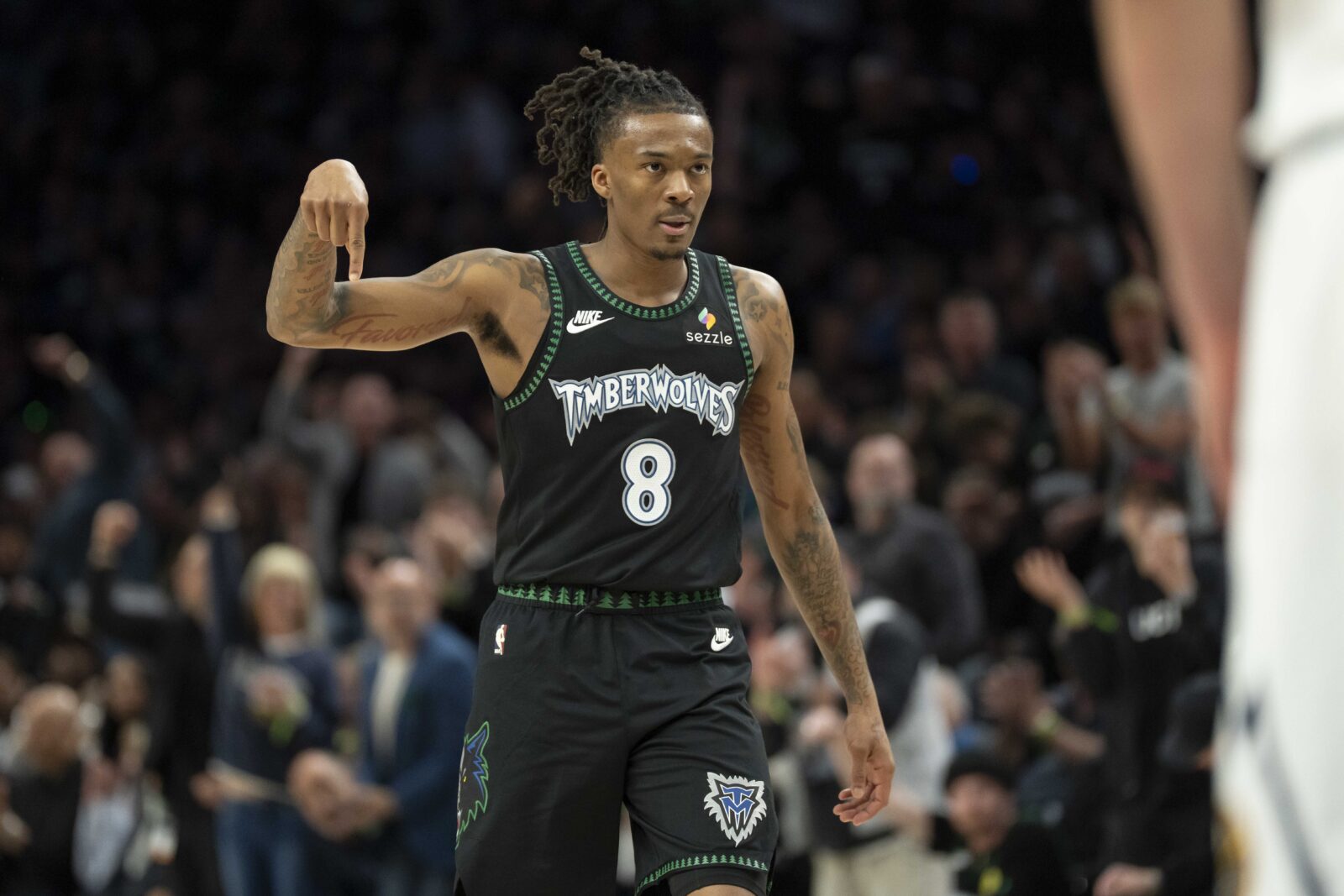
The Minnesota Timberwolves enter the 2026-27 season with revitalized energy and focus after a disappointing 2026 playoff exit. After another up-and-down year for the Wolves, injuries hit during the postseason run and decimated their chances of true contention.
Finishing the regular season 49-33 was largely underwhelming, given the hype and expectations swirling entering the season. Minnesota’s record was barely enough to earn the conference’s sixth seed. Though they stymied the rival Denver Nuggets in the first round, San Antonio sent the Wolves packing in the conference semis. The team’s lack of depth at key positions was exploited. It suffered injuries, and Anthony Edwards played on one leg.
With last season now in the rearview, the focus is on the future. This organizational mindset is evident, following a recent franchise rebrand. Not only are the jerseys changing, but so is the network you watch them on. DAZN is the new exclusive streaming partner of the Minnesota Timberwolves, taking over for FanDuel Sports North.
Team’s Biggest Offseason Loss: Naz Reid
The most impactful offseason loss was unquestionably Naz Reid, who was traded to Charlotte in the LaMelo Ball deal.
The losses of veterans Mike Conley, Kyle Anderson, and Joe Ingles will also be felt throughout the Minnesota locker room. As previously written regarding the signing of Jonathan Kuminga, head coach Chris Finch is ready to “take the diapers off” and let the young core lead the way forward.
Tim Connelly’s Julius Randle experiment ended early this offseason. The Wolves moved him to the Brooklyn Nets to free up cap space. While new faces will join the team this year, the roster’s core remains largely intact. You can view the current roster here.
The Timberwolves also underwent a coaching shakeup. Former lead assistant Micah Nori is landing his long-awaited head coaching gig in Portland. Per a recent report from HoopsHype’s Michael Scotto, Minnesota is hiring Daniel Brady to be a new assistant coach.
Team’s Biggest Offseason Addition: LaMelo Ball
In contrast, Minnesota’s most impactful offseason acquisition is easily LaMelo Ball.
Ball fills a point guard need the Wolves have sorely missed for years, and fans are eager to see him debut as a Timberwolf. His ball-handling, floor spacing, and playmaking will be welcome improvements to Minnesota’s offense. Taking the ball out of Anthony Edwards’ hands will help him operate with space and do some playmaking himself.
https://twitter.com/Timberwolves/status/2102478365404041487
Alongside Ball, adding Jonathan Kuminga could be a godsend for the Wolves. After moving Reid to Charlotte, Minnesota was admittedly thin at power forward. With Kuminga betting on himself and joining a contender like Minnesota, the move sparked celebration in Minneapolis. The Timberwolves now have a legitimate starting lineup and added stretch-four depth with the draft selection of Isaiah Evans out of Duke.
As it stands, the Wolves are eyeing a leap from French center Joan Beringer and are anxiously awaiting the return of guard Donte DiVincenzo from an Achilles injury.
Wolves’ Best-Case Scenario
After finishing the regular season 49-33 for the second year in a row, Minnesota’s active offseason shows they’re serious about their chances in the near window.
Considering the offseason activity and schedule ahead, it’s reasonable to predict a whopping 56-26 record for this year’s squad. This is best-case, and should be sufficient to comfortably put them in the three-seed spot, right behind San Antonio and Oklahoma City. That would also mean avoiding one of the two aforementioned clubs in the first round of the playoffs.
Regardless, the Wolves will likely have to get through one (or both) of the Spurs and Thunder.
In the ultimate best-case scenario, Minnesota would secure a top-two seed and change the math altogether. After all, health is well known for changing sports outcomes.
Wolves’ Worst-Case Scenario
So, what if the newly revamped roster takes time to gel? What if the Wolves start slowly? Or what if the injury bug bites at Mayo Clinic Square and things have to look different? So many questions remain before anyone can map out the permutations and combinations, but here’s a valiant attempt.
If negative variables enter the equation, things go sideways, and the wheels completely fall off—a worst-case projection for the Wolves is a final regular-season record of 42-40.
If that were the case, Minnesota would be looking at a potential playoff seeding of eight to 10. They would then have to participate in the Play-In Tournament. The Wolves are at a point in their history where a play-in appearance could be borderline disastrous and would put many in the Twin Cities on edge.
Assuming the Spurs and Thunder secure the top two playoff seeds, Minnesota could face a gauntlet. The Timberwolves could then be forced to face both — one in the conference semifinals and the other in the conference finals — before even sniffing a chance at the Finals.
Wolves’ Biggest Question Heading Into 2026-27 Season
Like every other team in the NBA, Minnesota’s regular season will hinge on health.
Questions remain about the Ball/Reid trade, given that LaMelo Ball has played 75+ games only once in his six-year NBA career. In 2021-22, he played 75 games for Charlotte and was selected as an All-Star. Since then, he has averaged just over 44 regular-season games per year. If Minnesota wants to end up on the “best-case” side of fortune, Ball will need to be available much more often than he has been in the past.
The biggest question heading into the 2026-27 season for Minnesota is simple: How will the roster fit?











Leave a comment