

If you watched an NFL broadcast in 2025, you probably noticed something that looked unusual a decade earlier: a receiver sprinting across the formation at the snap, a running back split wide, or a quarterback tapping his helmet before a jet sweep fake.
They’re direct transplants from Saturday football, and they are reshaping how professional offenses attack defenses.
The College Blueprint Reaches the Pros
For years, the NFL shrugged off college schemes. The talent gap, the argument went, meant that spread concepts wouldn’t survive against pro linebackers and safeties.
That view has quietly collapsed. Kyle Shanahan in San Francisco, Sean McVay with the Rams, and Ben Johnson during his Detroit run have built entire identities around pre-snap movement first popularized by programs like Oregon, Baylor, and Oklahoma in the 2010s.
The reasoning is simple. Motion forces the defense to declare itself. When a slot receiver goes in orbit, coverage tips. Man defenders chase. Zone defenders adjust leverage. The quarterback gets a cleaner picture before he ever touches the ball.
What Motion Actually Solves
Play-callers aren’t copying college because it looks fun on TV. They’re copying it because the math works. According to tracking data from the past several seasons, offenses that use pre-snap motion on more than 60 percent of snaps consistently outperform league-average expected points per play.
Here are the main reasons motion has become such a valuable offensive tool:
- Coverage identification: Motion exposes whether the defense is playing man or zone within a half-second.
- Leverage creation: A receiver in motion arrives at the snap with momentum a stationary defender can’t match.
- Run-game math: Jet motion pulls an edge defender out of the box, giving the offensive line a numbers advantage.
- Quarterback simplification: Reads shrink when the defense telegraphs its intent early.
The Specific Concepts Being Lifted
Not every college idea translates. But many concepts have crossed over cleanly, and coordinators aren’t shy about admitting it in film sessions.
Jet and Orbit Motion
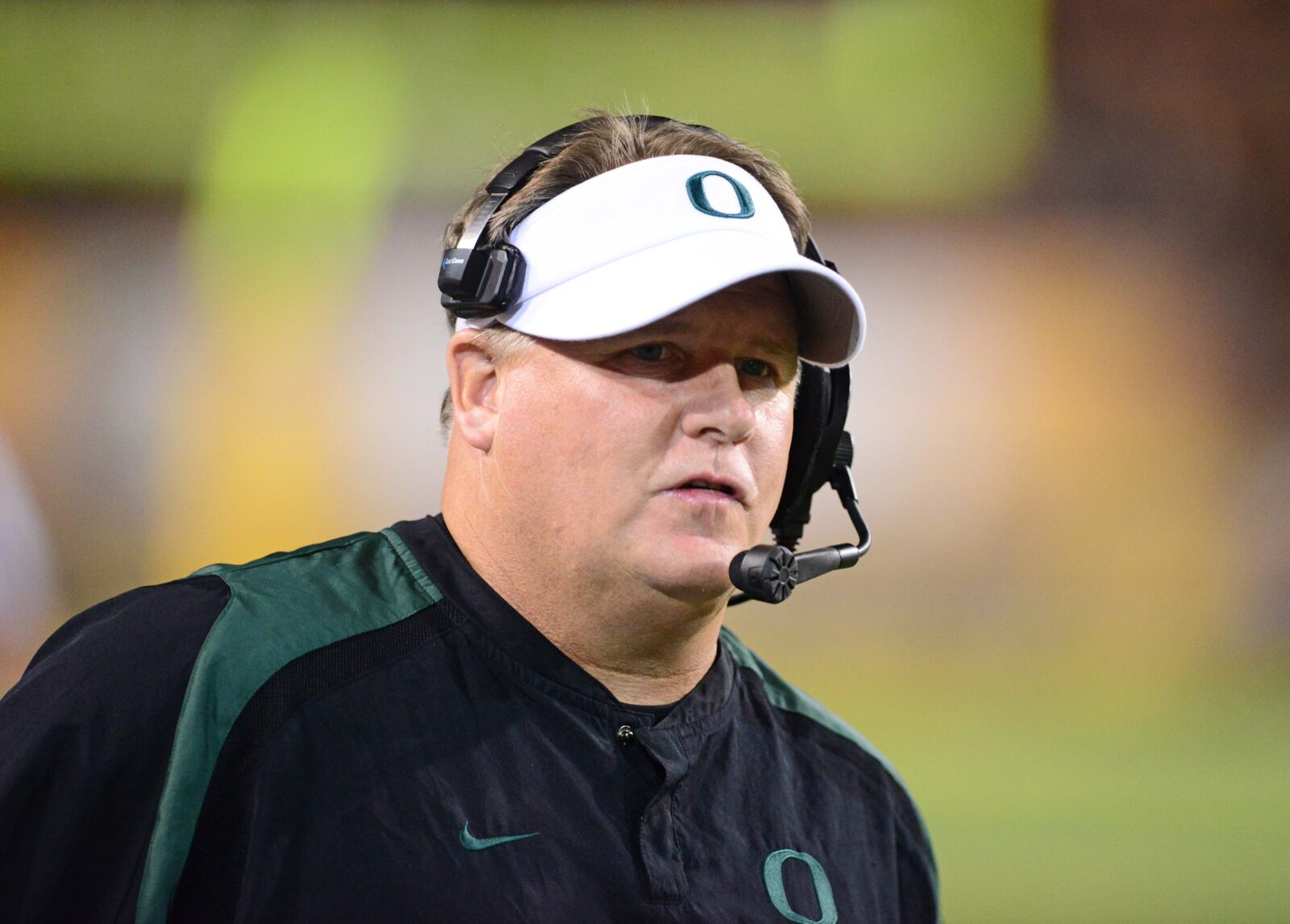
Chip Kelly’s Oregon teams weaponized jet sweeps to stress edge defenders. The Miami Dolphins under Mike McDaniel have run variations of the same action.
RPOs With Layered Reads
The run-pass option was a college staple long before it reached prime time. What’s new is the sophistication. NFL coordinators are now stacking two reads onto a single play — a give-or-throw decision plus a downfield tag — a structure Lincoln Riley refined at Oklahoma and Baker Mayfield eventually brought to the league.
Condensed Formations With Fly Motion
Tight splits paired with a wide receiver flying across the formation force defenses to choose between crowding the box and honoring the perimeter. It’s a Big 12 signature that Shanahan-tree coordinators have made a weekly staple.
Understanding the details has become part of the fan experience. Football supporters study play design and motion concepts, while casino review websites like Clash of Slots explain how different slot mechanics and bonus features compare.
Why the Shift Took So Long
The NFL’s resistance was structural. College teams practice more, install faster, and can afford to specialize personnel. Pro rosters, capped in size and time, historically leaned on formations they could run efficiently across a short week.
Two things changed. First, the 2011 CBA reduced practice time, which pushed coaches toward concepts that create advantages without requiring extra reps. Second, the analytics wave — reflected in the NFL’s own Big Data Bowl and the league’s public tracking data — gave coordinators quantitative proof that motion produced real, repeatable yardage gains.
How Defenses Are Responding
Defensive coordinators aren’t standing still. The counter has been more disguised coverage, later rotation, and heavier use of two-high safety shells that don’t reveal intent until after the motion resolves. Vic Fangio’s coaching tree has led that response, and the tension between motion-heavy offenses and post-snap-rotation defenses is now the central chess match of the modern game.
For readers who like team-specific analysis, articles covering things the Panthers must improve provide useful context for understanding how tactical adjustments shape performance over the course of a season.
Where This Goes Next
The exchange of ideas between college and professional football is unlikely to slow down. Quarterbacks entering the NFL already understand pre-snap motion, RPO reads, and faster offensive tempo, allowing coordinators to expand their playbooks without starting from scratch.
Defenses will continue adapting with disguised coverages, late safety rotations, and new ways to limit the information motion reveals before the snap. That ongoing adjustment is shaping one of the league’s most important tactical battles, with each side responding to the other’s latest innovations.
The gap between Saturday and Sunday football has become much smaller than it once was. Concepts that succeed at the college level now reach the NFL faster, and coordinators who recognize which ideas translate well are better positioned to keep their offenses evolving.










Leave a comment