

Last year, the Pacific Division featured some intriguing rosters. Regardless, it was largely considered the weakest in the NHL. It had the lowest point total of any division winner, the lowest total of any team, and the lowest total of any playoff team. Even still, there were plenty of takeaways from the division, including the Stanley Cup runner-up.
The Vegas Golden Knights took convincing wins in the first two rounds of the playoffs. When facing their toughest opponent to that point, the Colorado Avalanche, they didn’t stutter. A clean sweep punched their ticket to the Stanley Cup Finals, where they lost to the Carolina Hurricanes. The Anaheim Ducks fell victim to them in the process, but they had a surprising season of their own. They not only clinched the playoffs for the first time since 2018, but also won their first series since 2017.
The Edmonton Oilers were disappointed, losing to the Ducks in the first round after making the Stanley Cup Finals the two seasons prior. The Los Angeles Kings were a less-than-intriguing addition to the playoffs as a wild-card team. The San Jose Sharks ascended as a playoff team for years to come, but couldn’t clinch it ahead of the Kings. The Seattle Kraken remain a team that leaves plenty to be desired, while the Calgary Flames and Vancouver Canucks sat among the worst records in the league.
With a mix of contending and rebuilding teams, part of this preview highlights our predictions for the bottom-four teams in the Pacific Division.
8. Vancouver Canucks
The team that once seemed like a force in the West is now poised to make their second consecutive last-place finish. After trading away Quinn Hughes for youth and draft capital, the Canucks made it clear where they’re headed. Although they slipped to third in the draft lottery, they have a promising future ahead. It may take a while, and the 2026-27 season will likely be a bleak year in that process.
From a players-in, players-out standpoint, the Canucks were quiet this offseason. However, they did bring in Brandon Gallagher via trade. Veteran leadership matters with a young group, but it probably won’t move the needle this season. Signing Luke Schenn will accomplish something similar. Jamie Oleksiak was a great move to boost the defensive depth and should also be a great leader. Paul Cotter is likely to slot in the middle six, having been signed out of free agency from the New Jersey Devils. Extensions for Zeev Buium and Adam Novotný rounded out a stereotypical rebuilding offseason.
For the Canucks to be successful this season, a lot needs to happen. The middle of the ice isn’t all bad, as long as Elias Pettersson can return to form. Marco Rossi and Filip Chytil are intriguing down the depth chart. Liam Öhgren, Jonathan Lekkerimaki, and Buium are all young players who can contribute or even shine with some development. Their goaltending is still a big question mark, but they should get some good starts from Kevin Lankinen.
That said, it’s doubtful the Canucks actually want to be that good. They traded for several draft picks, and their focus is on building a top-tier prospect pool. With Landon Dupont and Nazar Privalov at the top of the draft, Vancouver will be looking to select as high as possible in 2027.
https://twitter.com/Canucks/status/2095991774129148039?s=20
7. Seattle Kraken
The Kraken, although a young franchise, have had very little to hang their hat on. After a pretty successful inaugural season, the franchise has struggled to build up into contention. This past season was more of the same, with a sixth-place finish in a weak division. After a quiet offseason, it’s hard to justify moving up, and they may slip even further.
Their offseason was headlined by a trade with the Florida Panthers for Mackie Samoskevich. Samo is a fine player, and he should seriously benefit from some more responsibility with a new team. He joins a young group of Matty Beniers, Berkly Catton, and Shane Wright. It’s hard to criticize the move, but it certainly shouldn’t have been the move of the offseason. For a team that needed more, the front office just didn’t deliver.
One bright spot is the defensive depth. It’s far from great, but it should certainly be productive in front of an average-at-best goaltending tandem. It’s not a terribly old group either, which means Kraken fans can look forward to a solid blueline for years to come. Extending Bobby McMann was another major offseason move, and it was a great way to stabilize a presence in the middle-six and on the power play.
Ultimately, the Kraken just didn’t do enough to establish a direction. It’s hard to tell if they expect to compete with their core or rebuild through the draft. With a stable blueline, it would make sense for them to get aggressive. If the young core they’re establishing makes some noticeable strides, some activity at the trade deadline could be in play. For now, it seems the Kraken have an unimpressive season ahead.
https://twitter.com/SeattleKraken/status/2068740859433226387?s=20
6. Calgary Flames
Ever since their 2022 playoff berth, the Flames have struggled to climb back into postseason hockey. They finished seventh in the division last season, resulting in the addition of Carson Carels as the sixth pick in the draft. On paper, Calgary’s roster has plenty to like. Some of their young players look very promising, and they keep adding and improving.
The Flames made two blueline additions. They traded for Simon Nemec and his brand-new contract. They also traded away Blake Coleman to the Minnesota Wild for draft capital and Jacob Middleton. Aside from some smaller one-year deals, those two moves defined their offseason. Both players will slot in and make an impact, with Nemec likely to start on the first pairing.
That said, their forward group is concerning. Jonathan Huberdeau will start the year on IR, leaving their wing group thin. Mikael Backlund and Morgan Frost up the middle in the top-six isn’t bad, but it is far from spectacular. Matthew Coronato, Connor Zary, and Samuel Honzek are all exciting young talents, but it’s doubtful they help lead the Flames much further next year. Brennan Othmann is another young forward worth watching. The former first-round pick was traded to the Flames at last year’s trade deadline and should benefit from a full year in a new organization.
Dustin Wolf is also a major bright spot as a young, already great netminder. Though he had a down year last season, it’s reasonable to blame the group in front of him more than his own talent. With additions on defense, his production could improve. Ultimately, winning games requires goals. Next season, the Flames may end up as the league’s least productive team in that area. Some slight improvements to propel them above the Kraken seem likely.
5. Los Angeles Kings
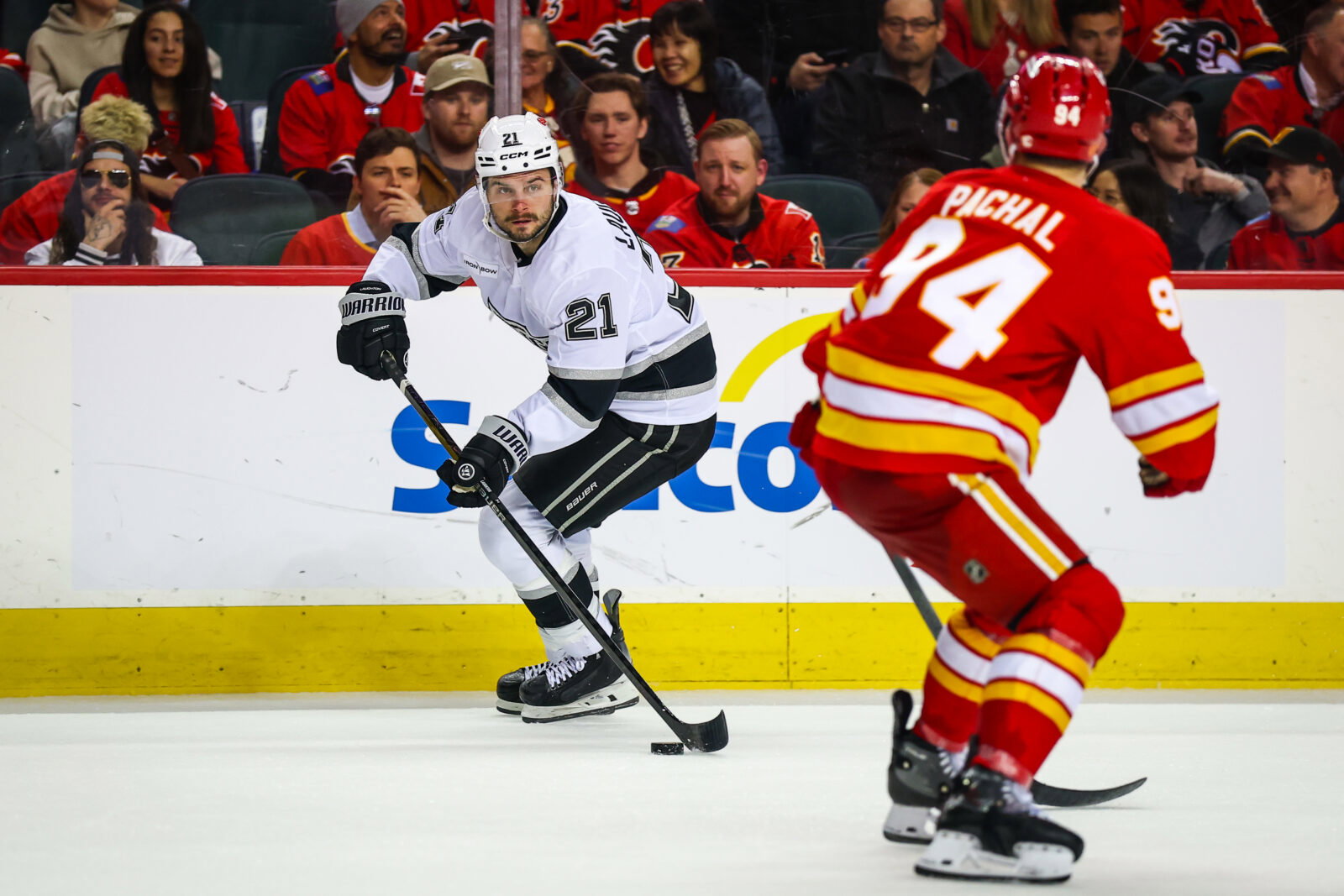
The Kings’ previous guard has slowly started to exit the franchise. With Anze Kopitar‘s retirement, only Drew Doughty remains from the early-2010s group that brought the organization two Stanley Cups. Even so, they remain committed to immediate playoff success. Despite their intention, it’s hard to see them making the playoffs again based on their underwhelming offseason.
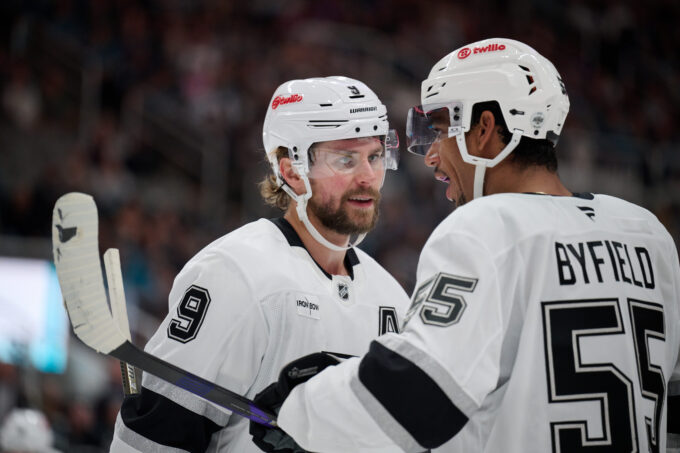
Mats Zuccarello was the most notable signing. After an excellent season with the Minnesota Wild, the Kings picked him up on a cheap deal to bolster the top six. Corey Perry also signed a one-year deal, while Scott Laughton was re-signed to a three-year deal. Both players will add offensive depth and bring a high-motor, leadership-based playstyle. All three players should help guide the youth in Quinton Byfield, Samuel Helenius, and Alex Turcotte, who will lead the next generation of Kings hockey.
All things considered, the roster is solid. Adrian Kempe and Artemi Panarin are a lethal offensive combo. As mentioned earlier, the offensive depth isn’t lacking, though it is far from championship-caliber. The defense still has Doughty to lean on, while guys like Brandt Clarke and Mikey Anderson take over as minute-eaters. Darcy Kuemper in net was once a force, and a return to form would be huge for the Kings.
Ultimately, like the Kraken, they didn’t do enough. The Kings were already among the least impressive playoff teams last season, and they didn’t stun with their offseason additions. As other teams in the division ascend, it will be hard to keep up with the same core. Their youth is intriguing, but the upside isn’t on par with other teams they will have to compete with for a playoff spot. If the pieces fall into place, they could make a Wild Card spot. For now, the outlook is less hopeful.
The Playoff Line
Clearly, one team is missing that has long impressed with its youthful talent but hasn’t made the jump. This season, it seems like their time to break into the playoffs and prove what they can do beyond game 84. For the teams above, there’s a mixture of rebuilding teams and teams that haven’t done enough compared to last season’s finish to justify a playoff spot. In part two, we’ll look at the teams best equipped to reach that next level and compete for the Stanley Cup.











Leave a comment