

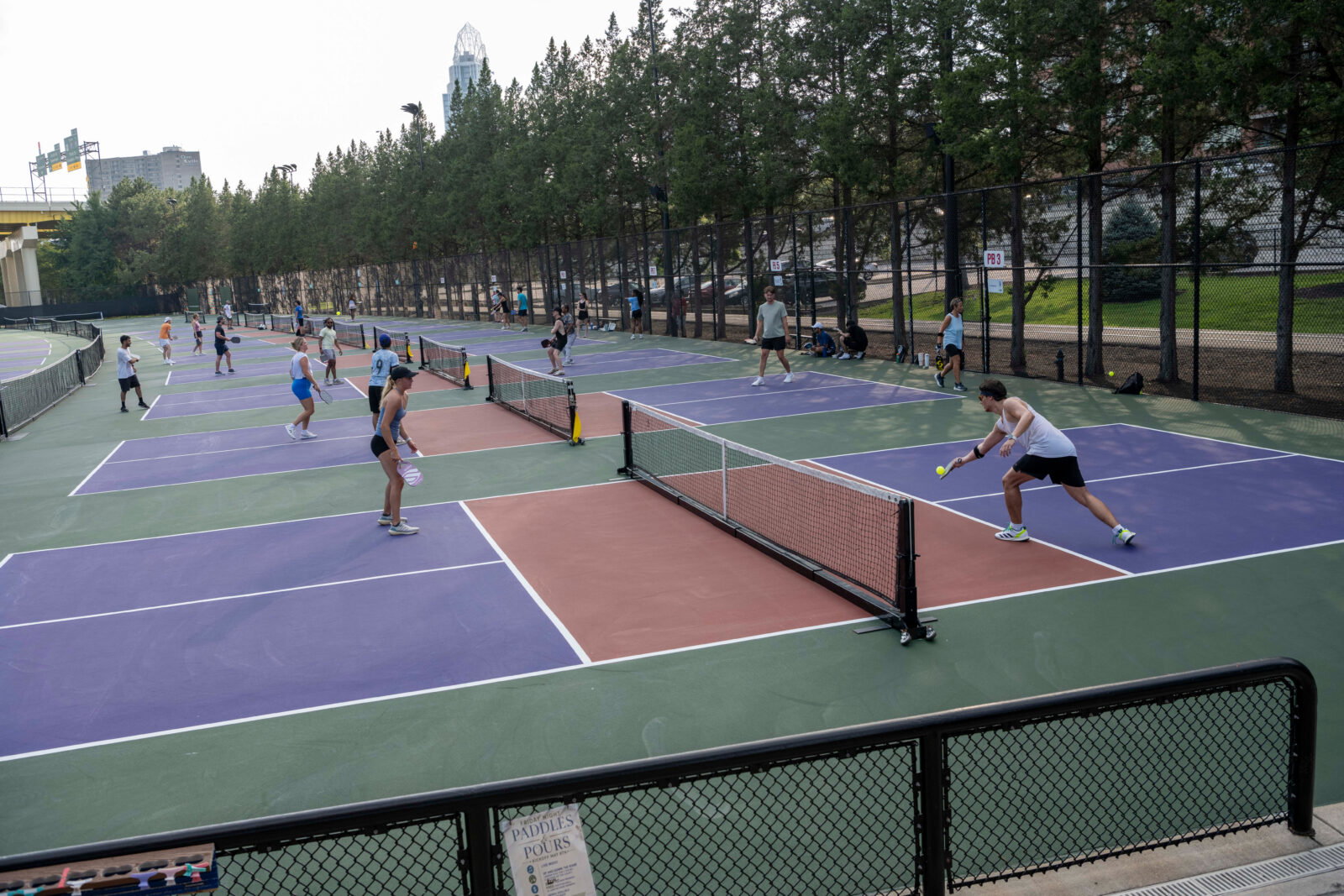
Walk past any public court on a weekday evening, and you’ll notice something odd. It’s loud. Not angry loud, more like backyard barbecue loud. Laughing, groaning, someone yelling “kitchen!” at a friend who clearly doesn’t care. That noise is the whole point, honestly.
Most neighborhoods lost this a while back. We used to bump into each other constantly, at the mailbox, the corner store, the little league bleachers.
Now half of that has been replaced by scrolling and deliveries and working from a kitchen table instead of walking to an office. Nobody planned it that way. It just happened.
Sport has always been a shortcut back to that. You show up, you don’t need a clever excuse, and suddenly you’re talking to someone you’d never have met otherwise. Pickleball has turned out to be unusually good at this, maybe better than anything else going right now.
Why Pickleball Draws Such a Mixed Crowd
You can learn the rules in one afternoon. That’s really the whole secret. No years of lessons, no intimidating gear, no feeling like an idiot for the first six months. Tennis and golf both ask a lot of new players before they let them have any fun. Pickleball just doesn’t.
Doubles is baked into the culture, and that matters more than people think. You’re never stuck out there alone, working through some private struggle with your backhand. You’ve got a partner covering for you, chirping at you, laughing when you shank one into the fence.
And the intensity flexes depending on who’s playing. A grandmother and a nineteen-year-old can share a court, and both leave happy, because the game bends to whoever’s playing it.
Soft dinks one match, someone smashing a ball at your shins the next. Same rules, completely different feel.
What Leagues Actually Give a Neighborhood
Pickup games are fine. Leagues are where things start sticking. A regular Tuesday night slot stops being “a thing I do sometimes” and turns into a fixed point in your week, something you plan around without thinking twice.
You start remembering people. The guy who always overpacks his cooler. The woman who talks a little too much trash but somehow makes it charming.
Rivalries form on their own, and those little rivalries are usually the reason people renew for another season instead of drifting off.
If you go looking for pickleball leagues in San Antonio, you’ll see the same pattern over and over. People aren’t only chasing better competition.
They want a schedule, a group that expects them, something a random park game can’t really offer. Even something as small as a standings sheet gives strangers a reason to start acting like a team.
Competitive Doesn’t Have to Mean Cutthroat
A lot of people skip organized sports because they’re scared of being the weak link. Fair enough, that fear is real, and any league worth joining deals with it directly instead of pretending it’s not there.
That’s what recreational divisions are for. Skill-based matchmaking keeps a total beginner from getting run over by someone who’s been playing since the sport barely had a name. It’s not coddling anyone. It’s just decent planning.
Plenty of solid pickleball leagues pair newer players with slightly stronger ones who actually enjoy teaching, rather than just tolerating it.
That said, it depends on the group. Some leagues are built to be intense, and that’s fine too, as long as everyone knows what they signed up for before match one.
The Part That Happens After the Match
Ask a regular league player where the actual bonding happens, and most won’t say “during play.” It’s after. Standing around, water bottle in hand, replaying that one absurd rally for the third time like it’s still happening.
Local events tend to show up once a community gets big enough. Potlucks. Charity brackets. The occasional costume night where nobody bothers keeping score.
Someone running a Silly Pickles pickleball league once mentioned their biggest turnout all year wasn’t a tournament at all; it was a holiday get-together where the paddles barely came out.
Friendships built on court have a way of leaking into regular life. Carpools. Birthday dinners. People trading shifts because their doubles partner is also somehow now their coworker’s cousin’s friend. Local coffee shops and gear stores near the courts feel this too, in small but real ways.
How Local Groups Can Help This Grow
None of this happens by accident. Cities and community organizers carry more of the weight than most players realize. Accessible courts matter, but access without guidance only gets you so far.
Beginner programs help a ton, along with low-pressure community leagues that don’t demand a huge chunk of time or money up front. Tournaments give the competitive crowd something to aim for.
Partnerships with schools and local businesses stretch whatever limited budget exists a lot further than any single group could manage solo.
What a Healthy Pickleball Scene Feels Like
The tricky part is balance. A good scene stays open to newcomers without turning chaotic. It’s welcoming, but it doesn’t ignore the people who genuinely want to compete hard.
Organized, but not stiff. Supportive without being condescending toward someone still learning to keep score out loud. You know it when you’re standing near the fence, and nobody looks lost for long.
The strongest pickleball communities were never really about who won. They’re built on something smaller and honestly harder to fake: a reason to keep showing up, meet people, and feel a little more tied to the neighborhood you actually live in.







Leave a comment