

It was an interesting opening weekend to March Madness this year.
After the first two days saw a limited amount of upsets and lots of blowouts, the second round delivered some more of those moments that we expect in March — buzzer-beaters, late comebacks, and games coming down to the wire.
While there isn’t a true Cinderella still alive, the quality of the 16 teams left in the tournament is as high as we’ve seen in the last couple of years.
Seeds don’t always tell the whole story of how a team is performing in March. Here is an updated ranking of all 16 teams still alive for the National Championship.
1. Florida Gators (1 Seed)
Had the last four minutes of Florida’s second-round matchup with UConn gone differently, the Gators may not even be on this list. But some big shots by William Clayton Jr. down the stretch helped seal the game and send the Gators to the Sweet 16.
Headlined by an experienced backcourt of Clayton, Alijah Martin, and Will Richard, the Gators can shoot any team out of the gym. In their win over UConn, the trio combined for 56 of the team’s 77 points. Pair that with their seemingly endless rotation of towering big men, and the SEC Tournament Champions are one of, if not the scariest team in the field.
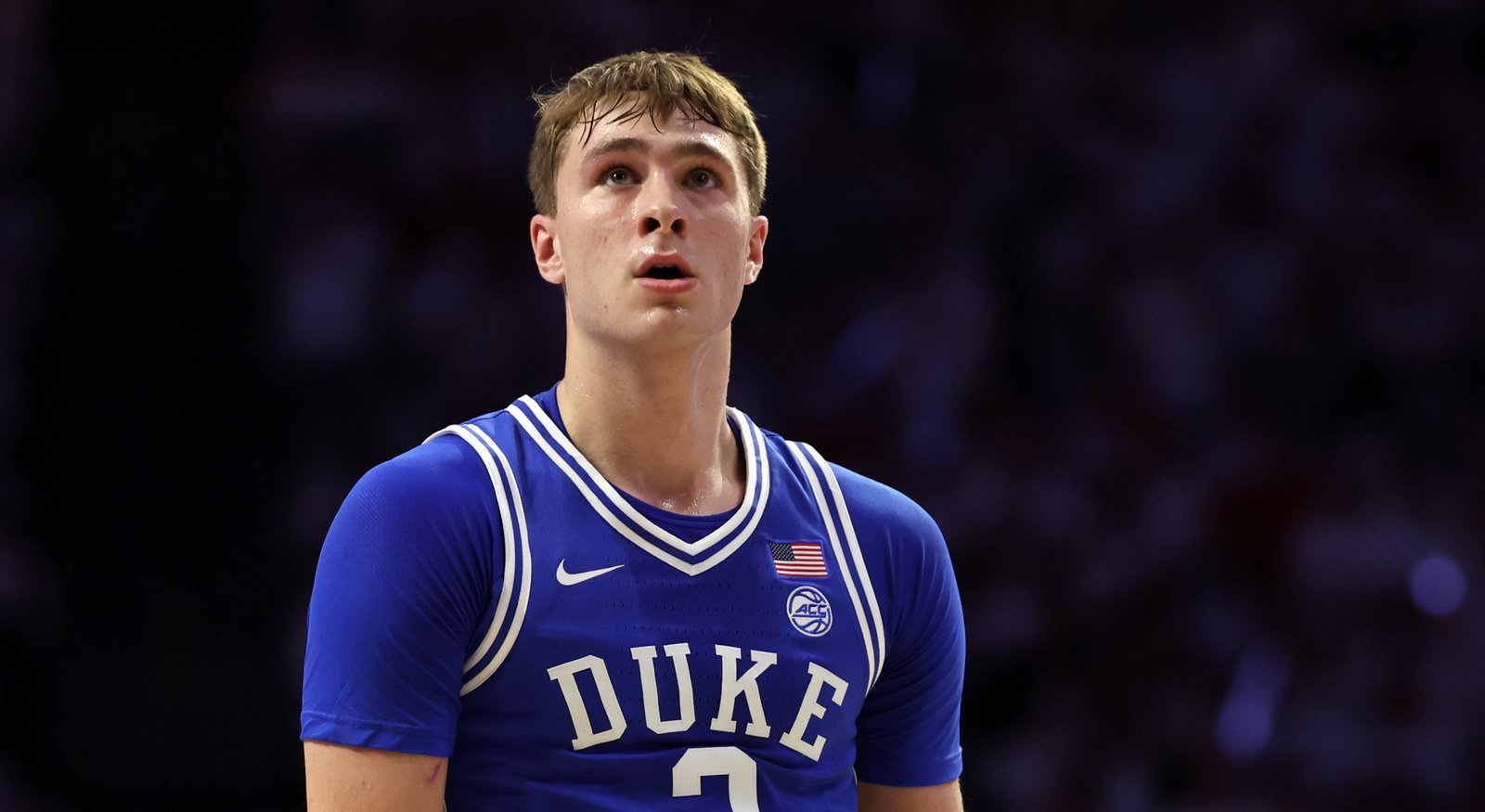
2. Duke Blue Devils (1 Seed)
Duke enters the Sweet 16 as perhaps the hottest in the country. With 13 straight wins by an average margin of 25 points, John Scheyer’s team hasn’t just been beating opponents— they’ve been destroying them.
Once again, the Blue Devils are led by an impressive class of freshmen, including projected number one overall pick in the NBA Draft, Cooper Flagg. However, it’s been junior guard Tyrese Proctor who has been the X-factor so far in the tournament. Proctor shot a combined 13/16 from 3 in the first and second rounds. For a team with multiple NBA prospects, having their veteran leader step up in the big moments could be the difference that pushes this squad over the hump.
3. Auburn Tigers (1 Seed)
Despite being the number one overall seed in the tournament, Auburn stumbled to the finish line to end the regular season. But don’t be too quick to count out the Tigers. This team still led the country with 15 quad one wins and won the SEC regular-season title.
Unlike Duke, the Tigers are one of the oldest teams left in the tournament. Tahaad Pettiford, a standout freshman guard, is the only non-senior to get serious minutes. Experience often prevails in March, and the Tigers have plenty of it.
4. Houston Cougars (1 Seed)
For the sixth consecutive season, the Houston Cougars, led by Kelvin Sampson, have advanced to the second weekend— the longest active streak in college basketball. However, this year’s team might have the best chance of finally bringing a championship to Houston.
Like previous teams under Sampson, the Cougars rely on their defense. Holding teams to a nation-best 58.4 points per game, the Cougars suffocate opposing offenses. That, combined with a balanced offensive attack led by L.J. Cryer, makes the Cougars one of the most well-rounded teams in the nation.
5. Alabama Crimson Tide (2 Seed)
The job Nate Oats has done at Alabama has been nothing short of impressive. This year marks the first time since 1987 the Crimson Tide are headed to the Sweet 16 in three consecutive seasons.
Coming off the heels of a Final Four last season, the Tide have looked the part of a team that could make it back. Once again led by Mark Sears and Grant Nelson, the Tide boasts one of the country’s fastest and most efficient offenses.
6. Tennessee Volunteers (2 Seed)
Like Alabama, the Tennessee Volunteers have returned to the Sweet 16 for the third straight season. Their matchup? The Kentucky Wildcats, who swept the Volunteers in the regular season.
Luckily for Tennessee, they’ve been playing some of their best basketball as of late. Since Feb. 22, Rick Barnes’ squad has knocked off Texas A&M in College Station, Alabama at home, and Auburn in the SEC Tournament. So far in March Madness, they haven’t lost a step. After opening up with a 15-point win over Wofford, they handled a good UCLA team in the second round to advance to the second weekend.
7. Texas Tech Red Raiders (3 Seed)
When fully healthy, Texas Tech is worthy of a top-five ranking on this list. The problem is that as of today, the status of Chance McMillan remains up in the air after sitting out Tech’s opening weekend games with an upper-body injury.
The good news for the Red Raiders is that in their limited action without McMillan, they’ve looked just fine. After a close loss to Arizona in the Big 12 Semifinals, they cruised to two double-digit wins to open the Tournament. The hope is that McMillan can return before the end of the year, and possibly even in time for Thursday’s matchup with No. 10-seeded Arkansas.
8. Michigan State Spartans (2 Seed)
Much like Florida, the Michigan State Spartans were dangerously close to not making the second week. In their Round of 32 matchup with New Mexico, the Spartans dug themselves a 10-point hole early, but were able to claw back in the second half and escape with a win.
For some teams, being tested early in the tournament is a good thing. It prepares them for the feeling of playing with the season on the line. For a young Spartans team, that could very well be the case.
It’s also important to remember that you can never count out Tom Izzo in March.
9. Kentucky Wildcats (3 Seed)
It has been a wild ride in Lexington this season. In Mark Pope‘s first year at the helm, there was a lot of pressure to perform after a disappointing recent stretch of early exits in March. After a good non-conference had the Wildcats ranked top-10 in the nation, the injury bug took over the locker room. But Pope’s squad never gave up.
The Wildcats got healthier, and while they are still without sharpshooter Jaxson Robinson, it seems they have finally found their stride again. After a convincing win over No. 6-seeded Illinois in the second round, the Wildcats are back in the Sweet 16 for the first time since 2019, looking to make their first Final Four since 2015.
10. Arizona Wildcats (4 Seed)
While a rough start to the season had fans questioning if Arizona would even make the tournament this year, Caleb Love and the Wildcats rallied in Big 12 conference play to give the program its fourth straight appearance in the Big Dance.
After defeating former Pac-12 rival Oregon in the second round, the Wildcats are set to rematch with No. 1 seed Duke in the Sweet 16. Not only did Duke beat Arizona in Tucson earlier this year, but if you remember back to 2021, Caleb Love, when he was with North Carolina, took down Duke in the Final Four. Now he has a chance to end Duke’s season for a second time in his career.
11. Maryland Terrapins (4 Seed)
One of the best stories in college basketball got even better this past weekend. After trailing a majority of the way against No. 12-seeded Colorado State in the second round, Baltimore native Derik Queen delivered the first buzzer-beater of March to send Maryland to their first Sweet 16 since 2015.
https://twitter.com/MarchMadnessMBB/status/1903979563350126664
For a team that lost at the buzzer an outrageous four times this season, seeing a game-winner finally go their way was almost poetic. Unfortunately for the Terrapins, the path to their first Elite 8 since 2002 doesn’t get any easier.
Maryland is set to face the No. 1-seeded Florida Gators in the Sweet 16.
12. Michigan Wolverines (5 Seed)
What a season for the Wolverines in year one of the Dusty May era. After a horrendous 2023-24 season that saw the lowest win total for the program since 1981, not only winning the Big 10 Tournament but also making the Sweet 16 is one of the quickest turnarounds for a team in recent history.
Led by the seven-foot tandem of Danny Wolf and Vlad Goldin, the Wolverines provide a matchup nightmare for every team they face. One player to watch out for is junior guard Roddy Gayle Jr., who is coming off a career-high 26 points in the Wolverines’ win over No. 4-seeded Texas A&M.
13. Purdue Boilermakers (4 Seed)
No Zach Edey, no problem.
It’s been a different style of a Purdue team than we’ve been used to seeing over the past half-decade. Led by All-American guard Braeden Smith, the Boilermakers have been one of the best 3-point shooting teams in the country this season.
Compared to the other lower-seeded teams, Matt Painter’s group has a favorable matchup in the Sweet 16. While No. 1-seeded Houston is no easy task, the game will be played at Lucas Oil Stadium in Indianapolis, about an hour from Purdue’s campus in West Lafayette. Knowing how well Boilermaker fans travel, the Regional Semifinal will likely have the feel of a Purdue home game at Mackey Arena.
14. BYU Cougars (6 Seed)
Putting this BYU team this low feels wrong, but it’s a testament to how good the rest of the field is. The Cougars enter the Sweet 16, playing as well as anybody in the country, and are winners in 11 of their last 12.
How have they done it? Their offense. In those 11 wins, the Cougars have broken 90 points five separate times, and haven’t dipped below 70 once. If your team can’t put up points, you don’t stand much of a chance against this BYU team.
15. Ole Miss Rebels (6 Seed)
One of the less familiar faces of this group is the Ole Miss Rebels, who are making just their second Sweet 16 appearance in program history. However, head coach Chris Beard returns for a fifth time.
While the Rebels don’t excel on one side of the floor, they don’t have many weaknesses either, ranking in the top 25 in both offensive and defensive efficiency.
16. Arkansas Razorbacks (10 Seed)
Coming in as our lowest seed, the Arkansas Razorbacks enter the Sweet 16 after knocking off No. 2-seeded St. John’s in the second round.
After an 0-5 start in SEC play had their hopes in jeopardy, Calipari and the Razorbacks were able to rally in the second half of the season. Most importantly, star freshman Boogie Fland, who was believed to be out for the season, has been able to return for the Razorbacks.










Leave a comment