

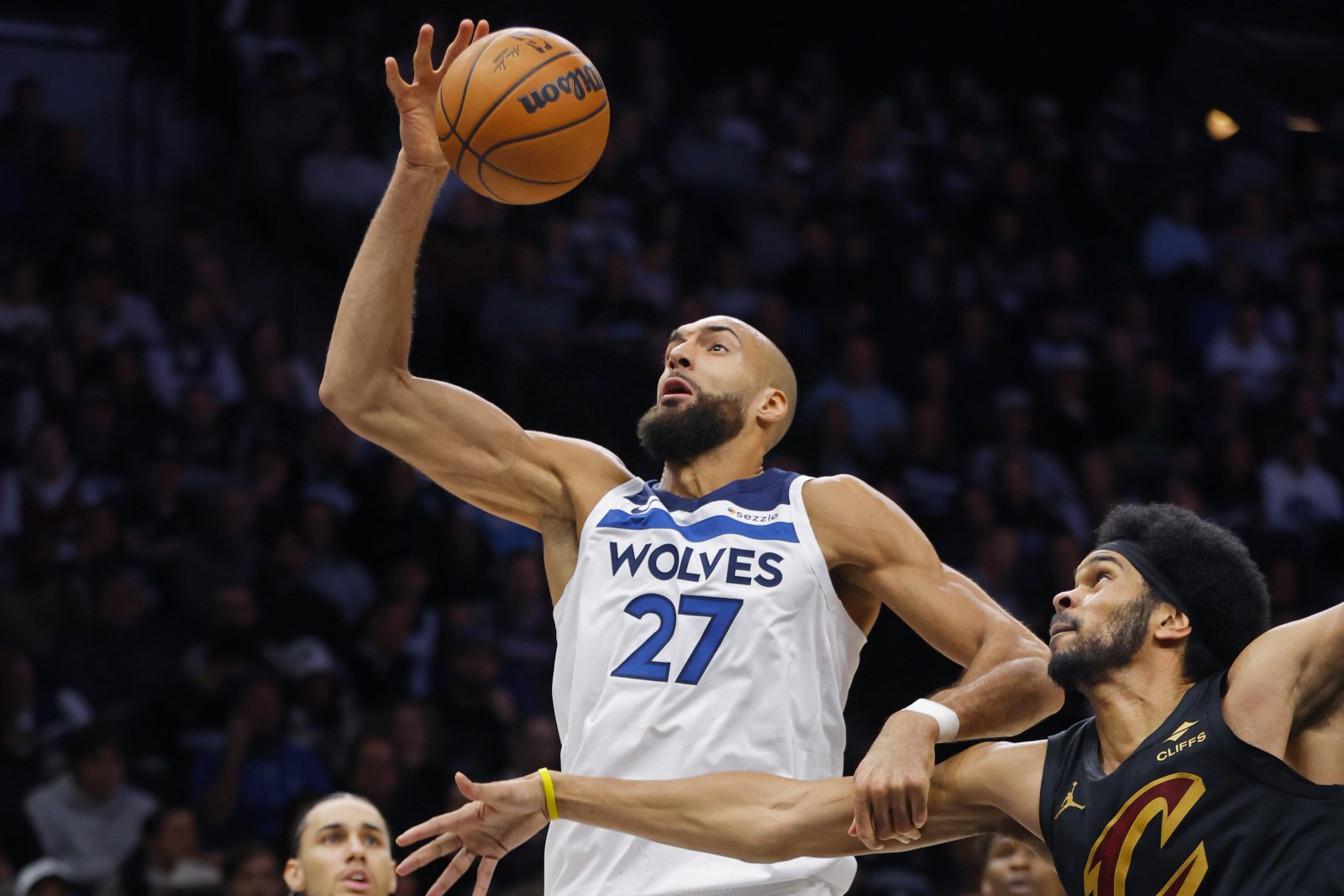
Rudy Gobert is playing some of the best basketball of his career—and hardly anyone seems to be noticing.
The four-time Defensive Player of the Year and three-time All-Star has been dominant over the past several weeks, anchoring one of the NBA’s most effective defenses while quietly strengthening his case for yet another DPOY trophy.
If he wins it, Gobert wouldn’t just add another award to his résumé — he’d stand alone atop NBA history.
Why is No One Talking About It?
So why isn’t the buzz louder?
Part of it is market. Minnesota remains one of the league’s least-covered contenders.
Part of it is perception. Gobert has long been a polarizing figure, criticized for his limited offensive game, scrutinized for his personality, and questioned by fans and players who believe he’s been over-credited defensively. As he approaches his mid-30s, there’s also a lingering assumption that decline must be imminent.
If You’re Really Paying Attention
None of that could be further from the truth.
Gobert remains offensively limited, but even that area has shown incremental improvement. After Thursday night’s win over the Cleveland Cavaliers, Anthony Edwards pointed specifically to Gobert’s improved hands—his ability to catch, control, and finish around the rim—an area that has plagued him throughout his career.
That modest offensive growth, paired with his continued defensive dominance, has been instrumental in the Timberwolves owning the best record in the NBA since Thanksgiving.
DPOY Case
Despite that, Gobert currently trails Oklahoma City’s Chet Holmgren in Defensive Player of the Year odds. Holmgren hovers as the favorite at around -150, while Gobert is close behind at +350. With more than half the season still to play — and the Thunder slipping recently — the gap is far from insurmountable.
As award conversations intensify and Minnesota’s success becomes harder to ignore, those odds could shift.
Gobert’s numbers make a compelling case.
The Timberwolves rank fifth in the NBA in defensive rating at 112.0, just two-tenths of a point behind the third- and fourth-place Spurs and Heats. They are, by any measure, one of the league’s elite defensive teams. Without Gobert, however, that identity would collapse.
Gobert owns the largest defensive on/off differential in the NBA. Minnesota allows a staggering 15.8 more points per 100 possessions when he’s off the floor compared to when he’s on it—the widest gap in the league. For context, Holmgren’s on/off differential sits at 5.7, while preseason favorite Victor Wembanyama is at 13.1. The disparity underscores just how singular Gobert’s impact is.
Individually, the production is still there. Gobert ranks top five in total blocks and leads the league in rebounds. But his influence extends well beyond box scores.
His Impact Is Noticeable
When Gobert sits, the rim becomes vulnerable. Opponents attack relentlessly, finishing efficiently and extending possessions with offensive rebounds. When he plays, everything changes. Guards drive and retreat. Shot attempts turn awkward. Second chances disappear. Defensive possessions end cleanly.
That impact hasn’t gone unnoticed around the league. After Miami’s loss to Minnesota on January 6, Heat Head Coach Erik Spoelstra called Gobert a “winning player” and one of the most underrated forces in the NBA, praising his physical presence and nightly competitiveness. Coming from one of the league’s most respected coaches, it was a telling endorsement.
Time Will Tell
There’s still plenty of basketball left to be played. But if the season continues on this trajectory, Rudy Gobert won’t just be part of the Defensive Player of the Year conversation—he may very well redefine it, chasing a historic, record-setting fifth DPOY award.











Leave a comment