

The Standard: Miracle on Ice
On Feb. 22, 1980, at the Winter Olympics in Lake Placid, the United States stunned the Soviet Union with a 4–3 regulation victory. That game became known as the Miracle on Ice.
The American roster was primarily composed of college players and amateurs. By contrast, the Soviets were seasoned professionals who had dominated international hockey for years.
The matchup was lopsided on paper. It was anything but on the ice.
The win came at the height of the Cold War, giving it significance beyond sports. The United States had been perceived as politically and athletically inferior to its rival. That night, a group of young Americans shifted that narrative.
Though the U.S. still had to win another game to secure the gold medal, the victory over the Soviets became a defining cultural moment — one that symbolized resilience, belief, and national pride.
The Rematch Era: Team USA Men’s Hockey, 2026
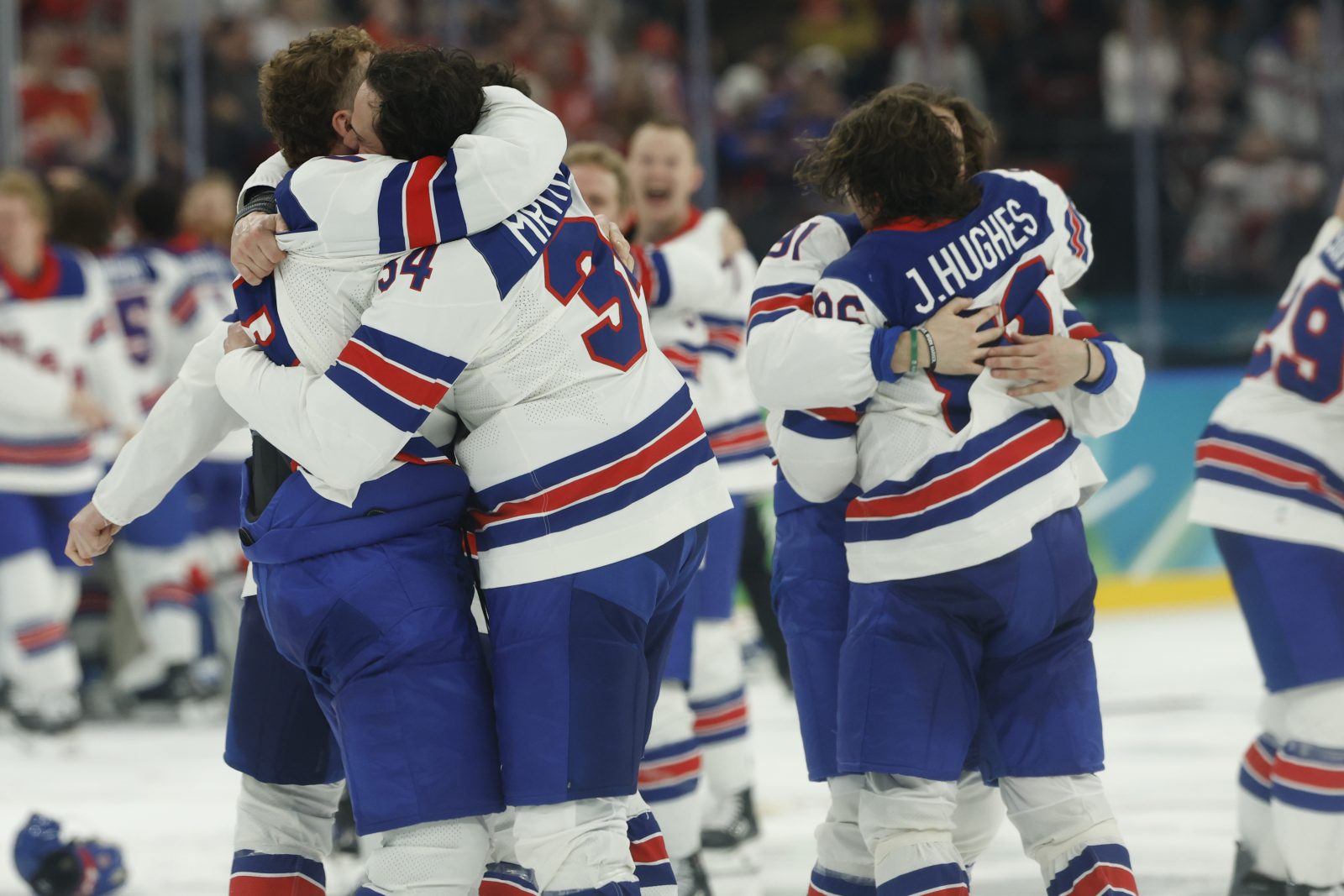
46 years later, on Feb. 22, 2026, Team USA again played for Olympic gold — this time in Milano Cortina against Canada.
Unlike 1980, there was no clear underdog.
The United States roster featured NHL talent, including the Hughes brothers. Canada countered with a lineup headlined by superstar Connor McDavid and one of the tournament’s most explosive offenses.
The gold medal game required overtime.
With the score tied 1–1, Jack Hughes delivered the decisive goal in a 2–1 victory, securing the United States’ first men’s Olympic gold medal since 1980.
The stakes were different from Lake Placid. There was no geopolitical tension, no ideological backdrop.
Instead, the matchup represented a clash between hockey’s two modern powers. The rivalry between the United States and Canada extends from youth leagues to the NHL and now, once again, the Olympic stage.
Where Canada relied on offensive firepower, the Americans leaned on defensive structure and elite goaltending. It was not a miracle — it was an execution.
The Women’s Statement: Team USA 2026
Three days earlier, on Feb. 19, 2026, the United States women’s team delivered a similar result against Canada.
Led by captain Megan Keller, Team USA faced a Canadian squad captained by Marie-Philip Poulin. As expected in this rivalry, the game was tight. It also required overtime.
Keller scored the game-winning goal in a 2–1 victory, giving the United States its first women’s Olympic gold medal since the 2018 PyeongChang Games.
The win underscored the competitiveness between the two programs. It also reflected the broader growth of women’s hockey, particularly following the formation of the Professional Women’s Hockey League in 2023. The talent gap has narrowed globally, but the United States and Canada remain the sport’s standard-bearers.
https://twitter.com/usahockey/status/2024590649605984499?s=20
Comparing the Eras
The Miracle on Ice remains singular because of its context. A group of young Americans defeated a dominant Soviet machine during one of the tensest political periods in modern history. It was as much about symbolism as it was about sport.
The 2026 victories carry a different weight. Both the men’s and women’s teams won as equals, not underdogs. Their opponents were not symbolic adversaries but hockey rivals. The triumphs in Milano Cortina represented competitive validation rather than geopolitical defiance.
In 1980, the United States shocked the world. In 2026, it reaffirmed its place at the top of international hockey.















Leave a comment