

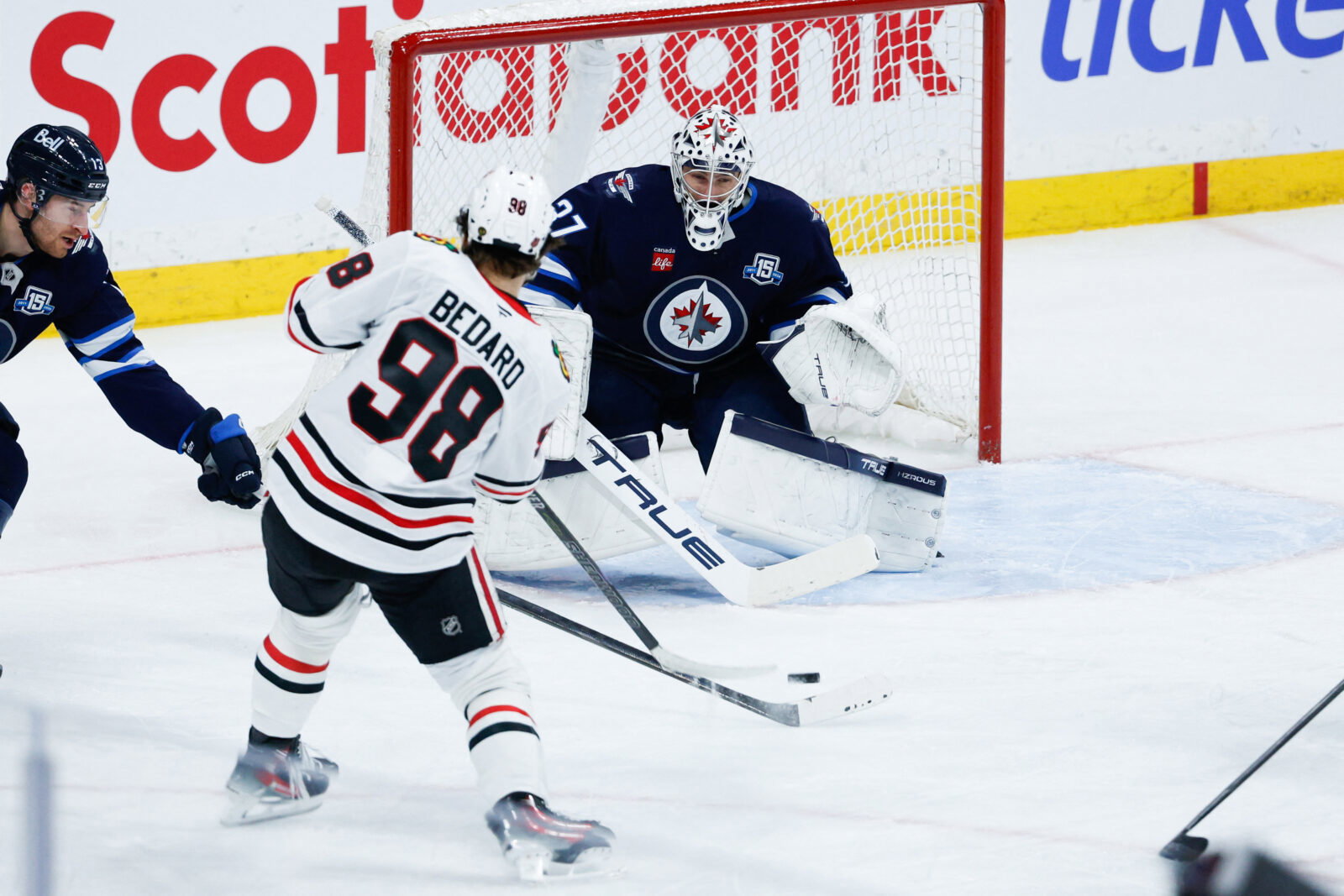
Connor Bedard‘s new five-year contract is so much more than an extension for one individual hockey player. It is symbolic of the Chicago Blackhawks’ timeline to contention.
When the news broke that Bedard finally got a deal done in Chicago, opinions were mixed. Some saw the AAV below expectations set by the Leo Carlsson offer sheet. Some saw the less-than-maximum term and unrestricted expiry status as a major blunder.
There’s a lot to like and a lot to question, but one thing is true: the Blackhawks’ contention window for the foreseeable future rests on the term of this deal.
Bedard Is Committed, but Are the Blackhawks?
The contract absolutely proves that Bedard is committed to Chicago. Offer sheets were never a question for him, stating “the risk of not being a Blackhawk wasn’t worth any amount of money.” Instead of potentially handcuffing the Blackhawks with a higher AAV offer sheet, Bedard found an in-house solution that gets him paid while still giving the Blackhawks some wiggle room.
With that said, the Blackhawks can not coast. They are now under time pressure to either win a Stanley Cup or at least get close. If they cannot produce a winning roster, they will almost certainly see their star player hit unrestricted free agency at the end of his new contract.
High Cap Hit, No Problem
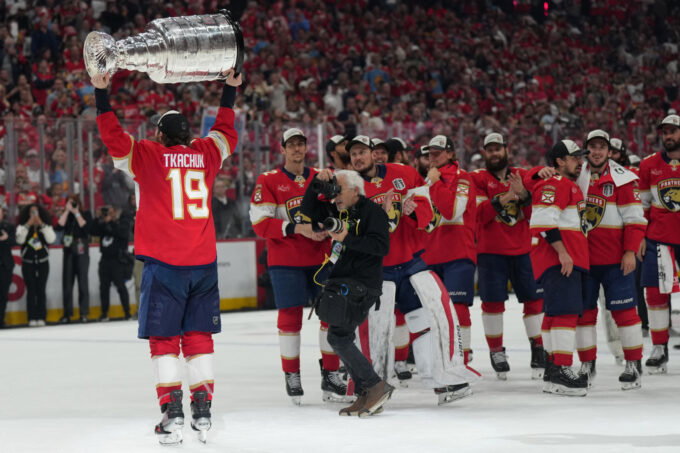
This contract came at a great time with a rising salary cap. Since the cap was introduced, there has never been a Stanley Cup winner with a player under contract for higher than $10m AAV. The first contract above that number was given to Patrick Kane and Jonathan Toews, which started in 2015-16.
Of course, that is bound to change. That could change as soon as this upcoming season. A more interesting, and possibly more telling, trend would be the percentage of the cap taken up by the highest contract.
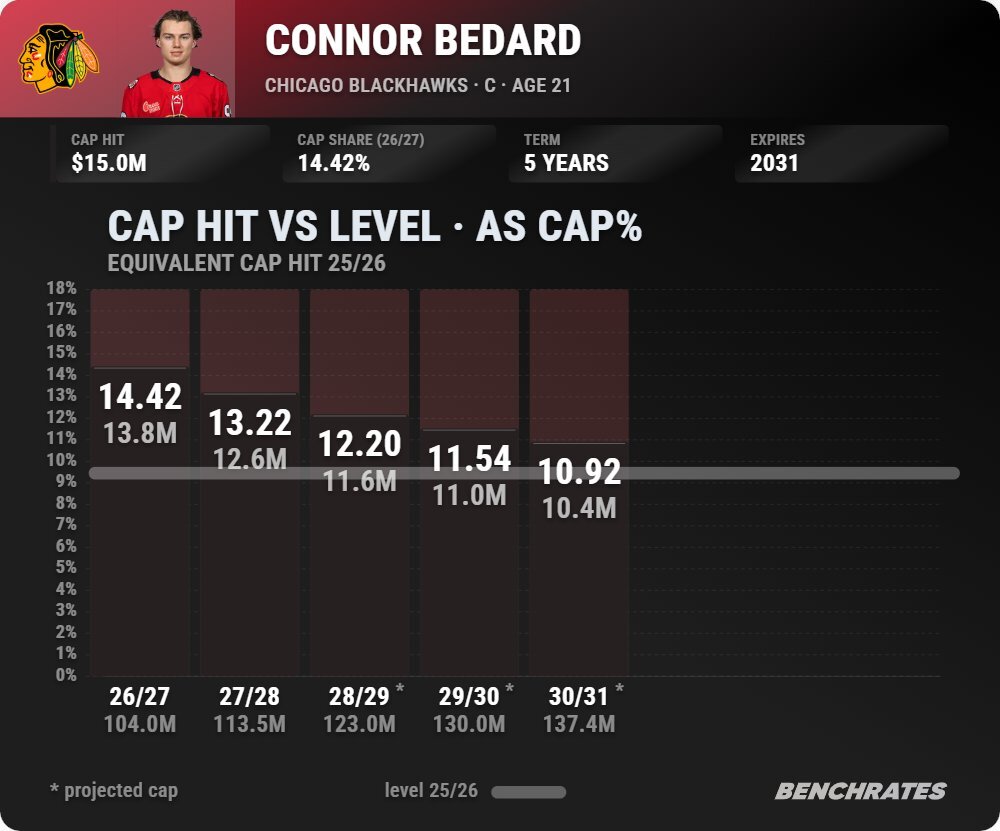
The “12% rule” is an analysis tool used to evaluate if a team spends too much money on a single player. The idea is that, if a team’s highest-paid player occupies less than 12% of the salary cap, that team is better equipped to fill out their roster successfully. Of course, this assumes their highest-paid player is high quality.
Although most Cup winners fall under the 12% rule, seven of the last 21 winners defied it. In some cases, it was only by a few decimal points.
Bedard, in the first year of his new contract, will occupy 14.42% of the cap. Over the next two years, it will decrease to 13.22% and 12.2%. Although the Salary Cap is not confirmed for the last two years of his contract, projections exist. In 2029-30, the contract should sit around 11.54% of the cap, and 10.92% the following year.
The 12% Stipulation
The 12% rule is era-dependent. The rule is most evident in a flat cap era. During periods where the cap is rising, teams can get closer to 13% on their highest-paid player and still be successful.
Look at the 2016-17 Pittsburgh Penguins, for instance — the second of a back-to-back Cup surge by Sidney Crosby and the crew. Yet, Crosby wasn’t even the highest-paid player. It was Evgeni Malkin in Year 1 of a $9.5m extension. In its first year, the contract occupied 13.01% of the cap. Because the cap was steadily rising, teams had more flexibility in how much money they allocated to one player.
However, when the cap froze during and after COVID, the rule regressed to 12%. Because large contracts no longer decreased in their share of the cap, there was very little wiggle room, unlike during rising cap periods. Considering the NHL is reentering a rising cap era, the Bedard contract is only “too big” for a couple of years, maybe even a single year.
The Blackhawks Have What They Need
With Bedard, Bowen Byram, and Spencer Knight all under long-term deals, the Blackhawks essentially have their superstar, a perceived top-pairing defenseman, and starting goaltender locked down. Additionally, they have another stud in Frank Nazar on a deal through 2033-34. Alex Vlasic? He’s under contract through 2029-30.
As players like Anton Frondell, Artyom Levshunov, Oliver Moore and many others come into their own, Chicago will have to do some fancy footwork to get their guys under contract. If Connor Bedard demanded a higher AAV, that task would have been far more difficult.
With that said, it may be a perfect storm for the Blackhawks. As players start to get their first extensions, other rookies and young players on their entry-level deals could impact the lineup. Roman Kantserov, Vaclav Nestrasil, Nathan Behm, Xavier Villeneuve. These players, and others, could be interesting pieces over the next four or five years before their ELC expires.
The Sweet Spot
Chicago may have five years, but the window is realistically even smaller. Are the Blackhawks going to win a Stanley Cup next season? Well, that would be a shock to many. In 2027-28, they could be set up for a playoff berth and even a deep run, but Lord Stanley is unlikely. 2028-29, when Bedard’s contract gets to the 12.2% number, is when Chicago Blackhawks fans should keep their eyes peeled.
That same season, Kantserov, Jiri Felcman, and Marek Vanacker will still be on their ELC’s. These three players, specifically Kantserov, could impact the team far more than their contracts would suggest. That’s not to mention the previously noted prospects that could also sign their ELC’s in time to make an impact.
The following seasons could still produce results for the Blackhawks. The primary hurdles in 2029-30 will be a Kantserov extension and Spencer Knight hitting free agency. In 2030-31, Seth Jones retention money will finally be off the books, but then Vlasic will be due for a new deal.
Chicago will have plenty of cap space to do it with, thanks to Bedard taking the amount he did. In 2027-28, they currently have $42,980,426 to play with. 2028-29, they have $67,891,676. In 2029-30, a whopping $81,800,009. This whole “rising cap” thing is real, and the Blackhawks front office will have every opportunity to use it and build a winner.
What Happens After?
2030 rolls around and the question is posed yet again: What will Bedard’s next contract look like? If the Blackhawks have won a Stanley Cup, it’s likely Bedard gets a massive payday from Chicago, much like Toews and Kane with their matching extensions in 2015-16.
As many learned, the organization struggled to build around two contracts occupying so much cap space. A big payday for Bedard in 2031 may close the Blackhawks’ window.
If the Blackhawks get close but don’t finish the job, Bedard could consider a Connor McDavid-type pay cut. Instead of handcuffing the team, he may take less money for just a year or two to give the front office more cap space to fill out the roster.
The doomsday scenario is that the Blackhawks don’t improve. They continue to miss the playoffs, they ruin the relationship, and Bedard walks his way to unrestricted free agency.
Only time will tell which scenario plays out. In any case, the Blackhawks have started the timer, and they have five years to make some magic.










Leave a comment