

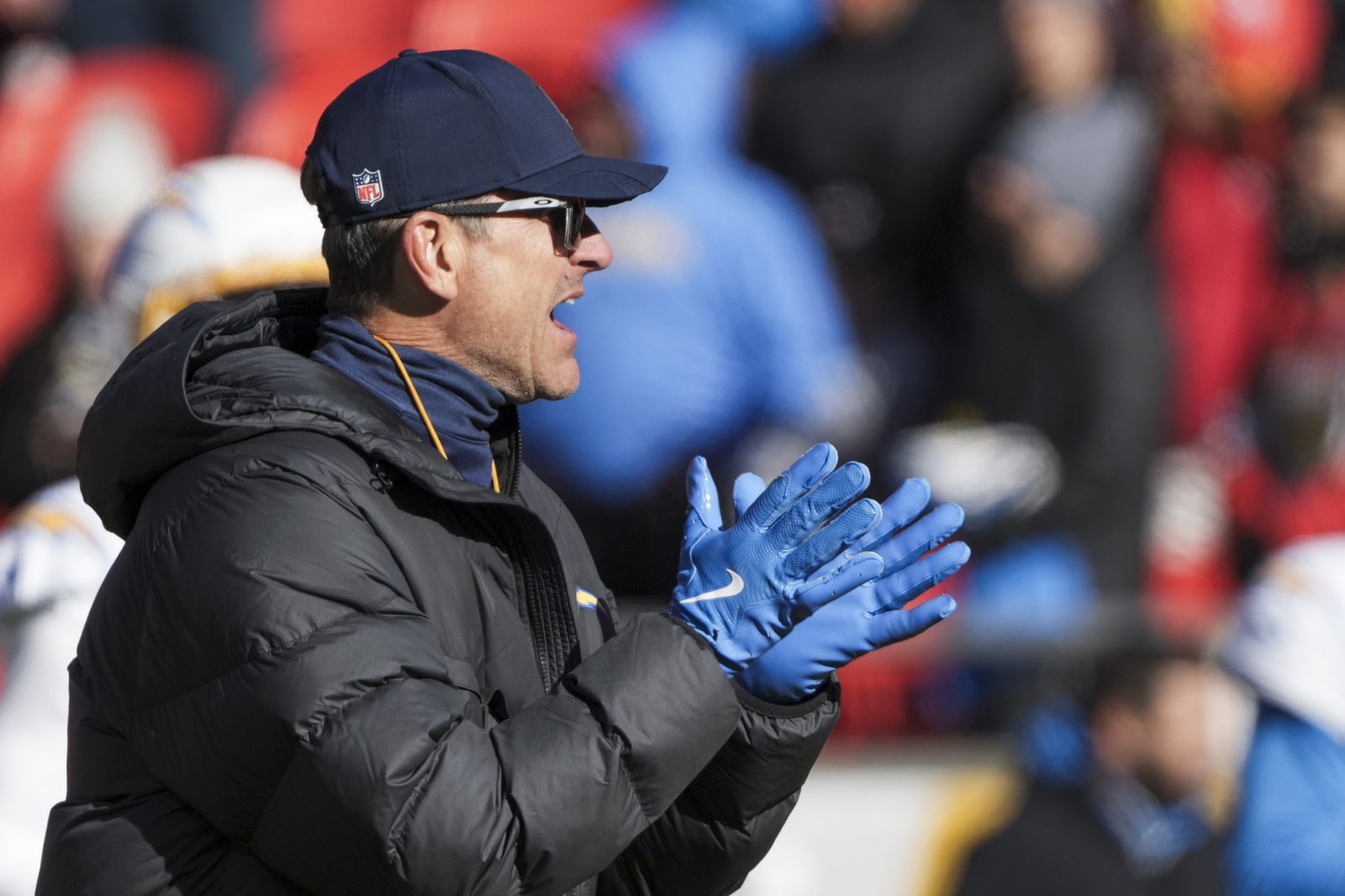
The Los Angeles Chargers enter Wild Card Weekend as the AFC’s seventh seed. They opened as 3.5-point underdogs to the New England Patriots.
Still, the matchup itself is much more favorable than the betting lines indicate. If the Chargers had a say in how the AFC bracket was arranged, drawing New England in the first round would be near the top of their list. This is not because the Patriots are weak, but because they are uniquely beatable for a team built like Los Angeles.
Historically Weak Schedule
The foundation of New England’s season matters a lot here. The Patriots finished with one of the easiest schedules not only this year but also compared to league norms over the past 25 seasons. That doesn’t invalidate their record, but it does put it into context. They consistently “handled” weaker opponents while avoiding many of the top-tier offenses that challenge their defensive structure.
https://twitter.com/ASchatzNFL/status/1974106042440298657
Against playoff teams, New England has only two wins: against the Bills and Panthers. Against teams over .500, they often won by margins that relied on game scripts going perfectly in their favor rather than through total dominance.
Contrast that with the Chargers. Los Angeles has already proven it can beat good teams, even when short-handed, and has quietly been one of the league’s better performers in one-score games.
That speaks to the Chargers’ success in situational football: late-down execution, red-zone efficiency, and quarterback decision-making under pressure. Justin Herbert’s ability to operate efficiently without relying on consistent explosive plays makes the Chargers dangerous against disciplined but conservative defenses like New England’s.
Luck of the Draw
This is also a stylistic win for Los Angeles.
The Patriots are much less explosive than Jacksonville, another potential draw, and a team that has proven it can overwhelm the Chargers with tempo and vertical threats. New England prefers to win by patience, ball control, and forcing errors. That’s a tougher strategy against a quarterback who rarely puts the ball in harm’s way and an offense that is comfortable playing methodically. The Chargers would rather face a team that tries to out-execute them than out-athlete them.
Health and personnel issues further narrow the gap. While the Chargers are not entirely healthy, they are entering the postseason in better shape than during the midseason stretch. Meanwhile, New England has injury concerns that directly affect protection and defensive flexibility— two areas Herbert has historically been able to exploit when defenses can’t disguise pressure or rotate coverage late.
If Los Angeles can keep Herbert protected, the matchup becomes much more even than the spread suggests. The benefits extend beyond Round 1.
In terms of seeding, this is arguably the most straightforward path available. A Chargers win sets up a second-round matchup with Denver, a team they already beat in Week 3. Denver’s Week 18 win over Los Angeles came against backups, in a game where the Chargers’ play-calling was intentionally conservative. There’s little schematic value Denver can gain from that result, and Los Angeles showed none of its true tendencies.
The No. 1 Seed for a Reason?
That said, none of this guarantees an upset. Los Angeles to Boston is one of the longest possible flights for a playoff game. Additionally, New England is disciplined, well-coached, and rarely beats itself. But the Chargers aren’t built to rely on opponents’ mistakes anyway. They’re designed to survive close games, depend on quarterback play, and exploit teams that lack overwhelming offensive firepower.
If the Chargers are going to make a January run, it was likely never going to start against a physical, pass-rush-heavy team like Pittsburgh or a high-variance offense like Jacksonville, both of which have faced L.A. once this season. It begins here, with a Patriots team that looks strong on paper but is far closer to Los Angeles on the field than most realize.











Leave a comment