

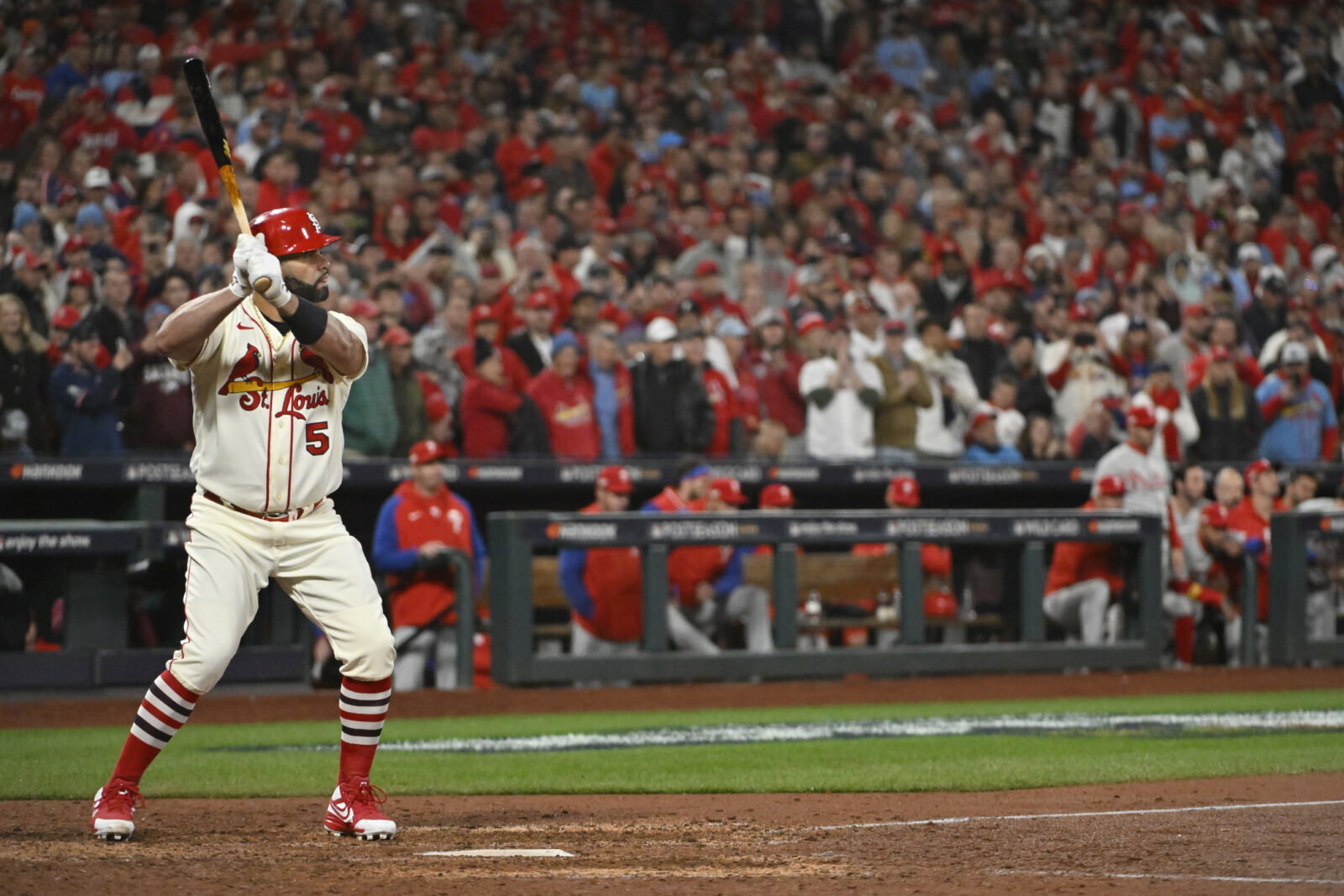
Imagine a world where Albert Pujols had become a free agent after only five seasons with the Angels. Or if Bryce Harper, Manny Machado and other stars had reached the market years earlier than they actually did.
That possibility is at the center of one of MLB’s latest proposals during collective bargaining negotiations with the MLBPA. The rule would limit the contract length of free agents switching teams to five years, six years for those staying.
Superstars commonly sign 10-plus-year contracts after establishing themselves to maximize their earnings. For example, the Mets recently signed Juan Soto to a 15-year, record-breaking $765 million contract. The proposed rule would have capped Soto’s deal at five years, dramatically reducing its overall value.
How Would This Rule Have Changed the Past?
Albert Pujols
Albert Pujols was one of the biggest stars in baseball when his contract with the Cardinals expired in 2011. A few months after winning the World Series with the Cardinals, he decided to sign a ten-year, $240 million deal with the Angels.
Pujols’ interest was not only rooted in the financial gain of being with the Angels. Rather, he was excited to foster a new environment in Anaheim and to play with budding rookie Mike Trout.
If the MLB’s proposed rule was in place back then, Pujols’ contract would have ended after the 2016 season. After only making the playoffs with the Angels once up to that point, Pujols was open about his frustration.
In this scenario, with frustration brewing and a contract expiring, Pujols would have explored other options. If Pujols had reached free agency in 2016, a team like the Washington Nationals could have been a logical landing spot that needed Pujols’ help, as they were a young team with a great rotation but few hitters to drive young star Bryce Harper home.
Robinson Canó
After playing for the Yankees for the first nine years of his career, star second baseman Robinson Canó packed his bags for Seattle in 2013 when he signed a ten-year, $240 million contract with the Mariners, the richest deal ever given to a second baseman at the time.
Although Canó remained productive in his first few years with Seattle, the Mariners never reached the playoffs with him. The MLB suspended Canó for 80 games in 2018 after he violated its PED policy. With the new proposed rule, Canó’s contract would have ended after that season, but unfortunately for the Mariners, they still had him under contract.
The Mariners dumped Canó to the Mets after his suspended season, in a deal that required them to continue paying a portion of his contract. The Canó deal remained a scar on Seattle for the next few years, as it is widely regarded as one of the worst contracts of the 2010s.
If Canó had been a free agent in 2018, the market for him would have cooled due to his PED use; however, one possible destination could have been the Milwaukee Brewers. Coming off an appearance in the 2018 NLCS, Milwaukee was in a win-now mode. Canó could have provided another bat that would have impacted the Brewers’ chances, and they would have been able to get him for cheap due to his suspension.
Should This Rule Be Put in Place?
Although the proposed rule is only in its early stages right now, it would definitely have had an impact in the past. Even though the shake-ups would have been interesting for fans, the players strongly oppose this rule, arguing that it would reduce players’ earning potential and suppress the free-agent market.













Leave a comment