

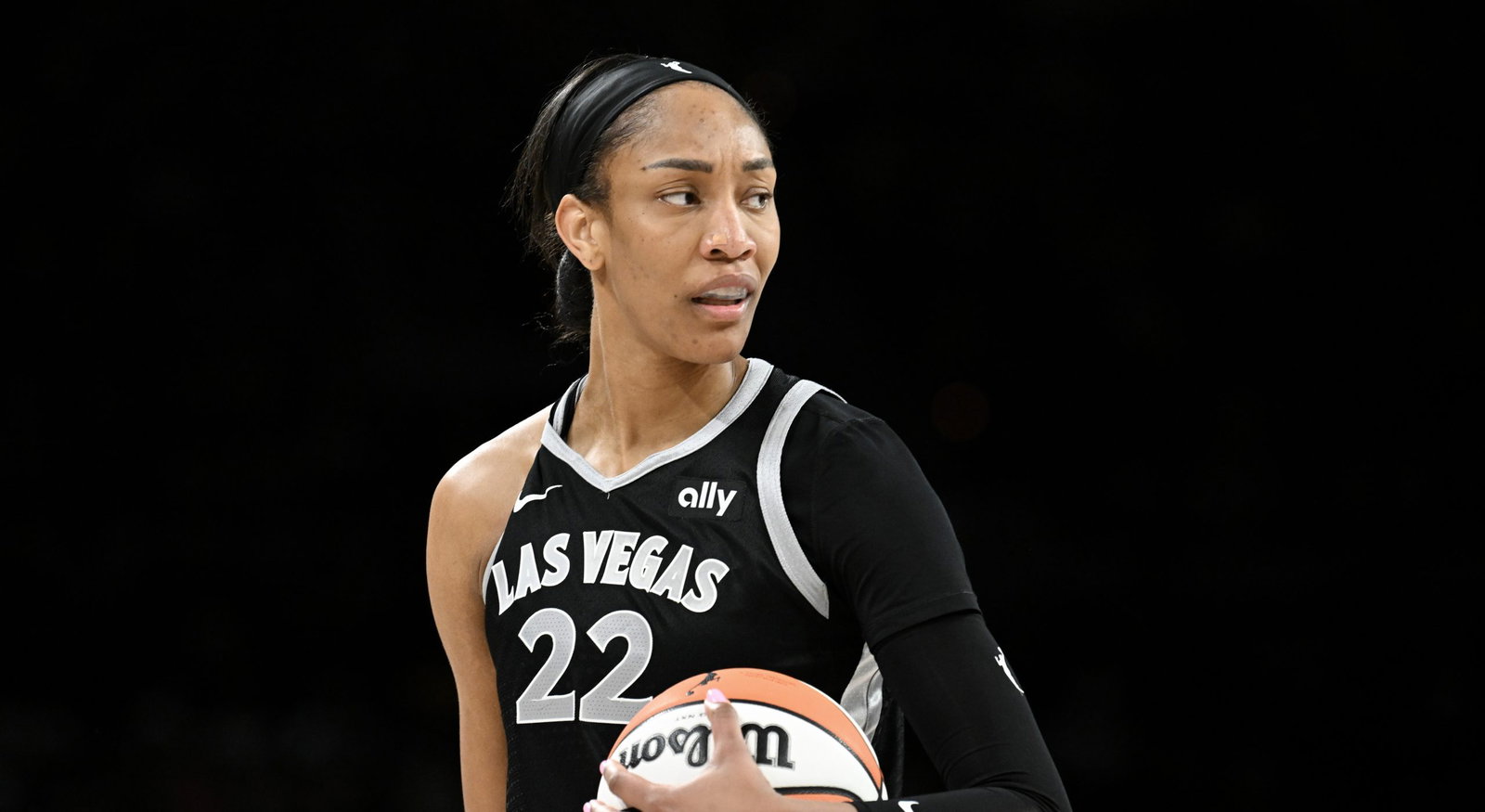
Now in its 29th season, the WNBA has seen 833 players take the court since its debut in 1997. Distilling nearly three decades of talent into a top 25 list means identifying the top 3% of players in league history — the elite of the elite.
The categories used to evaluate players include Most Valuable Player (MVP) awards and MVP shares, Defensive Player of the Year (DPOY) and DPOY shares, Finals appearances, championships, Finals MVPs, statistical league rankings, adjusted win shares (taking into account the changes in the number of regular season games throughout the course of the WNBA), All-WNBA selections, and All-Defensive honors (Note: All-Defense wasn’t introduced in the WNBA until the 2005 season).
A total of 117 players have received MVP votes, but only 16 have actually won the award. All 16 made the WNBA25. Fifteen of the 16 MVPs have won at least one WNBA championship, and 12 also won a Finals MVP.
The subjectivity comes when digging a little deeper. Take Hall of Famer Tina Thompson. She won four titles and made eight All-WNBA teams, yet never claimed a league MVP – even though she received MVP votes in 13 of her 17 seasons. Her Houston Comets teammate Cynthia Cooper won two MVPs and four Finals MVPs. Another Comet teammate, Sheryl Swoopes, won three MVPs and three DPOYs.
As great as Thompson was, she was the third-best player during the Comets’ four-peat from 1997 to 2000. Therefore, that places her in a lower tier than both Cooper and Swoopes.
Limiting the list to 25 means some impactful players missed the cut. Current players Skylar Diggins-Smith and Alyssa Thomas just missed. Becky Hammon, Katie Douglas, and Teresa Weatherspoon are players from the first half of the WNBA’s inception who also fell short of the WNBA25.
*All stats above were manually calculated*
Click the following to view the three other tiers: Tier 2 | Tier 3 | Tier 4
Tier 1: The G.O.A.T. Conversation
- 6. Cynthia Cooper (1997-2003)
- 5. A’ja Wilson (2018-Current)
- 4. Breanna Stewart (2016-Current)
- 3. Lauren Jackson (2001-2012)
- 2. Lisa Leslie (1997-2009)
- 1. Tamika Catchings (2002-2016)
Let’s start at the beginning. Cynthia Cooper wasn’t the most hyped player entering the WNBA’s inaugural season in 1997. At 33, she had spent over a decade overseas after a standout college career at USC. Assigned to Houston by default, Cooper joined fan-favorite Sheryl Swoopes and top draft pick Tina Thompson. It was Cooper, however, who promptly became the face of a dynasty.
Cooper led the league in scoring her first three seasons and won back-to-back MVPs in 1997 and 1998. Her 13.4 adjusted win shares (aWS) in 1997, a season in which Swoopes only played in nine games, remain the highest single-season mark ever. In 1998, she posted the second-highest aWS in history with 13.3. Her 32.2 player efficiency rating (PER) in 1997 ranks sixth in history. She also won Finals MVP in each of Houston’s four straight championships from 1997 to 2000.
In the first four WNBA seasons, Cooper racked up four titles, four First Team All-WNBA selections, four Finals MVPs, two MVPs, and three scoring crowns. She retired briefly, returned for a four-game stint in 2003 at age 40 – and still averaged 16 points and 5.5 assists. Her 9.6 aWS per season (including an absurd 11.8 from 1997 to 2000) outpaces second place by a wide margin. Her dominance at the WNBA’s launch remains unmatched.
While Houston received one former USC star in the 1997 Allocation Draft, Los Angeles got the other. At just 24, Lisa Leslie was fresh off an Olympic gold medal — her first of four — and became the face of the Sparks. She made All-WNBA in all 12 of her seasons (eight first-team), led the league in blocks twice, rebounds three times, and won two DPOYs.
In 2001, Leslie won her first of three MVPs and led Los Angeles past the four-time defending champion Comets en route to back-to-back titles. She earned Finals MVP both years. Leslie ranks second all-time in adjusted defensive win shares (37.4) and first in aDWS per season (3.1). She received MVP votes every season and holds the record for total MVP shares with 5.614.
https://twitter.com/SportsCenter/status/1412818820197236743
While Leslie made her mark as a defensive anchor, Seattle’s Lauren Jackson was a nightmare for defenders. From 2000 to 2007, either Leslie or Jackson finished top two in MVP voting. Jackson, like Leslie, won three MVPs – tied with Swoopes and A’ja Wilson for the most ever. But Jackson brought a modern twist to the post: at 6-foot-6, she hit 35.1% of her 1,243 three-point attempts (26th all-time), combining size with outside shooting efficiency.
Jackson led the league in PER six times, scoring three times, and rebounding once over 12 seasons. Her 2007 campaign remains one of the best in league history: she led the WNBA in scoring (23.8), rebounding (9.7), eFG% (56.8), turnover rate (8.8%), and aWS (11.2), while finishing second in blocks (2.0) and usage percentage (28.0%). Her 35.0 PER that season is the highest ever recorded. Of the eight 32.0+ PER seasons in league history, Jackson owns three. That year, she also won DPOY, making her one of only five players to earn MVP and DPOY in the same season.
She led the Storm to their first title in 2004 alongside Sue Bird. Then they faced five straight first-round exits in the years that followed. Leslie won 16 of the 25 games against Jackson head-to-head, including a 4-1 record in the playoffs.
Redemption came in 2010 for Jackson. She won her third MVP and powered Seattle to a title, claiming Finals MVP by averaging 22.3 points, 8.0 rebounds, 2.0 steals, and 1.3 blocks in a sweep of Atlanta. That year marked her last full season, as injuries shortened the rest of her career. Jackson retired after the 2012 season with eight All-WNBA selections (seven first-team), five All-Defensive honors, and ranks third all-time in adjusted win shares (86.6), MVP shares (4.698), and career PER (27.9).
https://twitter.com/seattlestorm/status/1227035473756880897
Four years after Jackson retired, Seattle struck gold again by drafting Breanna Stewart first overall in 2016. The UConn legend brought a résumé like no other — four NCAA titles, four Tournament MVPs, and three AP Player of the Year honors — and quickly became Seattle’s next savior.
Their pro numbers are strikingly similar. From 2001 to 2010, Jackson averaged 19.5 points, 7.9 rebounds, 1.8 blocks, 1.2 steals, 51.1% eFG, 28.5 PER, and 27.3% usage. Stewart averaged 20.8 points, 8.7 rebounds, 1.5 blocks, 1.4 steals, 52.4% eFG, and 26.4 PER from 2016 to 2024, with the exact same 27.3% usage. The biggest gap is in adjusted win shares – Jackson averaged 8.5 per season compared to Stewart’s 7.8.
Jackson holds the edge in First Team All-WNBA selections (7 to 6), MVPs (3 to 2), Defensive Player of the Year Awards (1 to 0), and All-Star appearances (7 to 6). Stewart, however, has more championships (3 to 2) and Finals MVPs (2 to 1). Outside of her Achilles injury in 2019, Stewart has finished top three in MVP voting every season since 2018. She joined the Liberty before the 2023 season and led them to back-to-back Finals appearances. In 2024, the Liberty captured the first title in franchise history. Only 30, Stewart’s place in the top three all-time feels inevitable— but she may have company soon.
A’ja Wilson is building a legacy that demands attention. Since being drafted first overall in 2018 by the Las Vegas Aces, she’s racked up three MVPs, two DPOYs, a Finals MVP, and back-to-back titles in 2022 and 2023. She’s made five All-WNBA teams (four first-team), four All-Defensive teams, and led the league in blocks four times.
Her 2024 MVP campaign ranks among the best in league history: 26.9 points (1st all-time), 11.9 rebounds (2nd), 2.6 blocks (15th), 1.8 steals, 53.1% eFG, and a 34.9 PER (2nd), all while posting the 10th-highest usage percentage ever (31.9%).
https://twitter.com/WNBA/status/1837844696699174913
Through seven seasons, she’s sixth in aOWS per season (4.6), fourth in aDWS per season (2.8), second in aDWS per year (2.9), fifth in aWS per season (7.4), first in MVP shares per season (0.549), and fourth in DPOY shares per season (0.183).
Stewart and Wilson are already in the top five, but the bar for greatest of all time still belongs to Tamika Catchings. No player in WNBA history has combined elite impact on both ends of the floor for as long as Catchings did. While many stars enjoyed the support of multiple All-WNBA teammates, Catchings played alongside only one All-WNBA caliber teammate in Indiana.
Katie Douglas made Second Team in 2009 and 2010, yet Catchings earned 12 All-WNBA selections (seven first-team) over her 15-year career from 2002 to 2016. She led the Fever to 12 consecutive playoff appearances, three Finals trips, and a championship in 2012 when she was named Finals MVP.
https://twitter.com/IndianaFever/status/1913955273850441917
Catchings’ sustained excellence and longevity define her legacy. A seven-time steals champion and top-five in steals 14 times, her 1,074 career steals lead the WNBA by over 300. She ranks fifth all-time in scoring (7,380 points), fifth in rebounds (3,315), 13th in assists (1,488), and sixth in PER (26.1).
Her career aWS total is 110.9. That’s a staggering 22.2 more than Diana Taurasi in second place, a gap wider than between second and 14th. Defensively, her 43.3 aDWS top Lisa Leslie’s 37.5 in second. Catchings was a 12-time All-Defensive Team member. Before the WNBA named All-Defensive teams, she finished second in DPOY voting three times in three seasons. She would have realistically made the All-Defensive team every season of her 15-year career. Only three players in history have surpassed 2.0 DPOY shares. Her 5.277 DPOY shares lead the league by nearly 2.5 over Sylvia Fowles. Catchings won DPOY five times and placed second six times. Although Catchings won just one MVP (2011), she finished in the top three seven times. She ranks second all-time in MVP shares (4.844), behind only Leslie (5.614).
https://twitter.com/Catchin24/status/1129467798676299776
Since her retirement, Indiana has posted a 0.250 winning percentage and just one playoff appearance in 10 seasons— proof of just how much she meant. With Catchings, they made the playoffs 13 times in 15 years. They’ve made it once in the 10 years without her.
Catchings stands as the G.O.A.T. She was relentless, consistent, and elite on both ends. Her greatness wasn’t just in accolades and advanced stats, but in how she elevated everyone around her and gave Indiana a chance every single season.
From foundational legends like Cooper and Leslie, to transformational stars like Jackson, to modern giants like Stewart and Wilson, the WNBA25 traces the evolution of the league through the players who defined it. Some ruled with dominance, others with longevity, and a few (like Catchings) with both.
The WNBA’s history is rich and still being written, but the names on this list have already etched themselves into it forever.











Leave a comment