

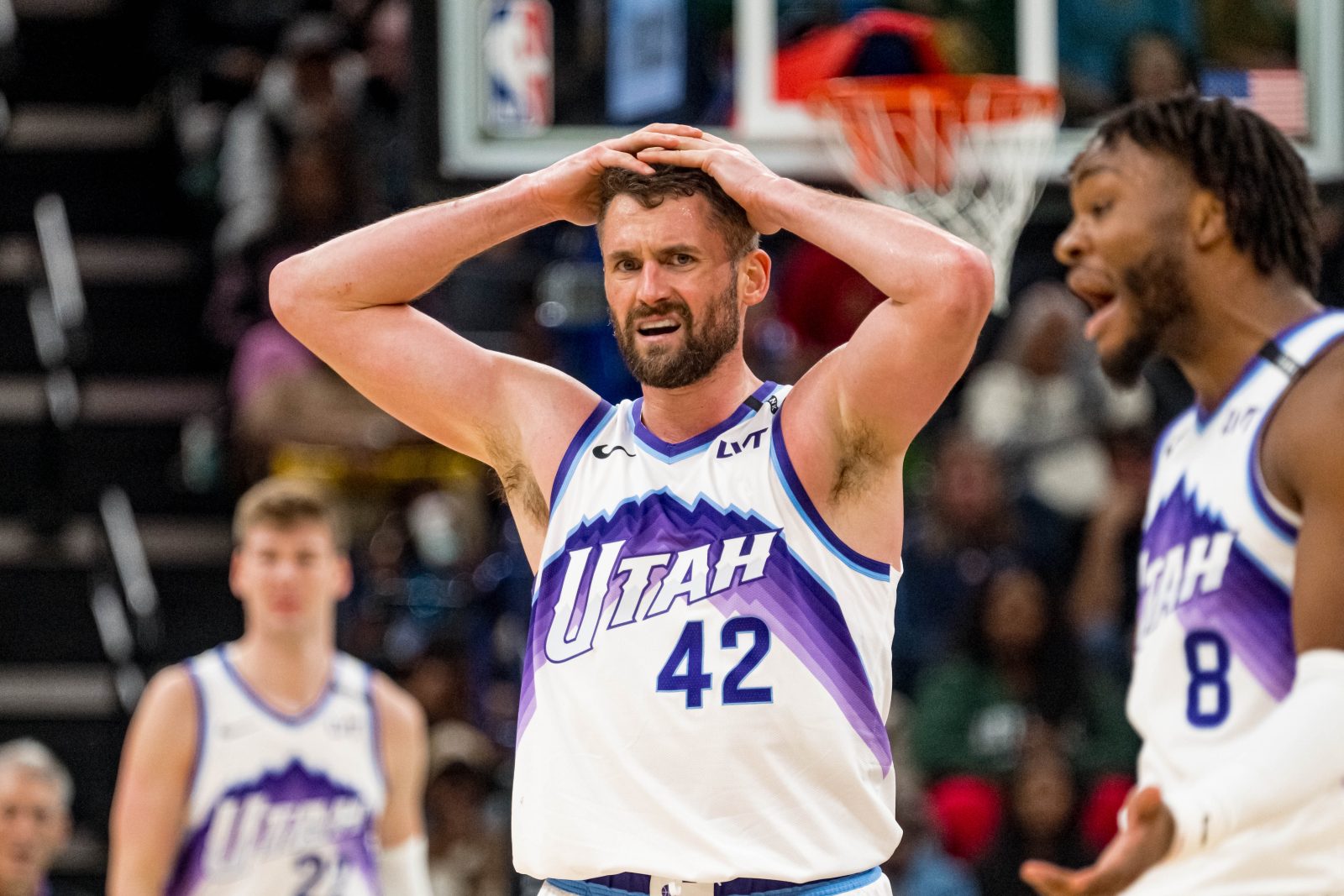
The Utah Jazz are far enough into the season that you’d expect to have a pretty good sense of who they are — but that still isn’t the case.
Even though the Jazz are supposed to be a tanking team, which sometimes they fit the bill for perfectly, on other nights, their high-end talent is impossible to miss.
On those nights Lauri Markkanen looks every bit like the franchise pillar he is supposed to be, and Keyonte George runs the offense with a calm that was not always there last year. When the ball is moving, the spacing looks right, and the tempo suits them, the Jazz look like a team that could be going somewhere.
https://twitter.com/utahjazz/status/1999692353720717494?s=46
Inconsistency That Cuts Both Ways
Then there are the nights that hang over this team a little longer than they would like. The ones where, once the game starts to tilt, it completely slips away, and the final score shows a 30 or even 40 point gap.
In one of those games against Oklahoma City, Utah never looked settled from the opening minutes. The Thunder were getting good looks without doing anything particularly clever, simply moving the ball, setting basic actions, and waiting for the Jazz to react a step too late.
What made that night harder to swallow was that the Thunder were playing without Shai Gilgeous-Alexander. It still did not matter. They pushed the pace off misses, ran after rebounds, and kept forcing Utah to defend in uncomfortable, scrambling situations.
The Jazz had a few stretches where the offense finally clicked, the ball moved side to side, and they looked like they might climb back into it. But almost every time they made a small push, a breakdown on defense wiped it out on the very next trip. It did not look like a team that refused to try; it looked like a team that could not hold its concentration long enough, and that has been one of the recurring stories of their season so far.
Head Coach Will Hardy hasn’t danced around the issue. He has talked about effort, yes, but more importantly, he has pushed the idea that this group needs to stay locked in longer. He hasn’t singled anyone out, which matters, but his tone suggests he knows patience only stretches so far.
The belief is still there. So is the frustration.
Signs of Growth Even in a Chaotic Stretch
To be fair, the Jazz have had nights that show why the staff hasn’t given up on the bigger picture. Their recent wins over the Kings, Rockets, Nets, and Grizzlies weren’t perfect, but they felt controlled.
In those games the Jazz made good decisions late, defended with more urgency, and handled the important possessions with a level of maturity that has been missing at times. They didn’t blow anyone out, but they didn’t have to. They played the kind of basketball that usually travels well.
Markkanen remains the constant, and George continues to look more comfortable taking on more responsibility. The supporting cast has contributed in pockets, though the inconsistency of those contributions explains part of the volatility.
When Utah is connected defensively, everything else tends to fall in line. When they aren’t, the game gets away from them faster than expected.
What Comes Next for a Jazz Team Still Figuring Itself Out
What the Jazz need now isn’t a major tactical shift or roster shakeup. They simply need to handle the basics more consistently.
Get back after misses. Communicate more clearly on switches. Avoid the sequences where one missed rotation becomes several. These details may seem small, but in the Western Conference, small things decide whether a team climbs or sinks.
There is still time for Utah to put things together this year. Their best moments are convincing enough to keep hope alive, but the window for figuring themselves out isn’t endless. If the pattern of encouraging wins followed by deflating losses continues, this season may end up feeling like a string of opportunities they never quite held onto.
For now, the Jazz remain somewhere in the middle, trying to find a footing that has eluded them. Whether they manage to settle in will depend less on talent and more on how often they can avoid repeating the mistakes that keep pulling them back.












Leave a comment