

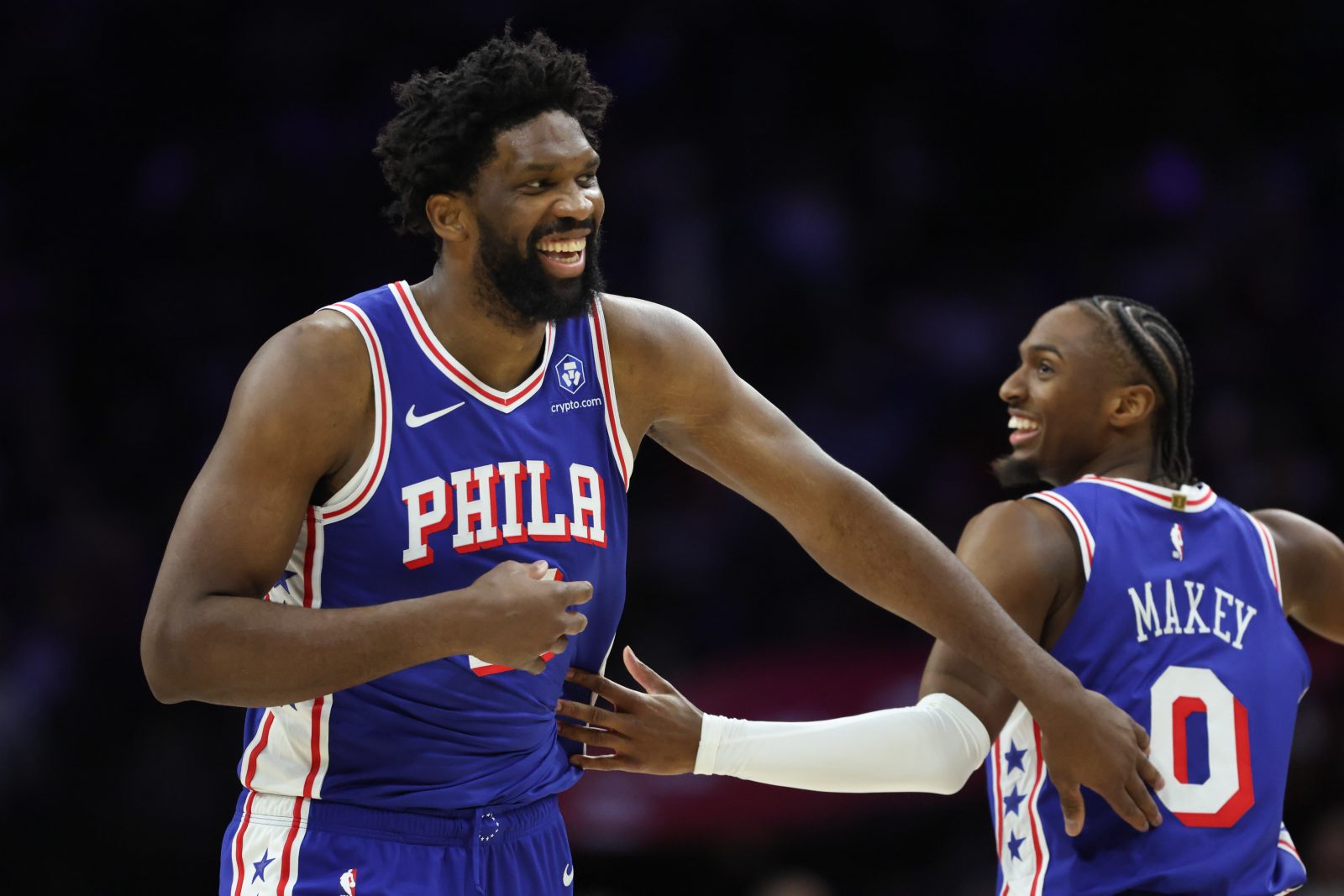
As the 76ers return from the All-Star break, the landscape feels more optimistic. Sitting 31–26 and sixth in the Eastern Conference, Philadelphia had teetered with top-tier status before the deadline. As such, the 76ers felt the need to target key fits as opposed to big-name stars.
Injury Strikes Again
At its core, this Sixers team is still built around Joel Embiid and Tyrese Maxey. Their issue as a roster, though, is their health and depth, which are the pillars of playoff success. Embiid, who has blossomed into one of the league’s most dominant scorers when on the floor, has continued to miss games this season.
He missed a game versus the Atlanta Hawks and will likely miss the game versus the Pacers due to right shin soreness. In the 5 games before the break, though, he averaged 33.8 points, 7.4 rebounds, and 5 assists.
So, when the Sixers approached the deadline, they didn’t swing for a blockbuster. Instead, they added reliability. They needed depth pieces that could stabilize stretches of injuries and help bridge the gap to the postseason, so they got just that.
Cameron Payne
Veteran guard Cameron Payne is back in town on a rest-of-season contract. After a brief stint overseas with Partizan Belgrade, the 31-year-old returned to the NBA. In his 2023-24 stint with the Sixers, Payne averaged 9.3 points and 3.1 assists in about 19 minutes per night, showing he can provide instant offense off the bench.
Payne’s true value might not show up in the box score, but rather, it’s seen in his ability to push the pace. He’s a scorer who doesn’t hesitate, a veteran who’s seen playoff benches, and a guard with enough experience to thrive. His presence gives coach Nick Nurse an offensive option that can play big minutes and heat up quickly.
Jabari Walker
Another deadline move — less splashy but still meaningful — was the decision to upgrade Jabari Walker from a two-way contract to a standard NBA deal. Walker has played in 45 games this season, averaging 3.7 points and 3.1 rebounds, while shooting 40.3% in 12.1 minutes. Walker rightfully earned his full-time roster spot through hustle and floor balance.
These moves paint a picture of a front office consciously avoiding rash upheaval; they opted for controlled adjustments, prioritizing flexibility and role enhancement over huge moves.
No More McCain
What makes Philadelphia’s approach notable is not just who was added, but who wasn’t: the Sixers traded first-round pick Jared McCain to the Oklahoma City Thunder for draft picks. The Sixers are choosing future flexibility over immediate results. That move signaled a willingness to defer short-term gain for longer-term opportunities.
Given Embiid’s injury history and the rough road Philadelphia has already navigated, this strategy feels cautious. On the positive side, it reflects a recognition that this is a team built to compete. Bench depth, veteran reinforcement, and roster flexibility are paramount when playoff matchups are looming.
Deep Playoff Run or Regular Season Hold?
So, how might these moves impact the rest of the season? Depth matters more than ever. When Embiid has played this year, the 76ers have looked like a top-tier team. When he hasn’t, inconsistency and lineup discontinuity have emerged. Philly is banking on Payne, Walker, and many others to blunt those gaps and keep Philly competitive.
If Embiid returns fully healthy — and stays that way — the Sixers’ additions give them just enough reinforcement to make a postseason run. If Embiid continues to miss stretches, these same moves will be tested in the playoffs.
Simply put, the 76ers have not drastically altered their identity; they gave themselves future options to improve. Especially in a league where durability and rotational diversity often decide close matchups, the Sixers have put themselves in a position to succeed. Not just in the short term, but in the long term as well.










Leave a comment