

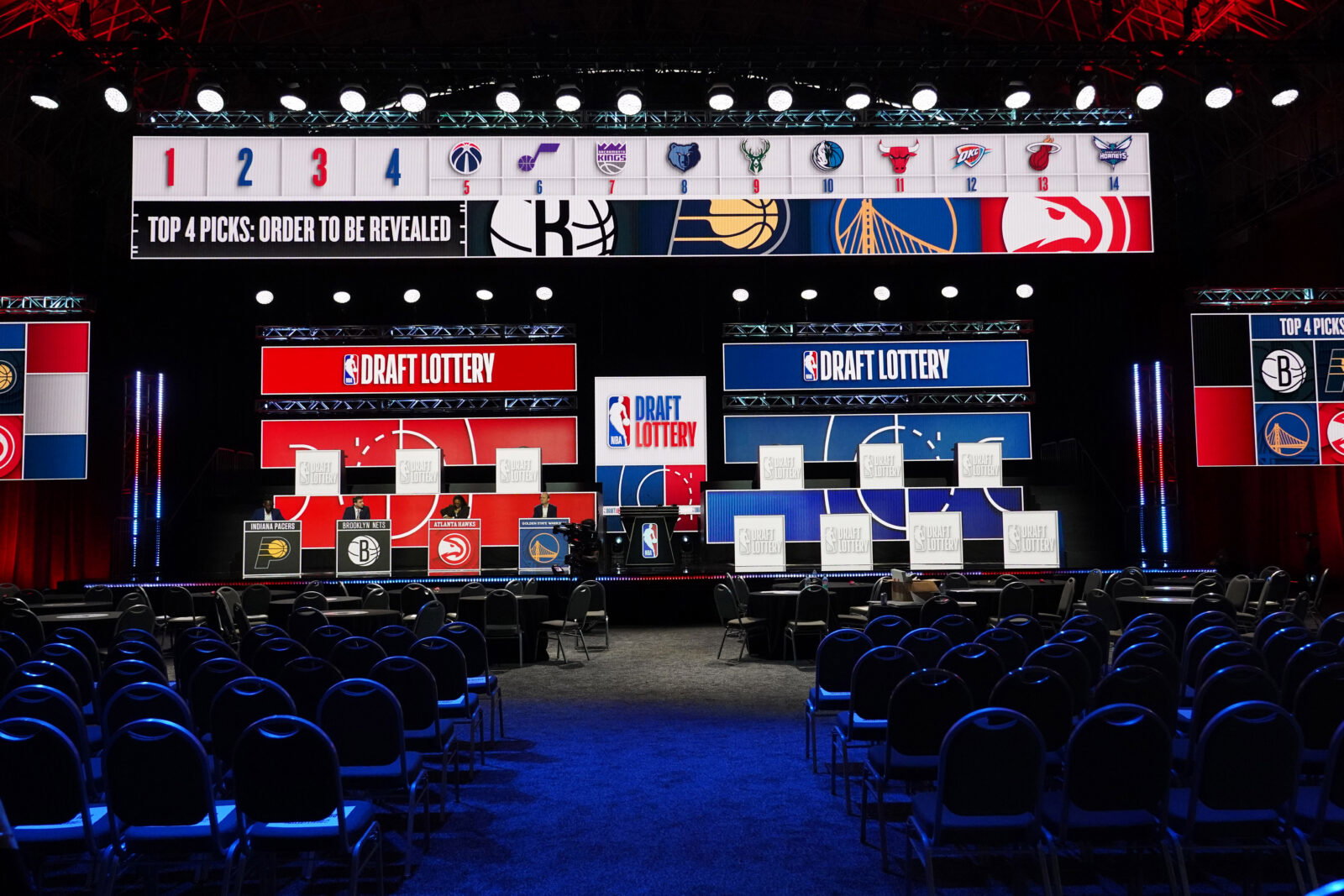
The NBA season is officially back, and with a new season comes new rules. One of the biggest changes involves the NBA draft lottery.
The new rules, called the 3-2-1 lottery system, will debut for the 2026-2027 season. And these reforms could forever change the landscape of the NBA.
Rebuilding teams like the Washington Wizards and Utah Jazz no longer have the same incentives to tank for better lottery picks. Meanwhile, teams on the bubble between making the playoffs and missing out now have a better chance of landing a lottery pick.
Explaining the New Lottery Rules
The new NBA Draft lottery format changes a lot.
It expands the lottery from 14 teams to 16 teams. The three teams with the worst records each receive two lottery balls; under the penalty of “draft regulation“, but they can’t receive a pick worse than 12th. To incentivize winning and discourage tanking, teams that finish between the fourth-worst and 10th-worst records receive three lottery balls. In exchange for gaining a third lottery ball, those teams can pick either as high as first or as low as 16th. The 9th and 10th seeds receive two lottery balls. The losers of the 7/8-seed play-in games receive one lottery ball.
Besides that, the league is implementing more changes. No team can pick first in two straight drafts or top five in three straight drafts. Teams can also no longer trade top-12- or top-15-protected picks.
The league will also discipline teams for purposely tanking, including lowering teams’ lottery odds, fines, or modifying a team’s draft position.
The NBA’s new lottery system runs for the next three years. In 2030, the NBA Board of Governors will review the system for other potential modifications.
Why the New NBA Draft Lottery Matters
The new lottery system could have drastic effects over the course of the season. Teams that fans would normally see tank for a shot at better odds at a higher draft pick, like the Brooklyn Nets, Sacramento Kings and New Orleans Pelicans, now have less incentive to tank since the three worst teams have worse odds compared to the 4th through 10th worst teams.
Under the old lottery rules, teams with the worst record had higher odds of getting the first overall pick. Under the old system, it rewarded teams who purposely tanked their performance. Thus, that system gave better odds to worse-performing teams, thus increasing the odds of a higher draft pick and a potential franchise-altering player.
The NBA put the new rules in place after an increasing number of teams were tanking their season on purpose. The hope is that by changing how the draft lottery is operated, this will fix the NBA’s tanking problem.
Will Lottery Reform Curb Tanking?
The main question about the rule change is whether it will solve the tanking problem the NBA is facing. The reason the NBA thinks these new rules fix the problem is that the three worst teams now have only a 5.4% chance of getting the number one overall pick. Meanwhile, teams that finished with the 4th-10th-worst records have an 8.1% chance of winning the first overall pick.
It remains to be seen if these new rules will actually fix their problem. We’re only a few weeks into the season, and the NBA draft lottery is still so far away.
How We Got Here
Before the rule change this year, the NBA draft lottery operated under a system in which the 14 teams that didn’t make the playoffs all had a chance at the first overall pick. Not only that, but before the rule changes, the system ensured that the three worst teams that season each had a 14% chance of getting the number one pick. The rest of the teams’ odds of finishing number one overall worsened depending on where they finished the season.
Since its inception in 1985, the NBA lottery has undergone numerous changes over the 41 years it has existed. When it was first incorporated, the rules were that all non-playoff teams had a 1-in-7 chance of getting the first overall pick, regardless of record. The drawing process involved sealed envelopes containing the teams’ logos in a big drum. The first letter picked was the overall first pick, and this continued until the seventh team was picked. A year later, in 1986, the NBA changed the rules so that the lottery would only determine the first three selections.
The Weighted Lottery Era
Over the following decades, the lottery underwent several changes. In 1990, the weighted Lottery era began with the NBA expanding the lottery to 11 teams. This happened because the league continued to grow and add more teams. The league also weighted the odds based on standings. The league decided to do this to help struggling teams. At this point, all the teams who missed the playoffs had the same odds of getting the first pick. By doing this, it gave the worst teams greater odds of selecting great players and thus speeding up their rebuilds.
Despite these adjustments, they still had a massive flaw in their draft lottery. Before 1994, the team with the worst overall record had a 16.7% chance of getting the first overall pick. But because of what happened in 1993, the league decided to adjust the percentages and raise the odds of the team with the worst record. The chance of getting the number one overall pick rose from 16.7% to 25%.
The league made this change after the Orlando Magic finished the 1992-93 season 41-41 and won the first overall pick despite having only a 1.52% (1-in-66) chance of getting it. Meanwhile, the Dallas Mavericks, who finished with the worst record, had to settle for the fourth overall pick despite finishing the year 11-71.
The rules stayed the same, except for the increasing number of teams to join the lottery. With more teams wanting to join the league, like the Charlotte Bobcats, now the Hornets, joining in 2004 to make it a 14-team lottery. The rules stood until 2019, when they shortened the odds of the worst team getting the number one pick. After that change, the three worst teams all had the same odds of getting the number one pick.
The NBA did this to discourage a trend of teams purposely losing games. This rule remained in effect for eight years before the NBA once again changed the rules to discourage tanking.
Future of the NBA
Only time will tell whether the NBA’s attempt to stop incentivizing tanking actually works. It’s going to take a few years to see if the rules actually have a positive effect on the league.
Teams like the Sacramento Kings, Washington Wizards, Charlotte Hornets, and Utah Jazz will serve as the eye test for the new rules. Seeing how these teams perform as the season progresses will help both the league and fans determine whether the rules are working. Some of the signs will be whether these teams stop pulling their best players.
While fans may question if these rules will actually help, one thing is clear: the NBA knows it has a problem, and fans should give the league credit for trying to fix it.








Leave a comment