

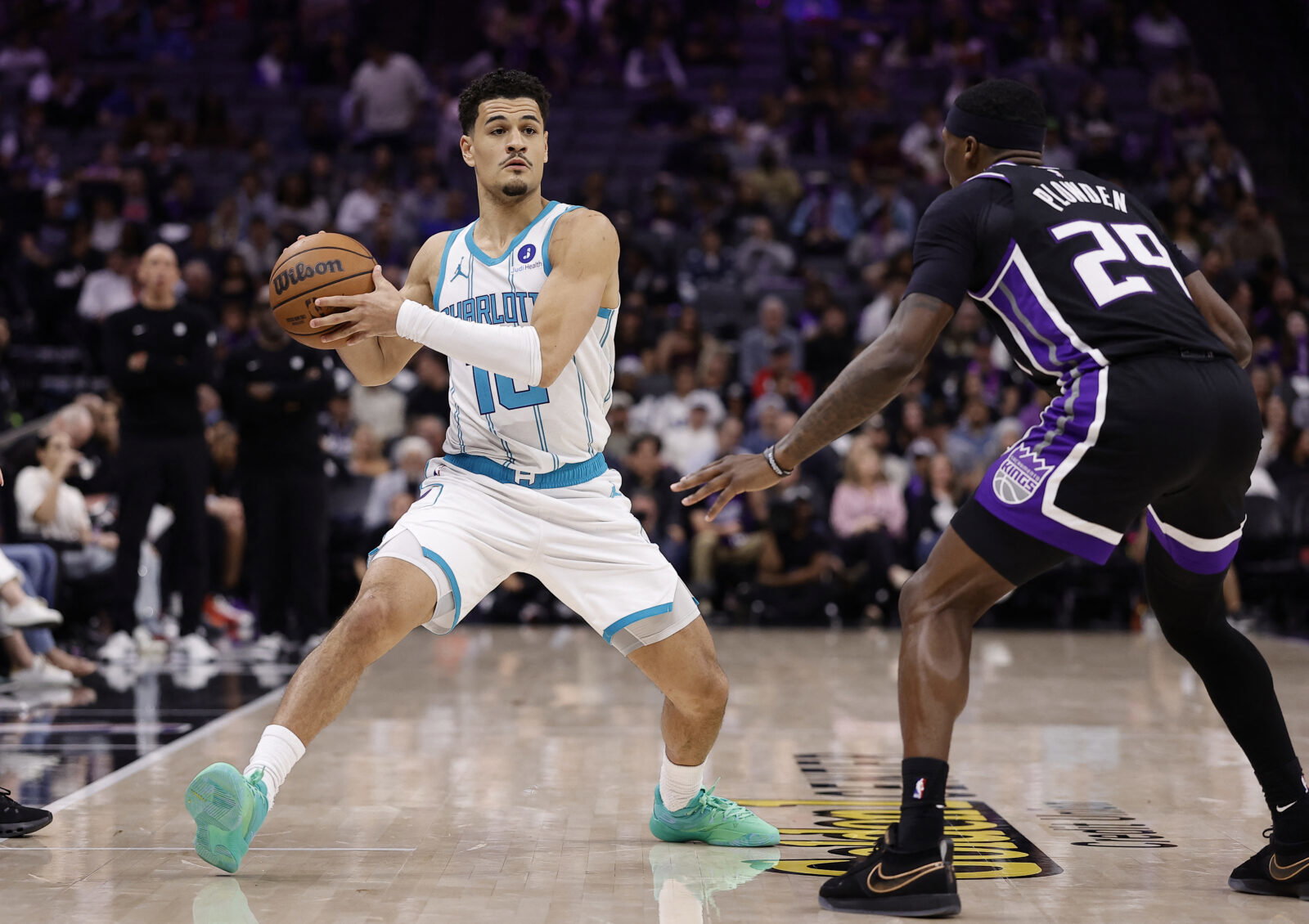
On Aug. 29, 2026, the Utah Jazz surprised Jazz Nation with a trade, sending former top-10 pick Cody Williams and John Konchar to Minnesota in exchange for Josh Green and cash.
With another former lottery pick leaving, the new Jazz roster continues to take shape. However, this move asks plenty of questions. What does this mean for Williams? How does this help Utah compete? How does Green contribute to the Jazz?
The Grass Is Greener in Utah
After helping the Charlotte Hornets return to the postseason, Green is now on his third stop in the league. While the 25-year-old’s scoring stats may not impress, Green’s impact shows up in other ways.
In limited minutes, Green maximized his time on the floor by doing the little things. With a +14.7 net rating, Green elevated the Hornets’ offense and defense by grabbing hard rebounds, hustling up the floor to disrupt a play, and hitting an open corner three.
He ranked 55th in plus-minus with a +207 rating. That puts him above players like Alperen Sengun and Devin Booker, and they played significantly more minutes.
Though he impacted the Hornets immensely, the Jazz already have guards in Josh Okogie and Svi Mykhailiuk. If Green wants more playing time in Utah, he needs to keep up his efficiency.
The trade means Utah wants to compete. After two years, the front office decided to spend their time and resources on Ace Bailey and Darryn Peterson rather than Williams. Players like Matas Buzelis and Jared McCain were ripe for the taking, but the Jazz ultimately drafted Williams.
At Colorado, Williams was a beast on both sides of the court. Averaging 11.9 points and earning Pac-12 All-Freshman honors, the forward was even rumored to go number one overall. So far, he hasn’t developed into the dominant starter many expected. While he still has a chance to develop into a dominant player in Minnesota, the odds are slim.
In all fairness to the front office, nobody hits on every draft pick in a rebuild. It stings to miss on a lottery pick, but the Jazz do dodge paying the Williams’ salary — meaning they can use that money to pay Keyonte George. Plus, they can flip Green’s $14.5 million contract at the trade deadline for a center to help them compete for a playoff spot.
Finding His Niche
For Williams, this is a critical juncture in his career. The 10th overall pick in 2024, Utah had high hopes for him. While he started last season slowly, his play showed a spark in the end.
He averaged 15.4 points, 4.8 assists, 4.3 rebounds, and 1.1 steals in March and April alone. This gave fans and Jazz media hope that Williams finally settled into the NBA. Then Summer League happened.
In a game against the Los Angeles Clippers, he scored zero points, grabbed two rebounds, added one assist, and stole one ball in 23 minutes. This performance caused speculation about Williams’s future in Utah.
Many media members wondered how much time he truly had left with the Jazz. This trade answered that question. The Jazz want to compete and feel that the time and resources put into Williams’ development won’t get them there.
Now, Williams must fight for his NBA survival. He must beat out his other benchmates in Minnesota to keep his career going. Perhaps adopting a Derrick Jones Jr. like role where he defends and gets the crowd going with dunks can suit him well.
All three components of this trade have something to prove this year. Green must improve his efficiency, Williams must break through, and the Jazz need to make the playoffs.











Leave a comment