

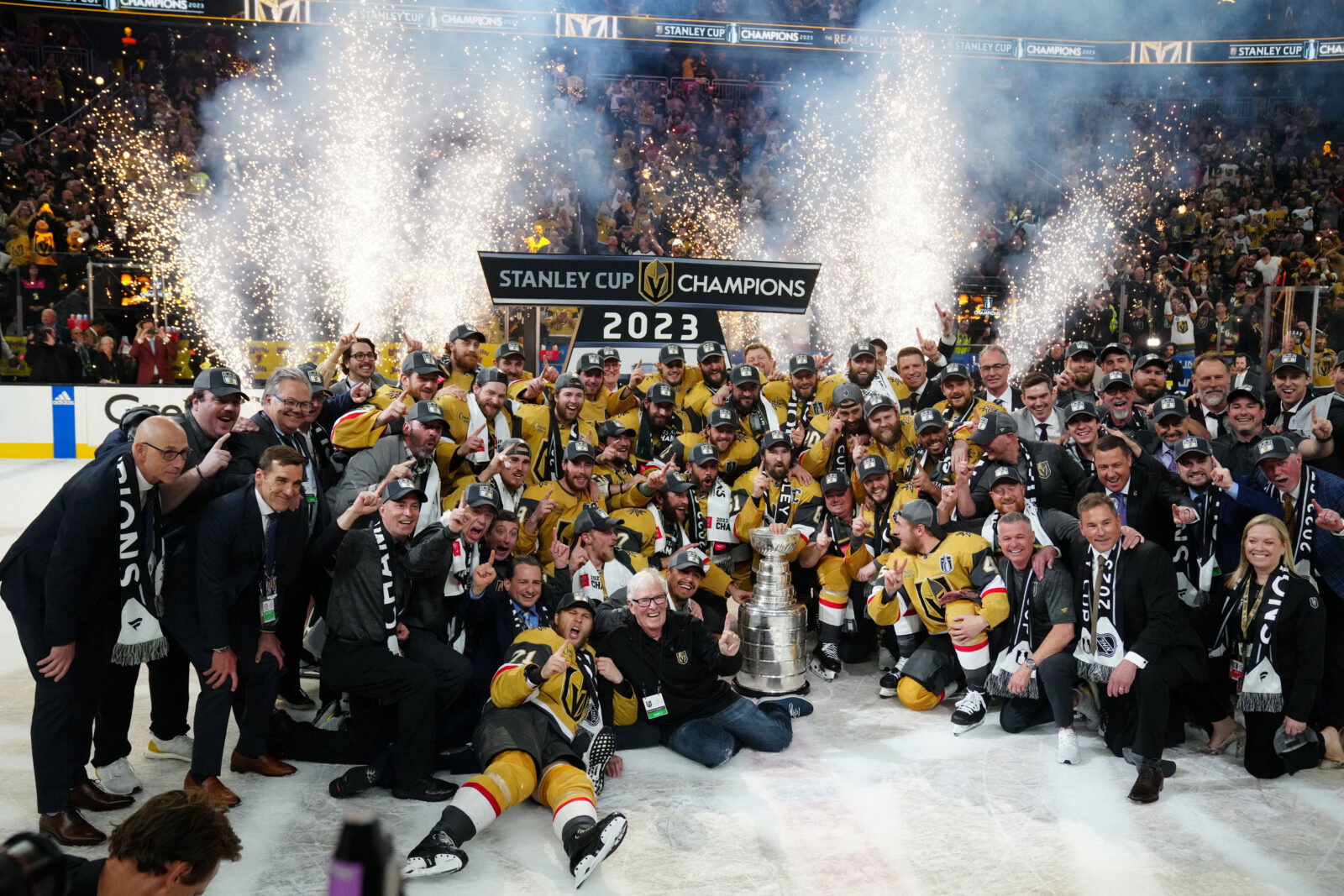
After the NHL introduced the Seattle Kraken, it seemed the league would stay put. 32 teams, eight per division, an even split, but that’s less clear now.
The league’s attitude is far from urgent, and they are operating on a “wait-and-see” basis. Essentially, if there’s an opportunity for expansion that makes sense, it will happen. So, forget ‘if’ and start asking ‘when?’
This truth may draw mixed reactions from hockey fans. On the one hand, the league has finally reached some equilibrium with its format. All of the franchises seem stable enough to stick around for a while and be competitive. On the other hand, expansion brings new opportunities, storylines, and a new stepping stone into the league’s future.
Regardless, if expansion is inevitable, it’s better to prepare for the outcomes than to reject it. Here are five North American cities that are a good fit for an NHL franchise.
5. Arizona
Arizona hockey fell from grace with the Coyotes before relocating to Utah. Even a few years after the relocation, Arizona has plenty of tools to support a team. Diamond Desert Arena, formerly Gila River Arena, is a stunner, and the area around the stadium is exactly the model a small- or mid-market team should thrive in.
Even if the NHL passed on the Coyotes’ former stomping grounds in Glendale, Phoenix could still be an option. Mortgage Matchup Center, the Coyotes’ first home and the Phoenix Suns’ current home arena, is in a hotter area and would likely draw more consistent traffic. The building has also been renovated since the Coyotes first moved out.
The name of the game is success. The Yotes had had nearly three decades to make some moments, and they simply failed. As soon as their roster turned over to Utah, they were in the playoffs just a year later and looking like a team on the rise. Some teams have established themselves enough to sell tickets regardless of the team’s performance. The Coyotes couldn’t claim that luxury.
It may seem ridiculous to return to a state that just had its team relocated, but it could work for a few reasons. The infrastructure is already there, and a decent chunk of the Coyotes fanbase will remain. Still, better options are on the table.
4. Atlanta
Following the trend of recent hockey hubs, Atlanta seems possible. Atlanta has had two teams relocated. First, the Atlanta Flames, which moved to Calgary in 1980. Then, the Thrashers, which became the second iteration of the Winnipeg Jets in 2011. They are the only city to lose multiple NHL franchises, so why go back?
Third time’s the charm, and in the current NHL landscape, Atlanta may thrive. The sport is more popular than ever, especially in the South. Florida, of course, has had plenty of success with the Panthers and Lightning. Just a couple of states to their north are the reigning Cup champion Carolina Hurricanes.
Georgia will always be football first, but Atlanta has also supported two other teams very well: the Braves and Hawks. State Farm Arena was built with hockey in mind and housed the Thrashers, so the team already has a viable home. Like the Coyotes, it’s about cultivating a fanbase.
A dedicated ownership group is key. In both the Thrashers’ and Flames’ failures, the ownership didn’t prioritize the team. The Thrashers were the forgotten child of a group that also owned the Atlanta Hawks. The Flames were well liked but were sold off to supplement the real estate empire that owned them. Some true hockey people at the top of the organization would do wonders for a potential Atlanta hockey club.
3. Kansas City
The NHL had a very short-lived presence in Kansas City. The Scouts were active only from 1974-76 before moving to Colorado and rebranding as the Rockies. After that, the team moved to New Jersey and rebranded as the Devils. The team posted a 27-110-23 record in two seasons; fans showed little mobility, and ownership had little desire to endure the growing pains of expansion.
The expansion era brought some major successes, but not for everyone. The Scouts weren’t the only team that quickly fell by the wayside. The aforementioned Atlanta Flames and the messy Oakland Seals/Cleveland Barons saga are perfect examples. The Washington Capitals joined the NHL with the Scouts and have been a fixture despite a worse record in their first two seasons. The difference was simply being prepared to push through a young, experimenting league structure.
The Kansas City Mavericks of the ECHL lead the hockey conversation. The team isn’t wildly successful at selling seats, but neither are most ECHL teams in front-of-mind professional sports markets. With the Chiefs so successful, it will be hard to divert attention. However, as their stars age and the team passes their competitive window over the next decade, a new franchise might energize the city.
It’s easy to point to a past failed expansion, but the Scouts don’t indicate what a modern Kansas City NHL expansion would look like. T-Mobile Center currently has no full-time resident and seats over 17,000. That has kept Kansas City in the expansion conversation for years. Clark Hunt, multi-sport owner and Chiefs owner, currently has no footprint in the NHL. As the sport grows, he may look to expand his reach in the same city where he built an NFL dynasty.
2. Quebec City
A few Canadian cities make sense, but none more than Quebec City. Hamilton also has a place in the discussion, but Quebec has something Hamilton doesn’t. A fairly recent professional club, the one that got away. The Quebec Nordiques are maybe the most iconic disbanded franchise in sports history, and the Colorado Avalanche still honor them as their predecessor.
At this point, most expansion markets will be medium-sized at best. QC is quite a small market, but it’s as dedicated as it gets. Although the NHL and MLB are polar opposites in financial league structure, Quebec City would be more like the Milwaukee Brewers. It has a smaller fanbase than most, but it’s also among the most dedicated. Nordiques fans still show up to games and lobby for the team’s return.
Centre Vidéotron, home of the QMJHL’s Quebec Ramparts, is ready for the NHL. It has a seat capacity similar to Madison Square Garden and is practically built for hockey. Seating over 18,000 in a small market could be a pitfall, but the Nordiques had little trouble filling the 15,176-seat Colisée de Québec. A few more thousand could be ambitious, but not unrealistic.
The Nordiques were the right girl at the wrong time for the NHL. The Canadian dollar is still a hurdle that the Nordiques struggled to clear, but the league is more stable than ever. With a fresh arena and the salary cap’s financial guardrails, a new franchise in Quebec City is very feasible.
1. Houston/Austin
Although Texans may object to lumping two very unique cities together in one entry, there’s good reason. Commissioner Bettman discussed an expansion to one of the two cities with Dan Friedkin, CEO of the business conglomerate Friedkin Group, back in July. Because the Friedkin Group is based in Houston, that city seems more likely. Regardless, if they expand to one, expansion to the other would likely wait.
Houston already has a rich professional sports scene. The Rockets are an incredibly impressive, young group. The Texans have an incredibly loyal fanbase for the newest NFL franchise. The Astros are a pillar of the city’s sports scene and are arguably the most recognizable brand of the bunch. The Houston Bulls of the NAHL are their only active major hockey team.
Austin is maybe the opposite. Their sports culture starts and stops with their Longhorns. University of Texas football dominates, with smaller professional leagues also in the mix, such as Austin FC in MLS. They also have a surprising amount of hockey, including the NA3HL’s Ice Bats and, most notably, the Texas Stars, the Dallas Stars‘ AHL affiliate.
Either location would likely be a home run. Texas hockey is bigger than ever, led by the Dallas Stars and their involvement in the Dallas-Fort Worth area. With the franchise’s presence in Austin, the city has a strong case. Houston might struggle to draw attention away from other professional sports, but it could also complement the existing culture perfectly.











Leave a comment