

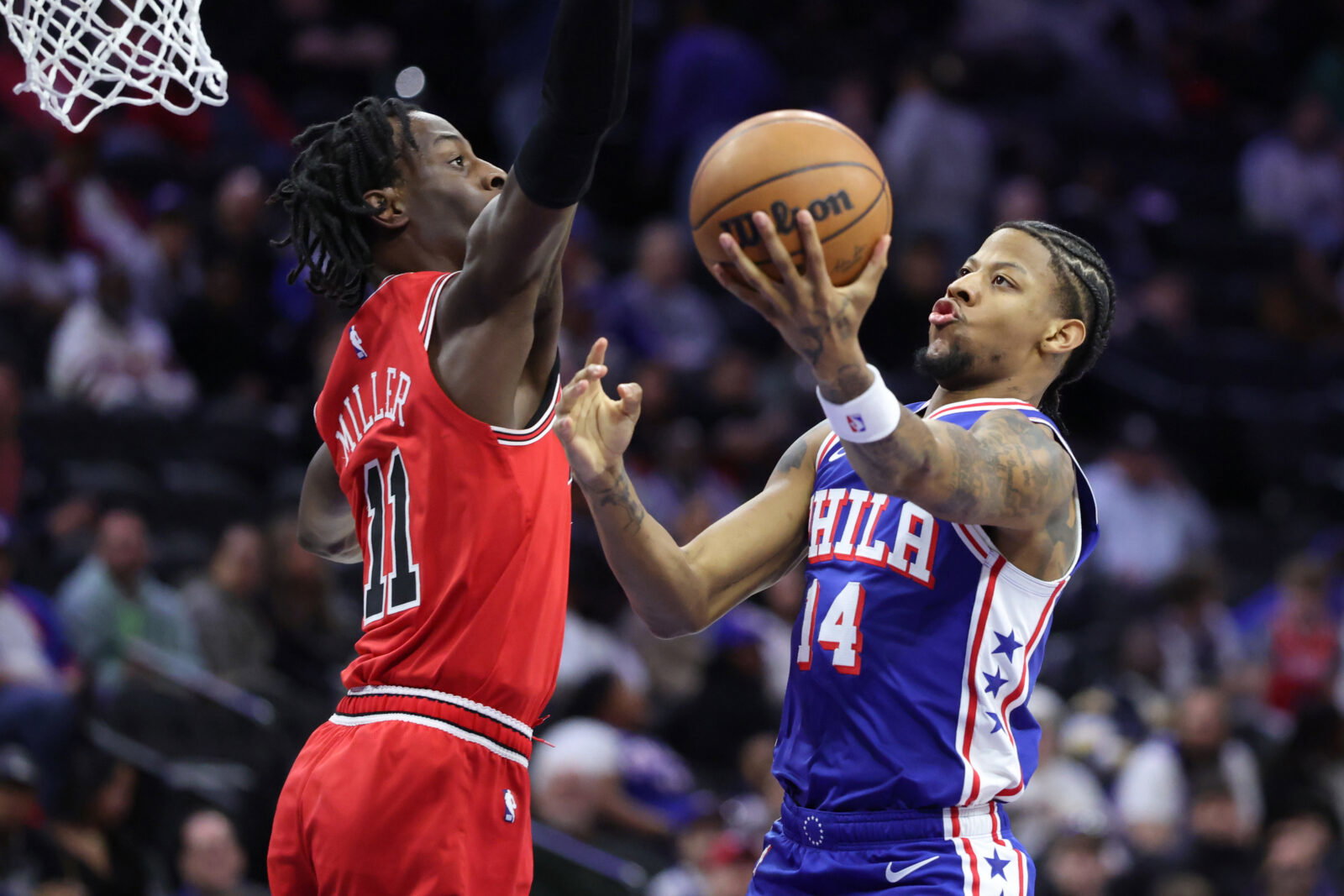
The Sixers are once again in a familiar place.
After a 128–96 loss to the Celtics in Game 4, they now face elimination in their first-round series. As reported by NBC Sports Philadelphia, head coach Nick Nurse pointed to the team’s inconsistency, noting that Philadelphia has alternated between strong performances and games that are “way out of character.”
That inconsistency has defined much of the season. Across 87 games, including the play-in tournament, the Sixers have shown both their ceiling and their flaws. They can defend in stretches, generate high-level offense through individual talent, and compete with top teams. But they also struggle with defensive rebounding, three-point defense, and maintaining effort across full games.
As the future of the franchise remains mum, so does Dalen Terry’s future in Philadelphia.
A Team Built on Star Power, Still Searching for Balance
As detailed in the NBC Sports Philadelphia report, much of Philadelphia’s offense continues to rely heavily on individual creation from Joel Embiid and Tyrese Maxey.
When that rhythm breaks, the structure of the offense often collapses with it.
Even in Game 4, Embiid led the team with 26 points, 10 rebounds, and six assists while playing through recent health concerns following an appendectomy. Maxey added 22 points but acknowledged his lack of aggression early in the game was a major issue.
The pattern has been consistent: When the stars are not fully dominant, the Sixers struggle to find reliable production elsewhere.
Where Dalen Terry Fits Into That Reality
It is in that context that Terry’s roster spot takes on a different meaning.
The 76ers converted Terry from a two-way contract to a standard deal late in the season, a move initially reported by NBC Sports Philadelphia and supported by multiple outlets including PhillyVoice, which noted the timing was tied to postseason eligibility rules.
On paper, the move was about flexibility. Terry is a 6-foot-6 wing who provides defensive versatility, secondary playmaking, and energy minutes. In limited action, he averaged 4.1 points, 1.6 assists, and 1.6 rebounds per game. But more importantly, the contract structure, which includes a team option for next season, signals something larger.
This is not just a playoff roster decision, it is an evaluation.
So far in the series, Terry has not been a factor in the rotation.
That is not unusual for a young player on a win-now team. Playoff basketball shortens rotations and prioritizes trust over experimentation. For Philadelphia, every possession has become too important to develop new roles on the fly.
But that also highlights the gap between where the team is and where it may need to go.
The current roster is built to compete now, but the results in this series suggest the foundation is still unstable.
The Bigger Question Emerging From the Series
What stands out most about this playoff run is not just the losses, but the repetition of familiar issues.
Poor defensive rebounding. Heavy reliance on isolation scoring. Inconsistent effort. Bench production struggles. These are not new problems, as highlighted in the NBC Sports Philadelphia breakdown of the series, they are structural ones.
And that is where the conversation begins to shift toward the future.
The Sixers are still playing for survival in this series, but moves like the Terry signing suggest the organization is already thinking beyond it. Even in a win-now environment, Philadelphia has continued to evaluate younger, more versatile pieces who could fit into a different version of the team moving forward.
Terry represents that type of player: not a centerpiece, but a potential connective piece on the margins.
If the Sixers are going to evolve beyond their current limitations, it will likely require more players in that mold.
The Path Forward
The immediate focus remains on Game 5 and avoiding elimination.
But regardless of how the series ends, the larger questions will remain: Can this version of the Sixers, built around star-driven offense and inconsistent supporting play, truly compete at the highest level? Or does the team need to gradually reshape its identity toward more balance, depth, and versatility?
Terry’s presence does not answer those questions, but it reflects their existence.
The Sixers are still in the middle of their season in a technical sense, but the direction of the franchise is becoming harder to ignore.
This playoff series has reinforced what has been visible all year: the ceiling is high, but the margin for error is thin.
As Philadelphia looks ahead, decisions like the Dalen Terry signing may end up mattering less for what they did this season, and more for what they signal about the next one.
Because for a team still trying to survive the present, the future is already beginning to take shape.












Leave a comment