

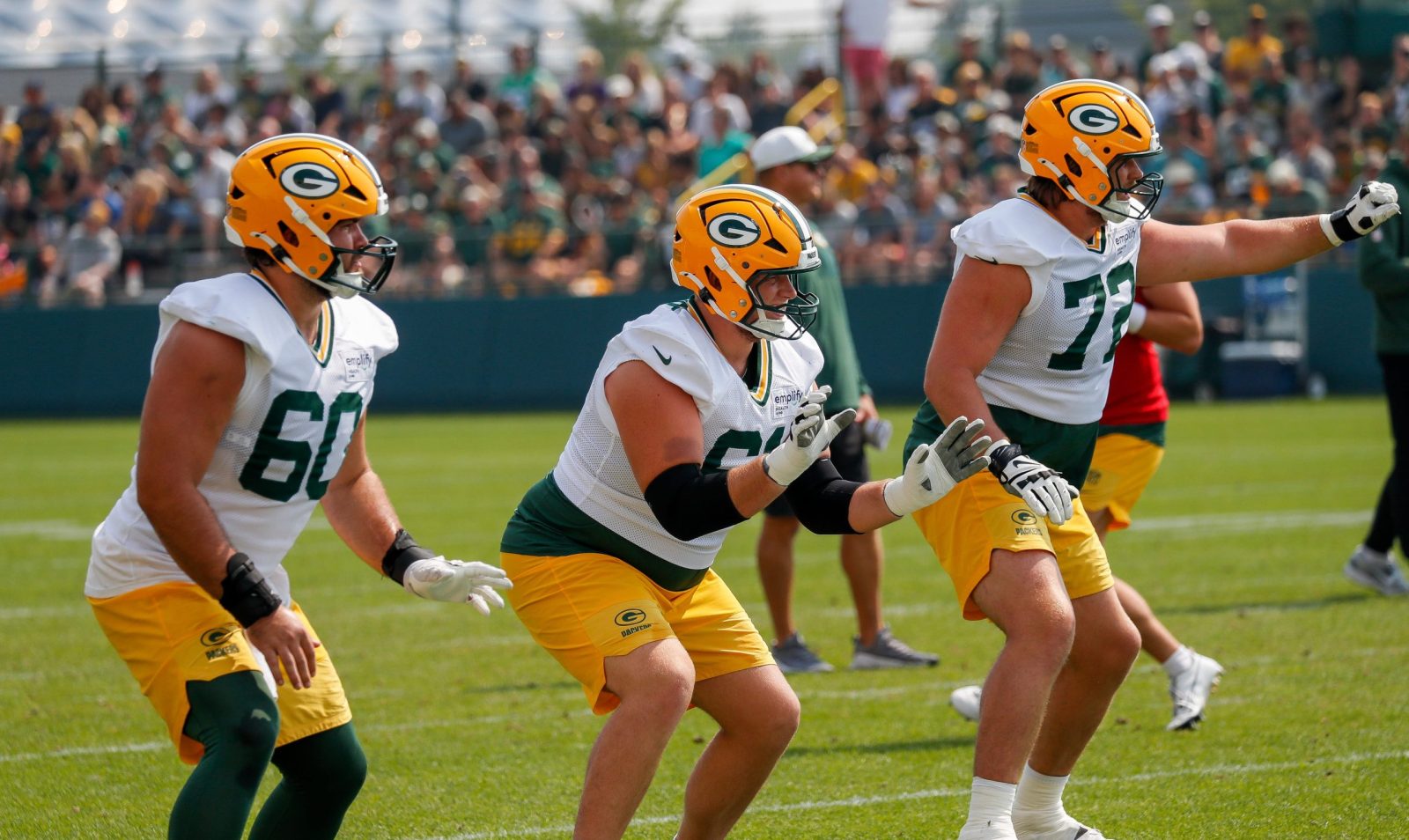
In modern times, training camps in the National Football League are straightforward.
Thirty-one of the 32 teams practice in their home state, typically allowing their fans to see them practice.
It’s a preseason formality that helps warm up the start of the season.
But once upon a time, things were different.
In 1995, six NFL teams brought their training camps to small colleges in Wisconsin— the peak of the ‘Cheese League’ from its formation in 1984.
While the league is a far-forgotten memory, the Packers, Vikings, Bears, Chiefs, Saints, and Jaguars once adopted the Dairyland as their home.
How it Brie-gan
For Green Bay and Minnesota, these training camp locations were uniform compared to those of their fellow teams.
Starting in 1958, the Packers practiced at St. Norbert College in De Pere every year until 2020. Likewise, the Vikings practiced at the University of Minnesota-Mankato from 1966 to 2017.
Other teams were drawn to Wisconsin due to the nice summers, distance from distractions at home, and good facilities.
Not far away, the Bears moved to Platteville, Wisconsin, in 1984 to hold their training camp. Their fans followed the trail nearly four hours away to support the Bears at the University of Wisconsin-Platteville until 2001.
Little by little, the next three teams followed.
The Saints found the University of Wisconsin-La Crosse in 1988, the Chiefs moved to the University of Wisconsin-River Falls in 1991, and the Jaguars joined the mix for one year at the University of Wisconsin-Stevens Point.
The St. Louis Rams joined the party past its prime in 2008 at Mequon’s University of Concordia.
What made them asiaGO?
While the Cheese League was a massive economic gain for the small Wisconsin towns, it wasn’t feasible for the football giants as time went on.
While once NFL teams were looking for training camp elsewhere, it became normalized to stay in your home state to draw in more fans, and take advantage of their world-class facilities.
Teams are inclined to hold joint practices across multiple states today, but in the Cheese League, it was merely a drive away.
“I think it’s sad,” said Hall of Fame offensive tackle Willie Roaf, who played for both the Saints and the Chiefs while they trained in the Cheese League. “It takes away from those towns in Wisconsin. But it really makes no sense to go up there because they have so many stipulations on how many practices they can do. It’s not what it used to be. If you’re hot, you can go inside and practice on your own turf.”
For some coaches, like Mike Ditka, he enjoyed going out to Wisconsin for his training camp. Of course, he was familiar with the Midwest, but praised the great area and its ability to bond the team together.
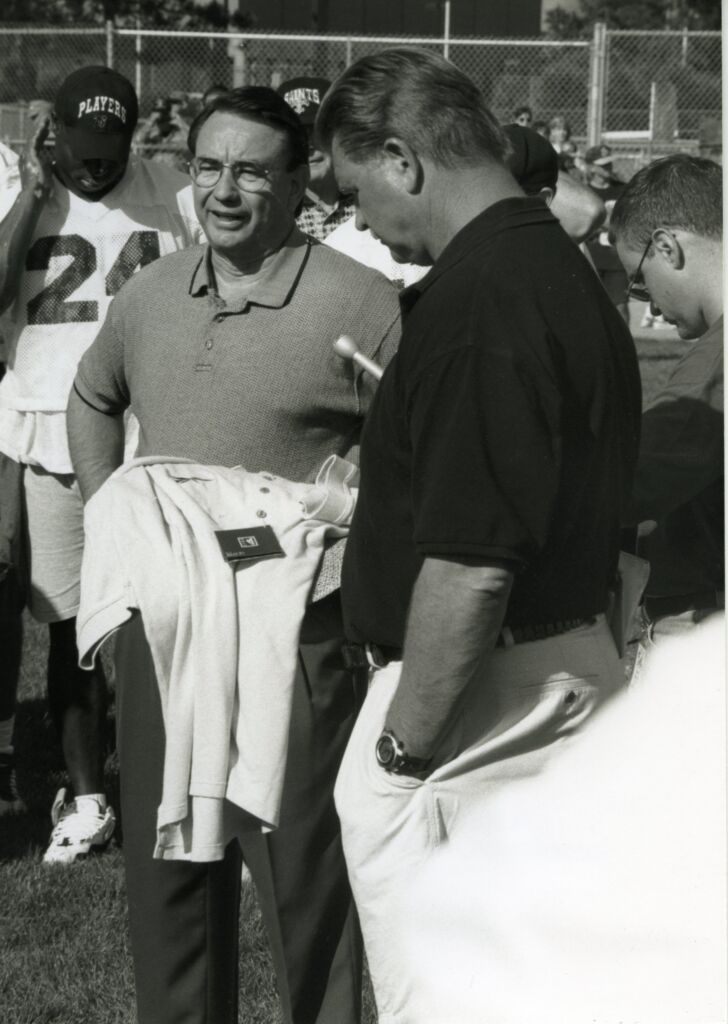
“If I was running a team, and I had a training camp site, I would go to Platteville,” Ditka said. “Now I have no say in it, so whatever they do, they do on their own. But you’re close enough to your fans for 16 weeks of the season. I mean, what the hell? To get the team away for a while is the best thing you can do.”
Monterey-conomics
The cheese league brought more than just football to the area. It brought a huge economic boost to the small towns.
In 1993, the Saints generated $2.5 million for the La Crosse area’s economy, according to Fox.
Up the river in River Falls, the Chiefs generated an economic impact of more than $1 million in 1991, and they paid about $275,000 to the University of Wisconsin-River Falls.
In the 2000s, their economic impact doubled to $2 million.
When the Bears escaped to Platteville, their fans would follow in numbers. So much so that the number of hotels in Platteville doubled…from two to four.
Several restaurants opened during that time, and the financial boost to Grant County’s economy was around $1.5 million.
The Cheesy Memories
As a kid, I remember looking at the menu of Steve’s Pizza Palace in River Falls, Wis., where the Chiefs once practiced every summer.
You can peruse the menu or website to this day, and you’ll find a small artifact of the Cheese League that stood the test of time.
“They make it with a real thin crust. It’s really, really good. ” — Joe Montana – Kansas City Chiefs Quarterback 1994
One could figure that somehow, by chance, one of the greatest quarterbacks ever found his way to Steve’s and tried it one day. However, a simple story tells us about the world that once was for these small towns.
A small quote that’s minuscule in history, but a quote that perfectly defined the league.
Someone from a town nobody’s heard of, like myself, can walk into a restaurant and think about eating the same pizza that an all-time great did.
That feeling is magical, and one that is rarely found nowadays in these places.
It brought larger-than-life superstars to these places that would’ve been ecstatic to see the Badgers in town, let alone teams from across the nation.
While there’s virtually no chance that the Cheese League will ever return, residents of these towns always treasure the memories of when their home became a tourist destination and housed some of the world’s best athletes.








Leave a comment