

Some medals are remembered for their color. Others are remembered for what they changed.
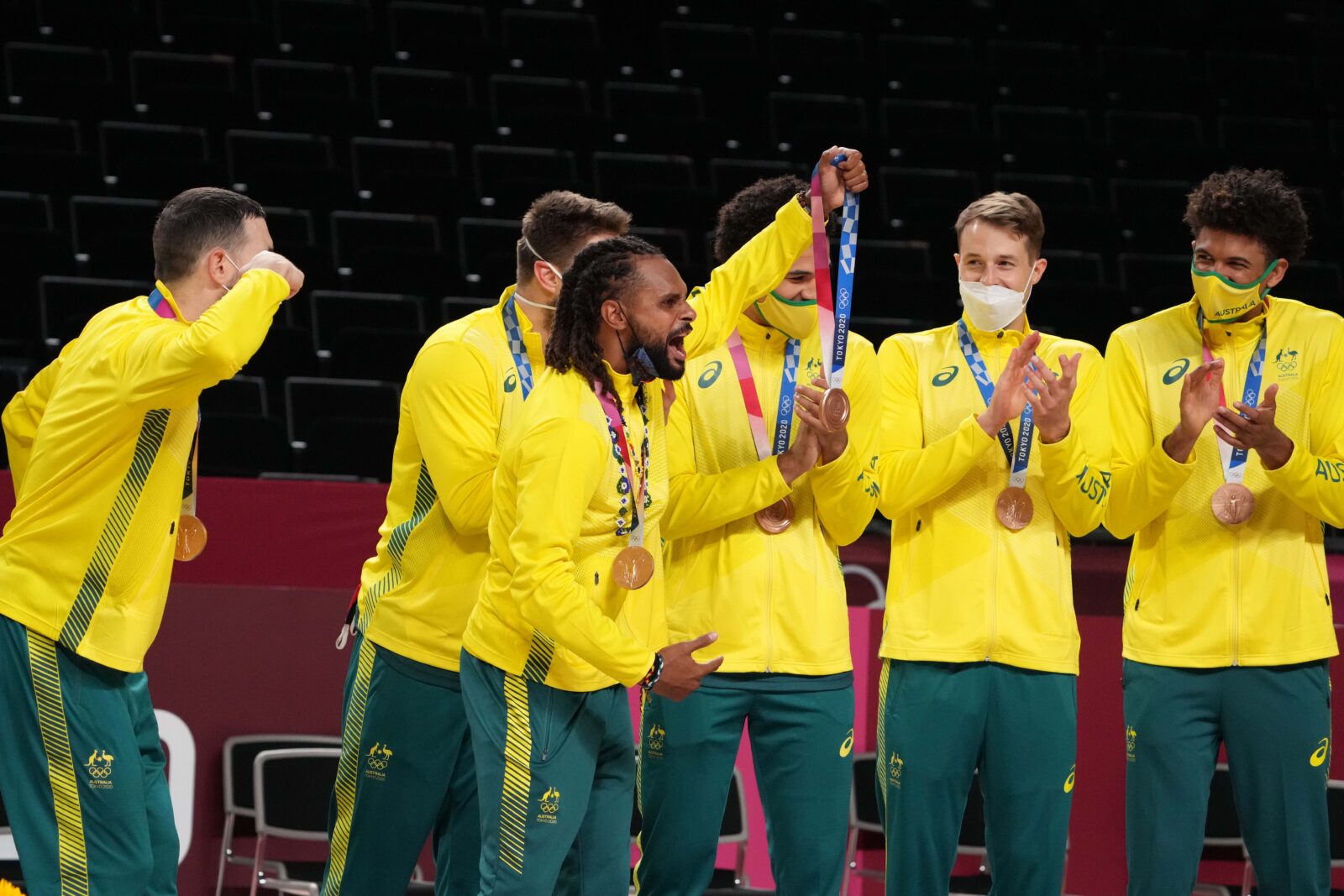
Australia’s bronze medal in men’s basketball at the Tokyo Olympics belongs in the second category. Officially, it was third place. In reality, it felt far bigger than that. It ended decades of frustration, rewarded one of the country’s most respected generations, and changed how Australian basketball was viewed at home and abroad.
For the Boomers, Tokyo was not simply a podium finish. It was a breakthrough moment.
The Medal Australia Had Waited Decades For
Australia had been close before. Painfully close.
The Boomers built a reputation as a disciplined, dangerous international team, but major medals kept slipping away. Fourth-place finishes became part of the story. Talented squads earned respect, yet the final reward never came.
That history is what made Tokyo different.
When a team carries years of near misses, pressure grows heavier with every tournament. Players know they are representing not only the current roster, but also those who came before them.
Winning bronze meant releasing years of tension in one night.
More Than a Win Over Slovenia
Australia secured the medal with a 107-93 victory over Slovenia, a team led by Luka Dončić at the Tokyo Olympics.
But the result meant more than defeating a talented opponent.
It showed Australia could respond after the disappointment of missing the gold medal game. It showed resilience under pressure. Most importantly, it proved the Boomers could finish the job when the moment demanded it.
Many strong national teams are remembered for potential. Medal-winning teams are remembered for results.
Tokyo moved Australia into the second category.
Patty Mills and the Leadership Moment
Every historic team usually has one player who defines the emotional tone of the campaign. For Australia, that player was Patty Mills.
Mills had long been one of the faces of the Boomers program. His commitment to representing Australia had already earned admiration, but Tokyo elevated that reputation even further.
He played with urgency, confidence, and complete belief. His scoring mattered, but leadership mattered just as much.
Teammates followed his intensity. Fans connected with his passion. Younger players saw what national representation could look like when treated as an honor rather than an obligation.
Not every medal run has a clear symbol. Australia’s did.
What the Bronze Changed at Home
International success often creates momentum long after the final whistle. That was true in Australia.
The bronze medal gave basketball stronger visibility in a country where sports are highly competitive. Rugby, cricket, Australian rules football, and football all compete for attention. Breaking through on the Olympic stage helped basketball claim a bigger share of the national conversation.
That influence was visible in several ways:
- More young athletes saw basketball as a serious pathway.
- The Boomers gained broader mainstream recognition.
- The domestic NBL received added credibility.
- Casual fans became more interested in future tournaments.
As basketball audiences expanded, so did interest in adjacent digital entertainment sectors, including online gambling in Australia, where sports fans increasingly engage with live markets, fantasy formats, and interactive matchday experiences.
Success can inspire participation faster than any marketing campaign.
The Numbers Behind the Breakthrough
The Tokyo result looked even more significant when placed in historical context.
| Category | Before Tokyo 2021 | After Tokyo 2021 |
| Olympic Medals | None | First Ever Bronze |
| Global Reputation | Strong but unfinished | Proven contender |
| Public Attention | Growing | Significantly stronger |
| Youth Inspiration | Steady | Elevated |
| Expectations | Competitive outsider | Medal threat |
That final category may be the most important.
Australia was no longer viewed as a team hoping to surprise stronger nations. It became a nation others had to take seriously.
Why It Was Bigger Than Bronze
Bronze medals are sometimes described as consolation prizes. That interpretation did not fit this moment.
For Australia, the medal represented three deeper achievements.
First, it removed a psychological barrier. Once a team wins one medal, future squads compete with belief instead of doubt.
Second, it rewarded a generation that had invested years into the national program. Many respected teams retire without closure. This group received one.
Third, it changed expectations. Fans, media, and opponents now look at Australia differently.
That is why the bronze felt larger than third place.
How Modern Fans Responded
Major sporting moments now live far beyond television broadcasts. They continue through clips, debates, podcasts, and data-driven fan communities.
Australia’s Olympic success arrived in a period when supporters increasingly followed sport across multiple screens. Fans watched highlights on mobile devices, tracked player performance online, and stayed connected through social media long after games ended.
That same digital engagement has also influenced user expectations around speed and convenience in online transactions. In Australia, recent attention around systems like PayID reflects how consumers increasingly value faster and more secure payment tools across entertainment platforms, including online gaming environments.
Modern victories do not end with the scoreboard. They continue through how fans experience them afterward.
What Comes Next for Australian Basketball
The biggest challenge after a breakthrough is proving it was not a one-time event.
Australia now enters tournaments with higher expectations. That creates pressure, but it also reflects progress.
The player pipeline remains encouraging. Australian talent continues to appear in strong domestic systems, overseas leagues, and the NBA. Coaching standards remain respected, and basketball interest is stronger than it was a decade ago.
The next target is obvious: another medal, and eventually a push for silver or gold.
Once a country reaches the podium, ambition naturally changes. Despite falling short at the 2024 Paris Olympics — losing in overtime to eventual Bronze Medalists Serbia in the quarterfinals — Australia remains a team with ample talent to challenge the world again at the 2028 games in Los Angeles.
Why Tokyo Still Matters
Some results fade quickly. Others become reference points.
Australia’s bronze medal in Tokyo remains important because it changed the Boomers’ story. The conversation moved from what had been missed to what had finally been achieved.
It gave fans a defining memory. It gave players proof that persistence can be rewarded. It gave the next generation something tangible to chase.
Officially, it was bronze.
For Australian basketball, it meant far more than that.











Leave a comment