


Progressive jackpots give slot-style games a moving target.
A small portion of each qualifying wager feeds a meter that rises until someone hits the prize, then the process starts again. The structure sounds simple, but the way that meter is shared changes the entire experience. Local and network progressives behave differently, and those differences affect how fast a jackpot grows, how often it resets, and what kind of player it tends to suit.
Let’s dive deeper.
Local Progressives Stay Close to the Floor
Local progressives are confined to one venue or to a tightly linked group of machines under the same operator. Because fewer players contribute, the meter usually climbs more slowly than with a wider-network jackpot. That slower rise is not a drawback by itself; it simply means the prize pool is built from a smaller circle of play.
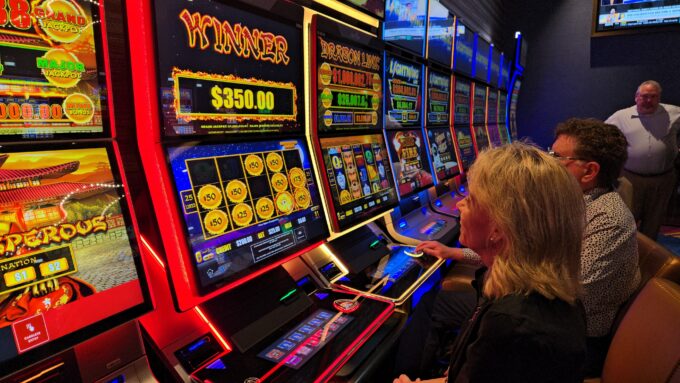
In practice, local progressives often feel more immediate. A player watching a bank of linked games may see the same meter across several cabinets, with the prize resetting after a hit and beginning its climb again. The cadence can be easier to follow because the pool is smaller and the activity is concentrated in one place.
Network Progressives Stretch Across More Play
Network progressives link the same title across multiple locations, sometimes across an entire platform. More players mean more contributions, so the displayed amount can rise quickly and each figure is much larger.
That scale is the main appeal: the jackpot may take longer to land, but the headline number can become far more dramatic than a local meter. Players who want to compare live examples often start with a public lobby that lists current meters and available titles. A lobby featuring progressive jackpot slots makes that comparison easier by presenting different jackpots side by side, including the live values that indicate whether a prize is tied to a local pool or a broader network.
Many network systems also use layered prizes. A title may carry a minor, major, and grand meter, each with its own pace and trigger conditions. That structure lets the game deliver smaller, more frequent shared wins while preserving a rare top-end prize for the longest run of play.
What the Meter Tells You Before You Play
The visible number is only part of the story. The rate of change, the reset pattern, and the number of linked games all help indicate how a progressive behaves. A meter that moves steadily on a small set of machines is usually local. A meter that appears across many titles or locations, especially with a much larger ceiling, is more likely to be networked.
- Meter growth: Faster growth usually points to a larger contributor base.
- Reset behavior: Frequent resets often suggest a smaller, local pool.
- Linked titles: Multiple cabinets or versions sharing one value indicate a common jackpot.
- Prize tiers: Minor, major, and grand meters usually signal a structured network format.
Why The Difference Matters to Players
Local and network progressives create different expectations.
A local jackpot may not reach the same towering figures, but it can feel more tangible because the pool is narrower and the meter may cycle more often. A network jackpot offers the opposite trade-off: a larger ceiling, a slower chance of landing the top prize, and a stronger sense of chasing a shared, platform-wide event.
That distinction matters when choosing where to focus attention. Players who prefer shorter jackpot cycles may gravitate toward local meters. Players drawn to rare, oversized prizes may refer to the long build of a network pool. Neither format is inherently better; they simply reward different styles of patience.
Conclusion
Shared jackpots are easiest to understand when you look at who is feeding the meter and how idly that meter is linked. Local progressives stay concentrated and tend to reset more often, while network progressives gather contributions from a much larger pool and can climb to record levels. Once you know how the jackpot is shared, the displayed number becomes more than a headline— it becomes a clue to how the game is likely to behave.








Leave a comment