

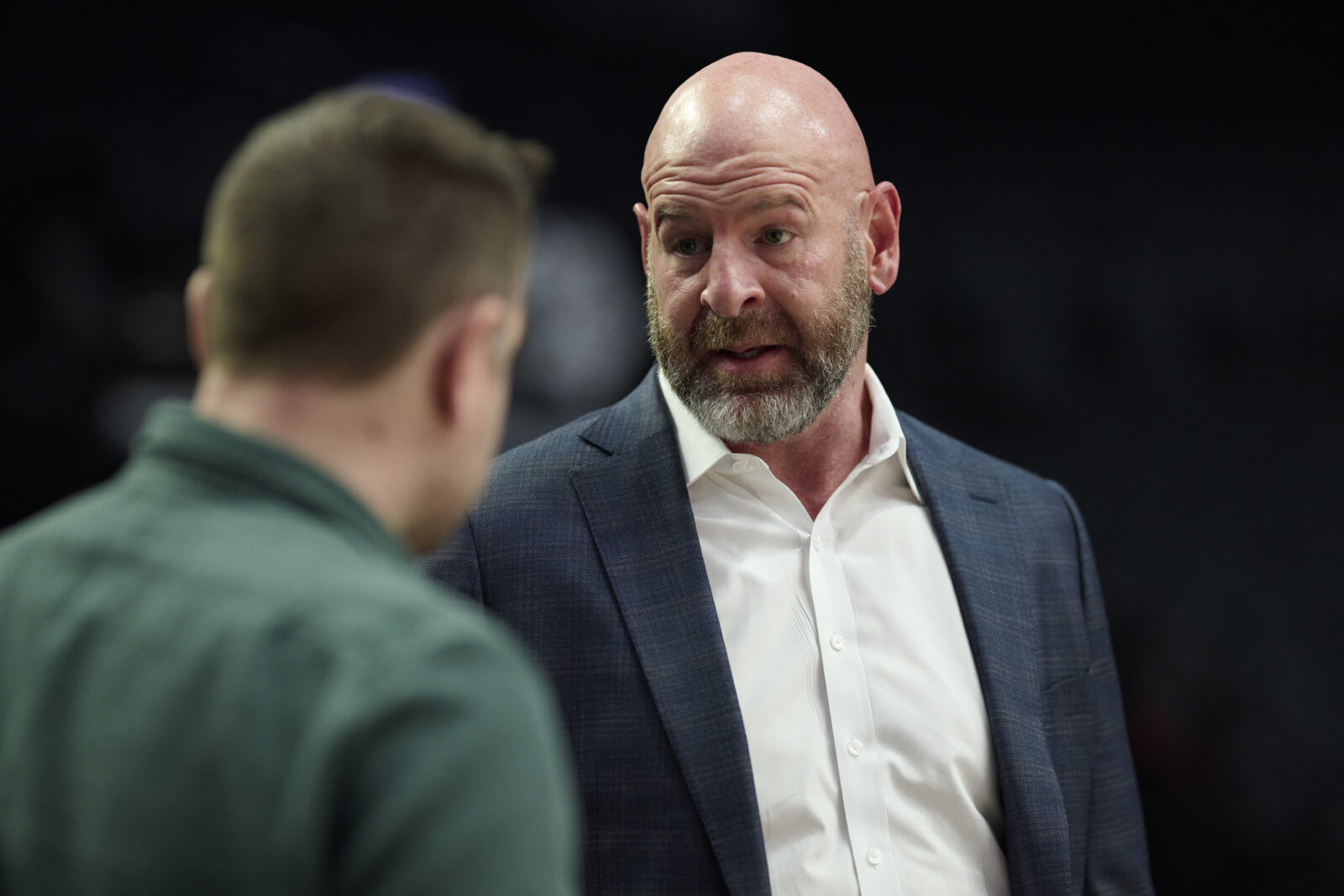
On Thursday, at the Blazers’ end-of-season interviews, General Manager Joe Cronin shared that he had presented a trade to the owner-in-waiting, Tom Dundon, at the trade deadline, to which Dundon gave the green light.
According to Cronin, that trade would have:
- Launched Portland into the “Tax” close to the first apron
- Saved the other team a bunch of money
- Given Portland a “nice, young asset”
- Forced Dundon to write a check for $20 million because of the taxes
Those four pieces of information are more than enough to make a guess as to who Cronin was targeting at the 2026 deadline. Based on the details Cronin shared and utilizing the internet to learn about the NBA’s luxury tax penalties, the player who would have been the centerpiece of this deal is crystal clear.
Clue 1: Would Have Saved the Other Team a Bunch of Money
The first thing to look at is the teams that were over the luxury tax heading into the trade deadline by more than $5 million, which would have constituted them being saved “a bunch of money” by going through with a salary-dump-style trade. Those teams are:
- Magic ($5.5 million over)
- Clippers ($6.7 million)
- Rockets ($6.8 million)
- Lakers ($6.9 million)
- 76ers ($7.0 million)
- Celtics ($12 million)
- Timberwolves ($14.6 million)
- Mavericks ($16.8 million)
- Warriors ($19.2 million)
- Knicks ($19.8 million)
- Cavaliers ($40.7 million)
These are our starting list of teams we will work from.
From there, there are a few we can eliminate based on the assumption that the team in this trade was focused on their finances, which would not have been the case for some bona fide contenders (or teams that believe they’re competing, at least).
That eliminates the Knicks and Cavaliers. James Dolan is all in on the Knicks winning the title this year, and Dan Gilbert, clearly, does not care how much he has to spend to try and win a title.
Clue 2: Portland Would Have Received a Nice Young Asset
The team Portland is trading with in this scenario would have supposedly traded a young player to the Blazers. That eliminates a few teams.
The Clippers were the oldest team ever before bringing in young players. The Mavericks are trying to pivot to a Cooper Flagg timeline and offloaded AD.
That cuts the list down to seven teams.
Clues 3 & 4: Portland Would Have Pushed Up Against 1st Apron and Paid $20 Million
This final clue lets us project that whatever nice, young asset Portland received would have been roughly $7 million more than whatever Portland shipped out.
Why $7 million? Because first, the Blazers currently have $7,094,491 of room before they hit the 1st Apron; that figure was slightly different, but only negligibly, before the Vit Krecji trade.
Second, that $7 million figure matches the $20 million penalty that Dundon would have had to pay for going over the tax line.
So, if a team does not have a “nice, young asset” who is making at least $7 million per year, then they are eliminated.
Which Teams Don’t Have Young, Tradable Assets?
That gets rid of:
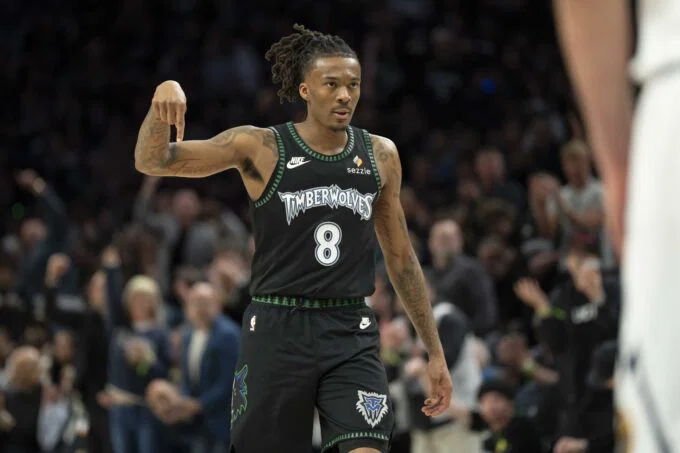
- Timberwolves — the Wolves were not getting rid of anyone in the core rotation, and their young pieces are all on inexpensive contracts
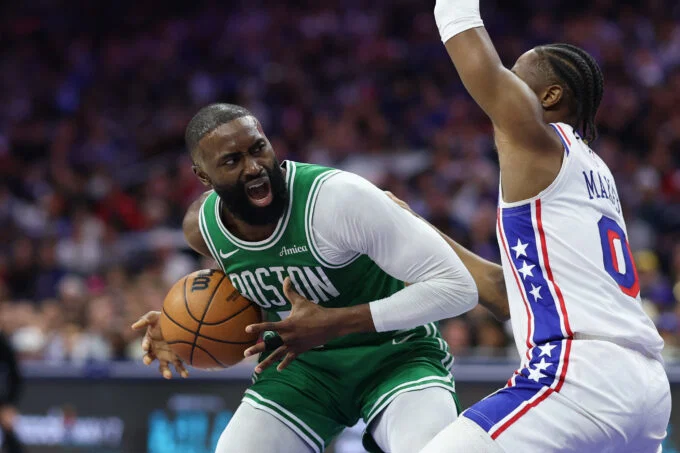
- Celtics — unless it was us getting Anfernee back, they only have young players on small contracts
- Lakers — Jake LaRavia comes close to the price at a $6mil AAV, and maybe counts as a nice, young asset, but hard to believe that we’d be willing to pay $20 million for LaRavia. Furthermore, L.A. dipped under the tax by trading away Gabe Vincent, who is surely not a young asset. The Lakers want to stay young in general.
- Rockets — Adding Reed Sheppard would have made little sense for Portland, and it would have made even less sense for Houston to move Sheppard just to save money when they have been devoid of a PG all season and were pushing for a title with KD. The rest of the pieces don’t fit the bill
- Magic — Anthony Black works for the formula; however, even though the Magic struggled throughout the year, there’s no way they were willing to give up one of their good players just to save some money, even if the Blazers offered them every pick they possibly could. They just traded away their future for Desmond Bane
Who Is Left in the Blazers’ Trade?
What we’re left with are the Warriors and the 76ers.
The Warriors make sense because with Butler tearing his ACL, dumping expensive players to save some money and re-positioning themselves for next season could have been on the table.
The 76ers make a ton of sense because they actually enacted one of these trades with the Thunder in the form of Jared McCain. However, McCain, when it comes to this scenario, was on too cheap a contract.
That leaves three potential players that fit the bill:
- Quentin Grimes – 76ers
- Moses Moody – Warriors
- Jonathan Kuminga – Warriors
Giving Cronin credit, it’s hard to believe that he would have thought trading for Kuminga, who can’t shoot, would have made any logical sense for the Blazers to trade for. Portland already has plenty of athletic wings who can’t shoot.
Moses Moody would have been a pretty solid pickup for the Blazers in a trade. He can shoot and defend, and he’s on a really team-friendly contract. Too team-friendly for the Warriors, who have been dying for consistent play from their role players, to want to move on from.
The Blazers Almost Traded for Quentin Grimes
This leaves us with Quentin Grimes, which makes perfect sense.
The 76ers offloaded salaries to save money at the 2026 trade deadline. They dumped McCain’s $4.4 million contract and Eric Gordon’s $3.6 million contract for a total dump of $8 million. Grimes is making $8.7 million this year.
Quentin Grimes makes a ton of sense for the Blazers. He can shoot, which was a need that Cronin not only admitted to in the same press conference from Thursday, but was one the Blazers addressed in the form of Krecji.
Grimes is a good player, but as he’s on the final year of his deal, he likely wasn’t worth a whole lot on the trade market, nothing the Blazers couldn’t pay, certainly. The 76ers were clearly trying to move one of him or McCain, given that they have a dynamic young starting backcourt in Tyrese Maxey and VJ Edgecombe.
Grimes is also a nice, young asset, given that he’s only 25 years old.
What likely ended up happening (speculating) is that the Blazers had put an offer for Grimes on the table with the 76ers. However, the Thunder, with their chest of draft assets, came over the top of that offer, giving the 76ers a first-round pick and a few second-round picks, opting to snag McCain instead of Grimes, because McCain is on a cheaper contract.
Would This Have Been a Good Trade for the Blazers?
It’s impossible to truly say whether the deal would have been good for Portland, given there’s no knowledge of just how many draft assets the Blazers gave up.
However, since Portland was able to make it all the way to the No. 7 seed without Grimes, and since Grimes is an unrestricted free agent who could walk for nothing this offseason, it’s safe to say that the Blazers accomplished all they could without Grimes anyway, and it’s probably for the best that they saved some draft capital for another day.









Leave a comment