

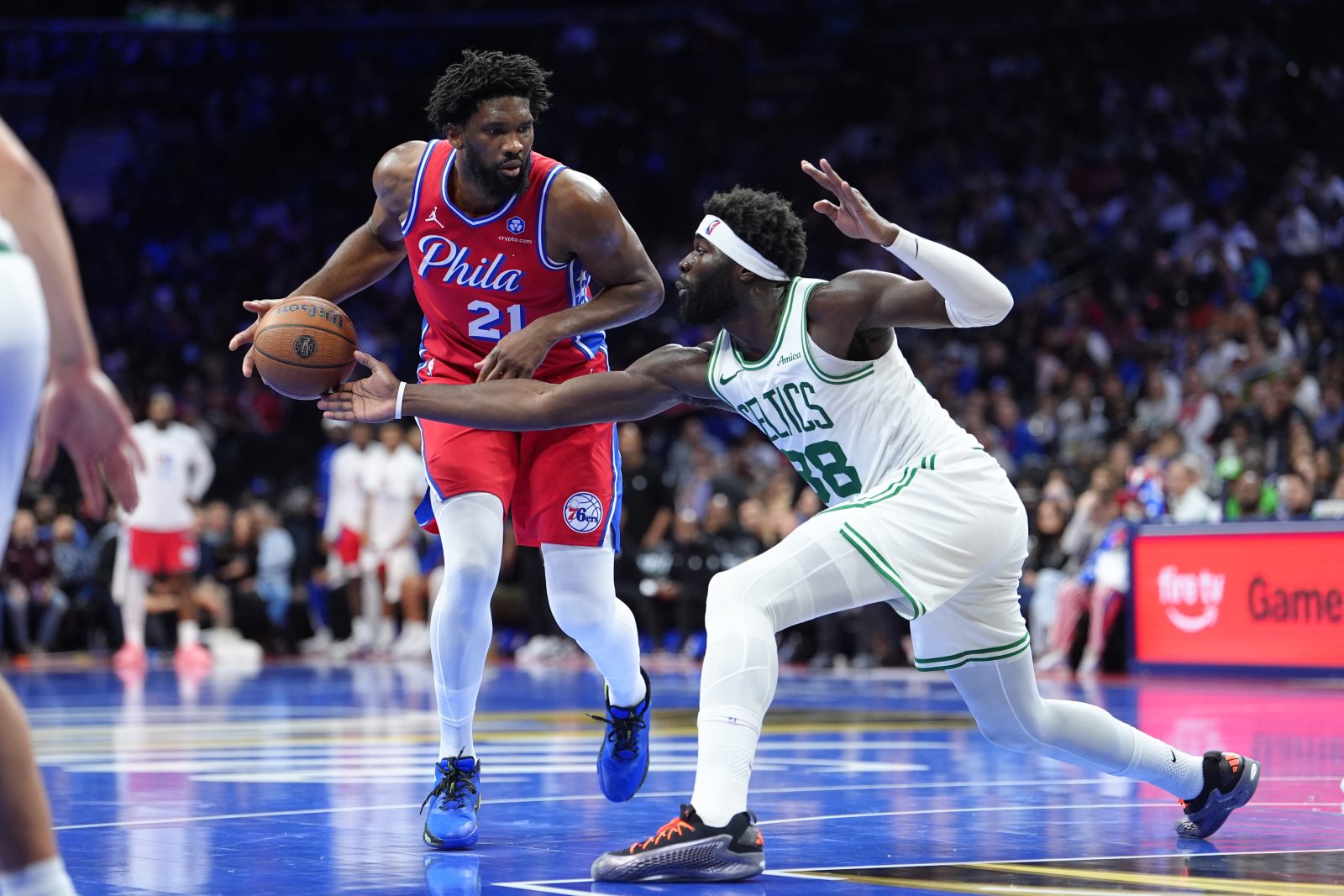
The Philadelphia 76ers and Boston Celtics do not need any manufactured drama — their history supplies it. Every meeting carries decades of tension, expectation, and memory. As a result, even a routine regular-season game feels heavier than most.
This rivalry stretches back far. More importantly, it has endured because neither franchise has ever truly faded. Instead, each era adds another layer to a story built on fierce competition.
Origins and Early Years
The rivalry began on Nov. 30, 1949, when the Syracuse Nationals faced the Boston Celtics. The Nationals, 13-1, beat the Celtics, 4-11, 87-71. Eventually, the Nationals became the Philadelphia 76ers, but the animosity followed. From the start, these teams occupied similar space in the Eastern Conference.
Over time, proximity and repetition turned familiarity into resentment. They met often, played meaningful games, and competed for the same postseason ground. That foundation set the stage for something bigger.
The Hall of Fame Era: Russell vs. Chamberlain
The rivalry truly ignited during the 1960s when Wilt Chamberlain and Bill Russell transformed games into cultural events. The two players’ contrasting styles symbolized opposing basketball philosophies.
Most notably, Philadelphia ended Boston’s eight-year championship reign in the 1966–67 season. That moment mattered because it proved the Celtics could be dethroned, and it permanently raised the rivalry’s stakes.
The 1980s: Erving, Bird, and the Playoffs
Two decades later, the rivalry resurfaced at full intensity. Julius Erving and Larry Bird led teams that repeatedly blocked each other’s path to the Finals. Consequently, the Eastern Conference often ran through Boston or Philadelphia.
For eight straight seasons, one of the two appeared in the conference finals or NBA Finals. Because of that dominance, every postseason clash felt like a referendum on the league’s balance of power.
Andrew Toney even earned the nickname “The Boston Strangler”. He was a pivotal piece of Philadelphia’s equation, scoring 34 points in the deciding game when the 76ers defeated the Celtics in 1983 Eastern Conference Finals.
Why Boston and Philadelphia Are Rivals
This rivalry exists for several reasons, but playoff frequency sits at the top. Boston and Philadelphia have met in 22 postseason series, the most of any NBA pairing. The Celtics have won 15 of those matchups, while the 76ers have taken seven.
Additionally, both franchises carry championship expectations. Boston’s dynasty status contrasts with Philadelphia’s tradition of contention. When those identities collide, tension follows.
How Fans Experience the Matchup
For 76ers fans, games against Boston are emotional checkpoints. Wins feel validating. Losses reopen old frustrations. That feeling is magnified by the fact that Philadelphia has not won a playoff series against the Celtics since 1982.
Meanwhile, Celtics fans often approach the rivalry with confidence. Boston’s historical edge fuels jokes and bravado. Still, even from that position, beating Philadelphia remains satisfying.
Neutral fans, however, tend to revere the rivalry. Many view it as second only to Celtics – Lakers in NBA history; longevity, star power, and postseason weight separate it from most conference feuds.
The Numbers Behind the History
Statistically, Boston holds the upper hand. In more than 470 regular-season meetings, the Celtics lead the all-time series 274-200. The postseason gap mirrors that trend, with Boston also ahead in playoff wins and total games played. The two teams have played 116 playoff games where Boston holds the record over Philly 66-50.
Those numbers reinforce why the rivalry feels unfinished from Philadelphia’s perspective. History favors Boston, but the pursuit of balance continues.
Modern Stars and Renewed Tension
The rivalry has not lost its edge in the modern era. Joel Embiid has embraced the matchup’s emotional intensity. His candid remarks about Boston have resonated across both fan bases, blending humor with honesty.
At the same time, Boston’s current core has continued to deny Philadelphia postseason success. That dynamic keeps the rivalry sharp, even as rosters change.
The 2025–26 Season So Far
This season has introduced a competitive wrinkle. Through three meetings, Philadelphia holds a 2–1 edge over Boston. Each game has been decided by narrow margins, underscoring how comparable the teams have been.
While the sample size remains small, the results suggest momentum. For the 76ers, that matters in a rivalry defined by psychological edges.
Why the Rivalry Still Matters
Ultimately, this rivalry survives because it is personal. Boston defends its dominance. Philadelphia chases redemption. Every game adds context, and every season offers another opportunity to reshape the narrative.
Until the gap truly closes, the Celtics and 76ers will remain locked in one of the NBA’s most enduring, emotional, and unforgiving rivalries.










Leave a comment