

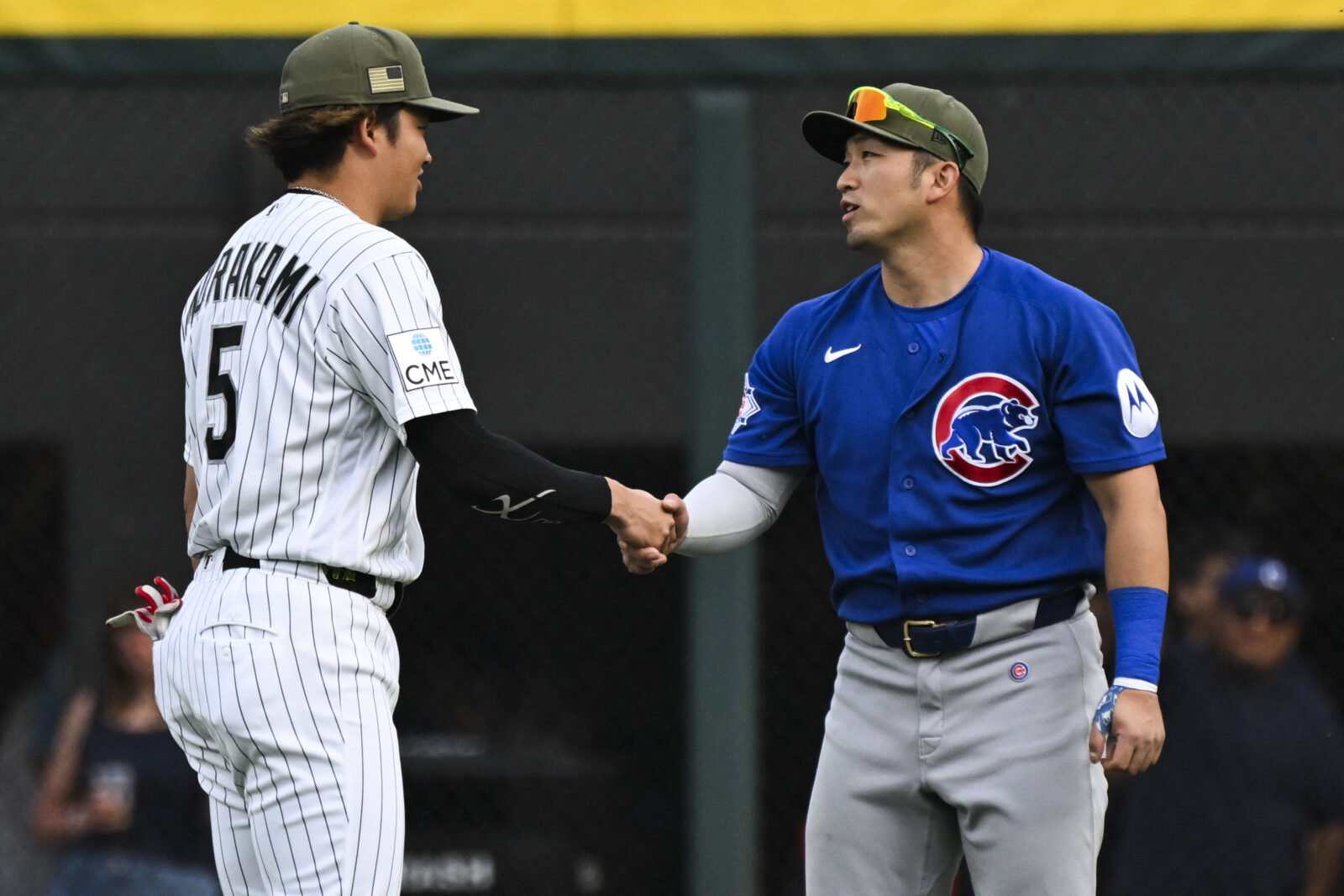
For the first time in nearly two decades, both the Chicago Cubs and Chicago White Sox have entered the second half of the season with legitimate playoff aspirations.
While the Cubs entered the year expecting to compete for the National League Central, the White Sox have exceeded every preseason outlook after one of the worst stretches in franchise history. As the trade deadline approaches, the White Sox find themselves in a position few predicted, while the Cubs continue to manage expectations; both clubs are playing meaningful baseball in July.
Throughout the season, fans have seen both teams step up and play with their deep rosters carrying them to victory.
The Cubs Are Living Up to Expectations
The Cubs entered 2026 with one goal: a return to the postseason. Through the first half of the season, they have looked like a playoff contender. Rather than relying on one superstar, Chicago has won through roster depth, strong defense, quality starting pitching and timely hitting. They have consistently remained near the top of the National League despite competing in one of baseball’s toughest divisions and recovering from a 10-game losing streak earlier in the season.
One of the biggest reasons for the Cubs’ success has been their ability to get production throughout the lineup. Pete Crow-Armstrong has continued his emergence as one of baseball’s premier defensive center fielders while becoming a dangerous hitter at the top of the order. Seiya Suzuki has provided middle-of-the-order power and run production, giving the Cubs one of the more balanced offenses in the National League.
The pitching staff has been equally important. Shota Imanaga has continued to establish himself as one of the league’s most dependable starters, while the bullpen has consistently protected late leads. Combined with one of baseball’s better defensive units, the Cubs have found ways to win close games on a regular basis.
Instead of relying on one player to carry the roster, Chicago has succeeded because nearly every area of the team has contributed, highlighting their well-rounded roster.
The Cubs currently have a firm grasp on a wild-card spot with a 3.5 game cushion.
The White Sox Have Become Baseball’s Biggest Surprise
Just two years removed from a historic 121-loss campaign, the White Sox have completely changed the narrative surrounding the organization. After entering the season expected to continue rebuilding, they have instead positioned themselves firmly in the American League playoff race.
The biggest difference has been the team’s overall culture. Under first-year manager Will Venable, the White Sox have played much better baseball by limiting mistakes while receiving contributions from nearly every part of the roster. Rather than depending on veterans, the White Sox have embraced its young core, and that group has developed much faster than expected.
Several young players have accelerated the rebuild. Miguel Vargas has become one of the team’s most productive hitters, providing consistent offense in the middle of the lineup. Rookie catcher Kyle Teel has earned the trust of the pitching staff, while rookie starter Shane Smith has emerged as one of the club’s most reliable arms. Those individual performances have helped create a team that is winning because of balance rather than star power.
The organization has gone from rebuilding for the future to currently competing in just a few months. Instead of discussing which veterans could be traded at the deadline, the conversation has shifted toward whether Chicago should add talent for a playoff push.
To round this all out, the White Sox recently had the first pick and drafted Roch Cholowsky out of UCLA who will become another cornerstone to this continuing rebuild.
A Tale of Two Different Rebuilds
Although both clubs find themselves in the playoff race, they arrived there through completely different paths.
The Cubs have spent the past several seasons constructing a roster built to contend immediately. Through strategic free-agent signings, player development and experienced leadership under Craig Counsell, Chicago has developed into one of the National League’s most complete teams. The Cubs sit at 57-45, good for the top National League Wild Card position, while owning a +65 run differential, a mark that ranks among the best in Major League Baseball. Their success has come from consistency, ranking near the top of the league in run production while pairing it with reliable pitching and one of baseball’s strongest defensive clubs.
The White Sox have taken a dramatically different path. The White Sox reached the All-Star break with 50 wins and are currently 1.5 games ahead in the lead for the AL Central. They carry a +44 run differential, showing that their success has not been fueled by luck but by consistently outplaying opponents.
The contrast between the two organizations makes this season unique. One team is meeting expectations, while the other has shattered them. Both are doing this by relying on a well balanced roster and not individual performances.
A Rare Moment in Chicago Baseball History
Meaningful baseball on both sides has been surprisingly uncommon over the history of Chicago baseball. There has only been three times that both teams have entered the post season simultaneously, making it an extremely rare occurrence. If this were to happen again it would further fuel the cross-town rivalry between the fanbases. The two teams face each other during the regular season, but have only met once in the postseason.
In 1906, the Cubs and White Sox met in the World Series. The Cubs entered the postseason after a historic 116-36 regular season, still the highest winning percentage in the modern era. Across town, the White Sox earned the nickname “The Hitless Wonders” after batting just .230 as a team, but relied on elite pitching to pull off one of baseball’s greatest upsets, defeating the heavily favored Cubs in six games to win their first World Series.
The next time both clubs reached the postseason in a full 162-game season was 2008, when the Cubs won 97 games and the NL Central while the White Sox captured the AL Central after a Game 163 victory over Minnesota. Although both teams also qualified during the shortened 2020 season, 2026 has the chance to become the first full season since 2008 where both sides of Chicago are legitimate playoff contenders.
Looking to the Future of Chicago Baseball
With the trade deadline approaching, both organizations face different opportunities. Both the Cubs and the White Sox are expected to strengthen their already competitive rosters in hopes of making a deep postseason run. Regardless of what happens over the final months of the season, one thing is already clear: Chicago baseball is once again relevant on both the North and South Sides.
If both clubs can maintain their current pace, 2026 could become one of the most memorable full baseball seasons the city has experienced since 2008.











Leave a comment