

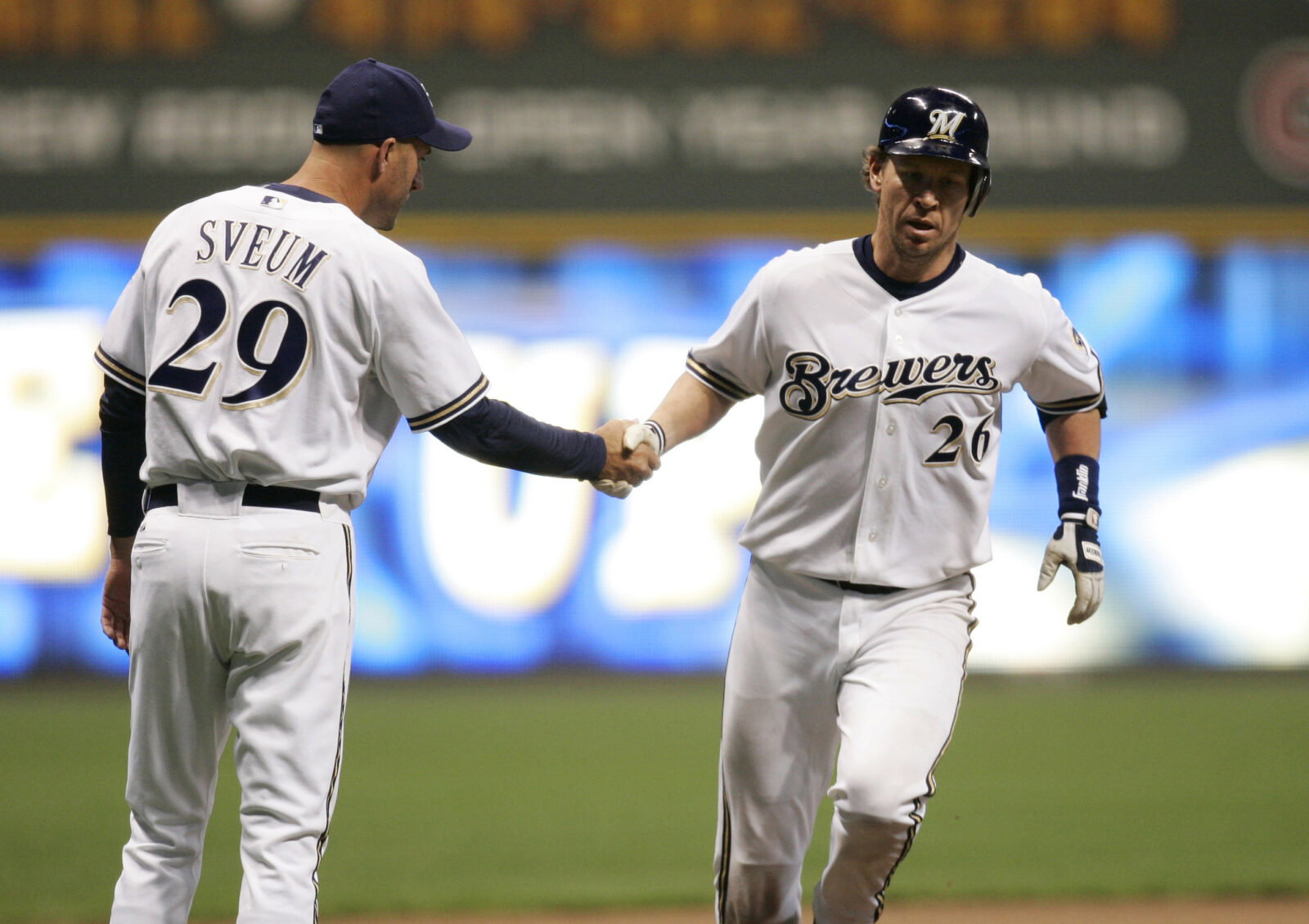
Originally, Damian Miller wasn’t committed to Viterbo University for baseball; he planned to get his degree at UWL and move on from sports. But after the Viterbo University baseball coach encouraged him to try it out, Miller decided to give baseball one more chance.
That decision eventually took Damian Miller from a small town in Wisconsin to Major League Baseball, where he played from 1997 to 2007 and was a member of the 2001 Arizona Diamondbacks World Series team.
Damian Miller’s Journey Started in Wisconsin
Growing up in a small town in Wisconsin, Miller’s path to professional baseball wasn’t always obvious. Before baseball became his career, Miller was just a kid in West Salem who liked sports. Miller played football, basketball, baseball, and hockey. Even while playing multiple sports, Miller always dreamed of the MLB.
“It was always a dream of mine; whether it was realistic or unrealistic, it was always a dream of mine to play in the big leagues,” said Miller. “As far back as I can remember, that has always been a dream of mine.” When asked what first got him into baseball, Miller pointed to his dad and the time they spent playing catch. “Baseball has always been instilled in me by my dad. Naturally, I jumped into baseball. When my dad was at work, I could not wait for him to get home so we could play catch; it was a passion of mine.”
Damian’s Parents
His parents were also a big part of his athletic career. Miller said both were there for every game, while his high school coach, Chuck Healy, was another major influence. “Both my parents were very supportive; they were there for every game. In high school, I played for Chuck Healy, who was also a big supporter of mine.” Miller also credits Robin Yount as one of the biggest influences on his life and athletic career. He got to know him not only as a coach, but also as a teammate and a friend.
Those people helped Miller believe that playing professional baseball was possible. Looking back, Miller said he never spent much time thinking about whether he was good enough to make it.
“I was probably too naive to think that it wasn’t,” he said. “We’d go to Brewers games, and my mom and dad would get seats for us by the bullpen, and I’d sit there watching the pitchers and catchers warm up. I was never interested in getting autographs; I just loved watching the players. I remember watching from the bleachers and believing that I would be there one day.”
That belief stayed with him as he kept playing.
“I never really thought I couldn’t.”
Giving Baseball One More Chance
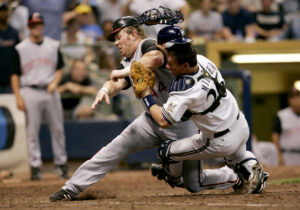
Throughout high school, Miller kept improving his baseball game, but it wasn’t always his priority. While he enjoyed playing, professional baseball wasn’t necessarily the plan from the beginning. Miller was originally committed to UWL to continue his education. However, after a conversation with Viterbo baseball coach Ed Servais, his plans started to change.
“My senior year of high school, I think we were playing Galesville, a regular Coulee Conference game. I was catching, and Ed Servais was the home plate umpire. At the time, I was going to UWL just for school, but after the game, he said he was starting a new baseball program at Viterbo, and he asked if I was interested in going there and playing baseball.”
Ultimately, Miller’s decision came down to how much he loved baseball and the chance to pursue his dream of playing professionally.
“I loved playing it; I think it’s a beautiful game. There’s something romantic about it to me.”
That decision changed his career path.
Learning the Game
Miller enjoyed his time at Viterbo and said the experience helped him grow as a player.
“I loved playing there; it was fun. We had a good team too for the three years I was there. My experience there was great. I learned a lot. In high school, I was such a raw player; no one really taught me how to hit or how to catch.”
For Miller, Viterbo University was more than just a college. It was the starting point of his journey toward professional baseball. He gave special credit to his first-year coach, Ed Servais, for helping him improve and making the transition from high school baseball to college baseball a better experience overall.
Still, Miller said he didn’t truly learn how to play the game until he reached the minor leagues.
“But it wasn’t until I got to the minor leagues that I learned how to really play the game,” Miller said.
When Miller’s Baseball Dream Became Real — Drafted By Twins
Eventually, Miller’s development from his freshman year of college to his junior year at Viterbo put him on the Minnesota Twins’ radar. The Twins drafted him in the 20th round of the 1990 June Amateur MLB draft.
The path from college baseball to the MLB was not an easy one. Miller had to navigate the draft process and make the jump from college baseball to professional baseball. Looking back on the draft, Miller remembers waiting for his name to be called and wondering when the phone would ring.
“My junior year at Viterbo, every game scouts were watching me,” he said. “There were rumblings I was going to get drafted; I was home by myself, still living at home, and my parents were at work. The first round goes by, no phone call. By noon or 1 the next day, my phone rings, and it’s the Minnesota Twins.”
Welcome to the Big Leagues
Once Miller reached professional baseball, he quickly realized how different the competition was. “It’s an eye-opener when you go there, and there are four other catchers on the team, and they’re all playing at Florida State, San Jose State, and all these other big Division I colleges,” he said.
When asked about the biggest transition from college to professional baseball, Miller said it was having to compete every day.
“The biggest transition for me was competing every day. At Viterbo, you play a few days a week on weekends, whereas professionally you must perform every single day. That is a hard thing to adjust to; you can have good days, but there are days where you think to yourself, ‘Man, I really need to dig deep to find the energy to play today.’”
This is where Miller learned how to handle not only the good performances but the bad ones as well. “I had to learn how to be good and be bad. I had to accept the fact that there are days when you’re going to be good, and you’re going to be bad.”
Physical Demands
For Miller, the mental and physical demands were some of the hardest parts of professional baseball. “The hardest thing is having to compete at the highest level when you’re not 100% mentally or 100% physically,” he said.
The competition was tougher, the expectations were higher, and every game mattered. Instead of competing for a national championship, he was competing for a World Series.
Eventually, his hard work paid off as Miller made the Minnesota Twins’ final roster and got the chance to show the world what he could do. Miller’s first at-bat in the major leagues also gave him an early reminder of just how high the level of competition was.
“The first three guys I faced were Mariano Rivera, Andy Pettitte and Roger Clemens,” Miller shared. “So I got my welcome-to-the-big-leagues moment early. I didn’t get a hit against either; I flew out to right against Mariano, punched out against Pettitte, and probably punched out against Clemens.”
Miller Was Learning to Compete Every Day
Reaching MLB was the realization of a dream Miller had worked toward for years. But getting there was only the beginning. Even after reaching the highest level of baseball, Miller said he wasn’t scared of the moment.
“I wasn’t scared about the whole thing; I wasn’t fearful at all. You go to West Salem or Logan’s baseball fields, and the pitcher’s mound to home plate is 60 feet, 6 inches. It’s the same in a big-league stadium; just the players are better, that’s all.” That mindset helped Miller adjust to life in the major leagues and establish himself at the highest level of baseball.
Winning the World Series with the Diamondbacks
Eventually, in 2001, Miller reached the point in his career that every player dreams of: winning the World Series. Against all odds, the Arizona Diamondbacks found themselves in the World Series against the defending World Series champions, the New York Yankees, who were looking to win their fourth World Series in a row.
In the weeks leading up to the series, the odds were entirely in the Yankees’ favor, but it makes sense why. The Diamondbacks played their first-ever regular-season game in 1998 after becoming an expansion franchise just two years earlier, while the Yankees were becoming one of the most electrifying and dominant baseball teams we’ve seen.
For a player who grew up in West Salem, a town with a population of 5,000, the moment was even harder to imagine. At 32, Miller went from playing baseball in a small Wisconsin town to winning a World Series.
Damian Miller Lived an Underdog’s Dream
When asked what it was like to grow up in West Salem and eventually win a World Series, Miller said the experience was surreal.
“For me, I was just a kid from a small town competing in a World Series against the New York Yankees; it was surreal. My whole career I was this underdog kid, and here I am the everyday catcher, competing against the Yankees in the World Series. It was unbelievable.”
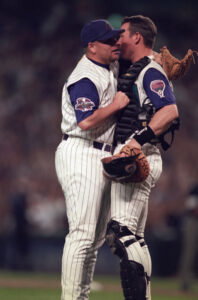
Even with everything that was at stake, Miller said he approached the World Series the same way he approached every other game.
“When you’re in the middle of it, you just play. Here’s a game I’ve been playing since I was four or five years old; you just play. You know what’s at stake: it’s an opportunity to get a ring and a world championship.”
For Miller, there was also something special about standing at the same home plate where some of baseball’s greatest players had stood.
“Here I am, a kid from West Salem standing at the same home plate that Babe Ruth, Lou Gehrig, Mickey Mantle and Joe DiMaggio — all those guys were standing right here. That part of it was cool; I really enjoyed that.”
The emotions of winning the championship were something Miller would never forget.
For Miller, the championship meant more than a trophy. It was the culmination of years of work, sacrifice, and decisions that started with giving baseball one more chance at Viterbo University.
Walking Away From the Game
After more than a decade in professional baseball, Miller eventually stepped away from the game, something that had been a part of him his whole life. Leaving baseball behind meant entering a completely different chapter of his life. For someone who spent so many years playing the sport professionally, walking away could not have been easy. Miller said it took him time to adjust to life without baseball.
“Retiring from the game I’ve been playing my whole life at 37 or 38 took me a whole year to get over. When you retire, the first thing you miss is the guys you played with every single day; the second was saying goodbye to competing, making it to the highest level where you compete every day, and not being able to compete again was very difficult.”
Even after leaving the game, baseball remained an important part of Miller’s life. When asked if he ever misses baseball, Miller said he still thinks about the memories he made throughout his career.
“Most definitely. I don’t watch a lot of baseball anymore, but when I do I start to think about all the good games I had, all the fun I had in the clubhouse, or on the bus, from the airport to the hotel, or from the ballpark to the airport.”
Miller’s Memories
As time passed, Miller said the bad games became easier to forget, while the good memories stuck with him.
“You start to have a short memory with all the bad games you had and think about all the good things.”
Looking back at his career, Miller can point to a journey that few people ever experience. He started in West Salem, Wisconsin, went to Viterbo University to play basketball, but decided to give baseball one last chance and eventually reached the highest level of the sport.
His journey reminds us that careers don’t always follow the path people expect. Sometimes, one decision can completely change the direction of a life.










Leave a comment