

Much has been made of the influx of injuries among NBA players in recent years. The number of calf injuries from the 2010-2011 season to 2025-26 has more than quadrupled.
The 2025-26 NBA playoffs have seen no shortage of ailments. One topic prevalent throughout this postseason is not just the number of injuries, but the fact that players are trying to push through them for the sake of their team’s title hopes.
Orthopedic surgeon Dr. Nirav Pandya took time to answer questions regarding the prevalence of player injuries and the issues with them continuing to play.
Players Trying to Persevere
Yasmeen: Much has been made about why players are falling victim to injuries more than ever, so why do you believe that is?
Dr. Pandya: When you have an 82-game regular season, which is really intense for a lot of these players, you’re worn down throughout the season. Suddenly, you’re in this very intensive playoff series, and you’re playing higher minutes. You already have the in-season wear and tear, so I think it’s an ideal setup for these injuries to occur. Whether they be soft tissue injuries like Jalen Williams’ or-, even though Anthony Edwards’ wasn’t a soft tissue injury, you’re more likely to have things like hyperextension injuries, etc., if your muscles are fatigued and you can’t really control your knees. So I think a lot of this has to do with the wear and tear of the season and the intensity of the playoffs.
Secondarily, the game has changed, and I think that’s the larger conversation. When you look at basketball in the 80s and 90s, it was physical in a different way, where it was kind of brute force, upper body, more explosive in that way. Now, it’s much more explosive; players are doing more things on a single foot…there’s a lot more movement, and bigger players have to play more explosively. So I think the combination of the wear and tear of the season and just the way the game is played sets up a lot of these players for soft tissue injuries.
Potential Solution to NBA Injuries
Yasmeen: What are your thoughts on the NBA’s 65-game threshold for players to qualify for awards?
Dr. Pandya: I understand the NBA doesn’t want players successively taking time off for no reason. In the same point, there’s more and more data suggesting players are more prone to injury, and load management could potentially benefit some of these players in keeping stars out there. I think the 65-game rule makes sense, but some of these players are getting the opposite effect, where they’re potentially rushing back from injuries so they can capture these awards.
Dr. Pandya: I think one of the things the NBA could potentially do is have an independent panel of physicians who examine a lot of these players and determine: Is the time they’re missing actually an injury? Then they’re not necessarily having the time missed count towards that 65-game threshold, versus players just resting to rest…and maybe that does count towards the 65-game threshold.
They can do two things: shorten the season in the sense of less games, which the NBA is never going to do, or potentially space the season out. Still have 82 games, but there are more rest days in between.
Risking Playing Injured
Yasmeen: How big is the risk of compensation in many of the injuries we have seen this playoffs? For instance, is there any correlation that could be associated with Jayson Tatum tearing his right Achilles tendon last postseason and injuring his left leg in the Philly series this year?
Dr. Pandya: Yeah, absolutely. I think that anytime a player has a lower extremity injury, particularly when they’re coming back and playing at a high level, there’s all this balance. They want to get back on the court, and that’s why, with certain returns to play, like with ACLs, they used to be 6-8 months recovery. Now, it’s up to one year because it takes a long time for patients to get their mechanics back and run fluidly. Your ACL may be healed, your Achilles may be healed, but are those subtle compensations impacting you, particularly in an explosive game?
So, absolutely, if you have an Achilles issue, then you can then develop a calf issue. We did a study looking at this. If you get a hamstring injury, there’s a very high rate you’re going to injure something else too…A lot of time, players will come back, and they haven’t fully restored their mechanics or how they’re moving, and then they’re set up for another injury.
For the everyday recreational athlete, you pull your hamstring, and you can go back out and play, and you’re not going to stress it. But for these NBA players, it’s hard enough to make it to the NBA and play at that level. Then to have a soft tissue injury or some other injury and not compensate is pretty hard. So I think that’s why we see a lot of these injuries stacking on one another in the playoffs.
High vs. Low Ankle Sprain
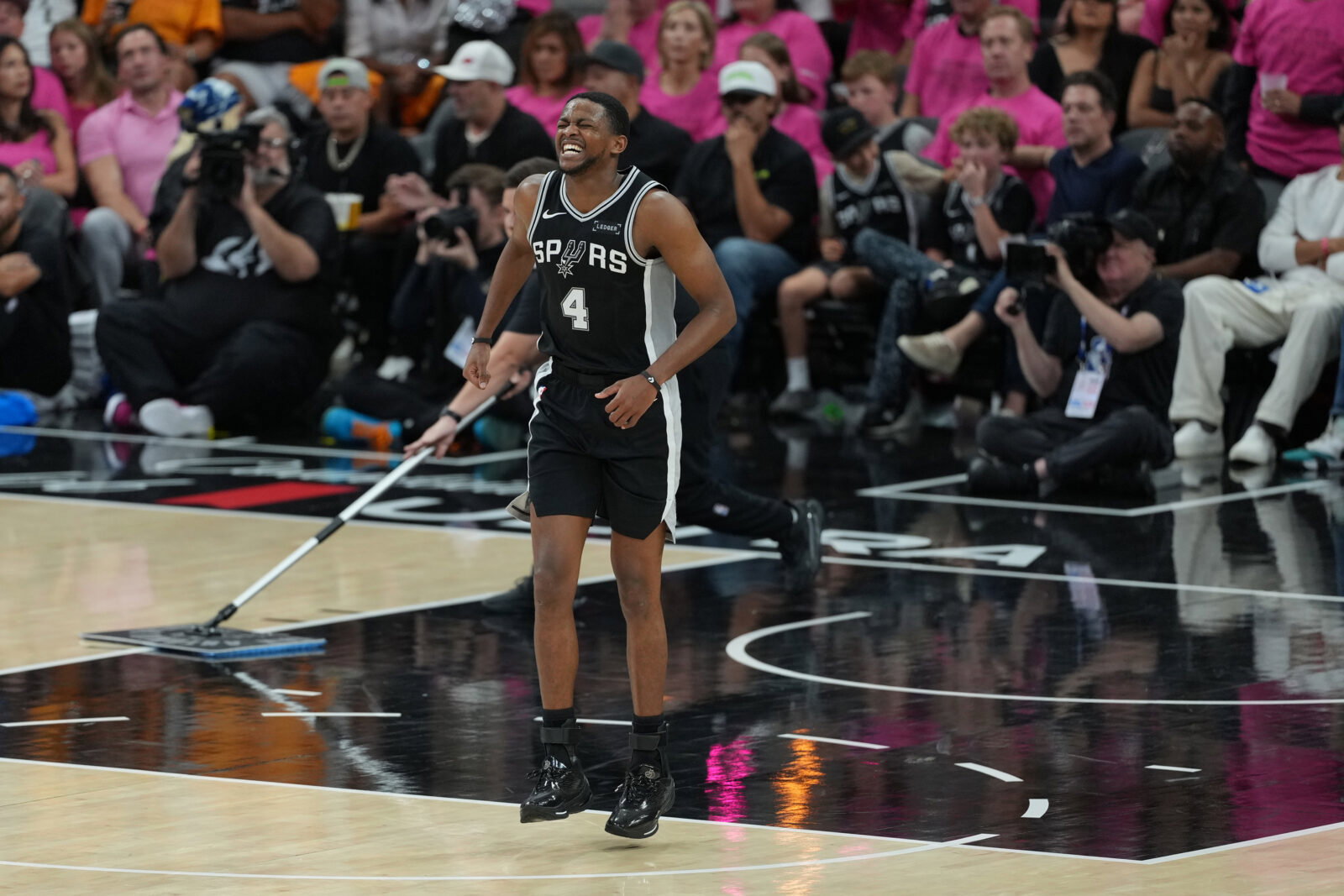
Yasmeen: De’Aaron Fox is one player with an ankle injury who rushed to come back even though he isn’t fully healthy. It was reported that he has a high ankle sprain, which may be worse than if it were a low ankle sprain. Why is that the case?
Dr. Pandya: If you think about ankle sprains, there’s the high ankle ligaments and the low ankle ligaments. The low ankle ligaments kind of connect the smaller bones together in the foot, and those are the ones that we commonly see when most people sprain their ankle, and they get swollen on the outside of it. And that is the lateral ligaments, the low ligaments that get injured.
The high ligaments connect your shinbones to your tibia and fibula, so they have a lot of force that goes across them. When you have an injury where you sprain those ligaments, you can imagine as you step, those two bones in your leg are separating. It’s a lot more painful than the ligaments in the lower part of your ankle, and takes a lot more force for those to get damaged.
High ankle sprains can sometimes take four to six weeks to fully get better, just because they’re a lot larger ligaments and a lot more force goes across them as opposed to lower ankle ligaments, where sometimes you can just miss one game. So having a high ankle sprain can be very difficult to deal with, particularly if you’re a basketball player, where you’re already putting so much force on that ankle, and you need that stability.
Is Too Much Time Off a Bad Thing?
Yasmeen: The Oklahoma City Thunder and New York Knicks had over a week off in between the second and third rounds of the playoffs. Some players say the rest helps, and others say it can disrupt rhythm after too long. Could having too much time off in between rounds be a negative?
Dr. Pandya: Absolutely. There’s a rhythm for professional athletes; they’re creatures of habit. With a lot of training programs, coaching staffs, and performance specialists will kind of map out the entire season: this is when we’re going to practice, this is when we’re going to work out. Suddenly, you get in a playoff series, and you have this whole week that doesn’t fit into that training regimen that’s happened.
I think for a lot of players, keeping that normal cycle of ‘ok maybe we have a day off, maybe we have two days off’ keeps rhythms in place and muscles explosive. So I do agree that a lot of teams – you see them come off that 7-10 day break, and then in the first game back they don’t look so good…
It can also set you up for injuries as well. There’s two kinds of groups: one is if you are injured, and then the rest can help. But if you’re not injured, then suddenly not having that constant explosive activity could potentially set you up for getting a soft tissue injury because you’ve gone from nothing to suddenly very intensive playoff basketball.
Joel Embiid’s Unprecedented Turn-Around
Yasmeen: What are your thoughts on Joel Embiid returning to play 17 days after an appendectomy. Could that have contributed to the hip pain he felt in the Celtics series?
Dr. Pandya: When we think about appendectomies, the surgery itself is invasive. We tell patients even for minor things: If you have a needle stuck in your foot and you get it out, it’s going to take 7-10 days even just for incisions to heal. And remember, when you have appendicitis, you’re systemically sick…Not only are you dealing with a surgery where you’re cutting into your belly and core muscles, which can then impact your ability to move; then you’re also sick, and your body needs to recover from that.
There’s not great data that says when people should come back, but most things say you should wait four to six weeks before coming back from this kind of injury. But once again, it’s the same sort of thing where it’s the playoffs, and people are like, ‘Well, your appendix is out, why won’t you play?’
So for a lot of players, there’s pressure for him to play both in the media and from other people…But 17 days — for people to get back to work after an appendectomy in 17 days at a desk job is pretty remarkable. To go play in the NBA playoffs at his size probably did lead to him having some secondary issues, too.
Hamstring Injuries in the NBA Are a Problem
Yasmeen: Which injury is the worst for NBA players to have?
Dr. Pandya: I would say hamstrings are the big one… Hamstrings we see a lot of, and then calf injuries are the second one. I think that’s particularly in players because basketball is a start-and-stop game.
You’re sprinting, you’re jumping — it’s the exact things you worry about the most…Whenever we see a player get a hamstring injury, not only am I worried about the short-term risk of this, but also the long-term risk of this recurring…The hamstring is a tough thing to rehab, a tough injury to have; that’s usually the one that I worry about the most.






![May 2, 2026; Boston, Massachusetts, USA; Philadelphia 76ers center Joel Embiid (21) celebrates with guard Tyrese Maxey (0) and guard Vj Edgecombe (77)] following their win over the Boston Celtics in game seven of the first round of the 2026 NBA Playoffs at TD Garden. Mandatory Credit: Winslow Townson-Imagn Images](https://theleadsm.com/wp-content/uploads/2026/08/2026-05-03T023431Z_178259642_MT1USATODAY28868982_RTRMADP_3_NBA-PLAYOFFS-PHILADELPHIA-76ERS-AT-BOSTON-CELTICS-680x453.jpg)





Leave a comment